Key Takeaways
- Treat the handoff as a clinical event: suicide risk clusters sharply in the week after discharge and stays elevated for months, so the first 30 days need a scheduled plan 6.
- Before leaving the unit, meet with the treatment team to get a written safety plan, reconciled medications, named follow-up providers, and clear thresholds for calling the clinic versus the ED 15.
- Lock in a confirmed outpatient appointment within seven days, since patients seen that quickly had an adjusted hazard ratio for suicide of 0.82 compared to those with no 30-day care 2.
- Close the gap between prescription and swallowed pill by reconciling bottles against the discharge list, checking stock and prior authorizations, and calling the prescriber about side effects instead of silently stopping 8.
- In days 1 through 7, move the safety plan out of the folder and into daily life, and give support people specific jobs: tracking medications, holding numbers, and driving to appointments 16.
- Through days 8 to 30, keep care continuous with a medication check-in, a kept appointment, and daily routines, because feeling steadier is not the same as being out of the risk window 3.
- For co-occurring psychiatric and substance use diagnoses, ask for integrated care from one team rather than two separate referrals that leave both conditions under-managed 17.
- Escalate without hesitation for returning suicidal thinking, missed doses, lost sleep, new paranoia, or quiet withdrawal, and go to the ED or call 988 when safety cannot be held at home 16.
The handoff is the highest-risk moment in psychiatric care
If you’re reading this in a hospital family lounge, or in the parking lot after a discharge meeting, or late at night the week your person came home, you already know something the paperwork doesn’t say out loud: the day someone leaves an inpatient psychiatric unit is not the day the hard part ends. It’s the day the hard part changes shape.
The research is blunt about this. In a retrospective study of 615,067 psychiatric discharges, 320 people died by suicide within seven days of leaving the hospital, 771 within 30 days, and 1,325 within 90 days 6. Risk clusters tightly against the discharge date and then stays elevated for months. That isn’t a reason to panic. It’s a reason to treat the handoff as its own clinical event, planned with the same care as the admission.
This guide is built around the first 30 days because that’s where the leverage is. You’ll find what the discharge plan should actually contain, the questions to ask before your loved one walks out the door, why medication gaps quietly drive readmission, and how to tell when something has shifted enough to call for help again. You don’t need to get everything perfect this week. You need the next right step, scheduled and written down.
Why the first 30 days are different from any other window
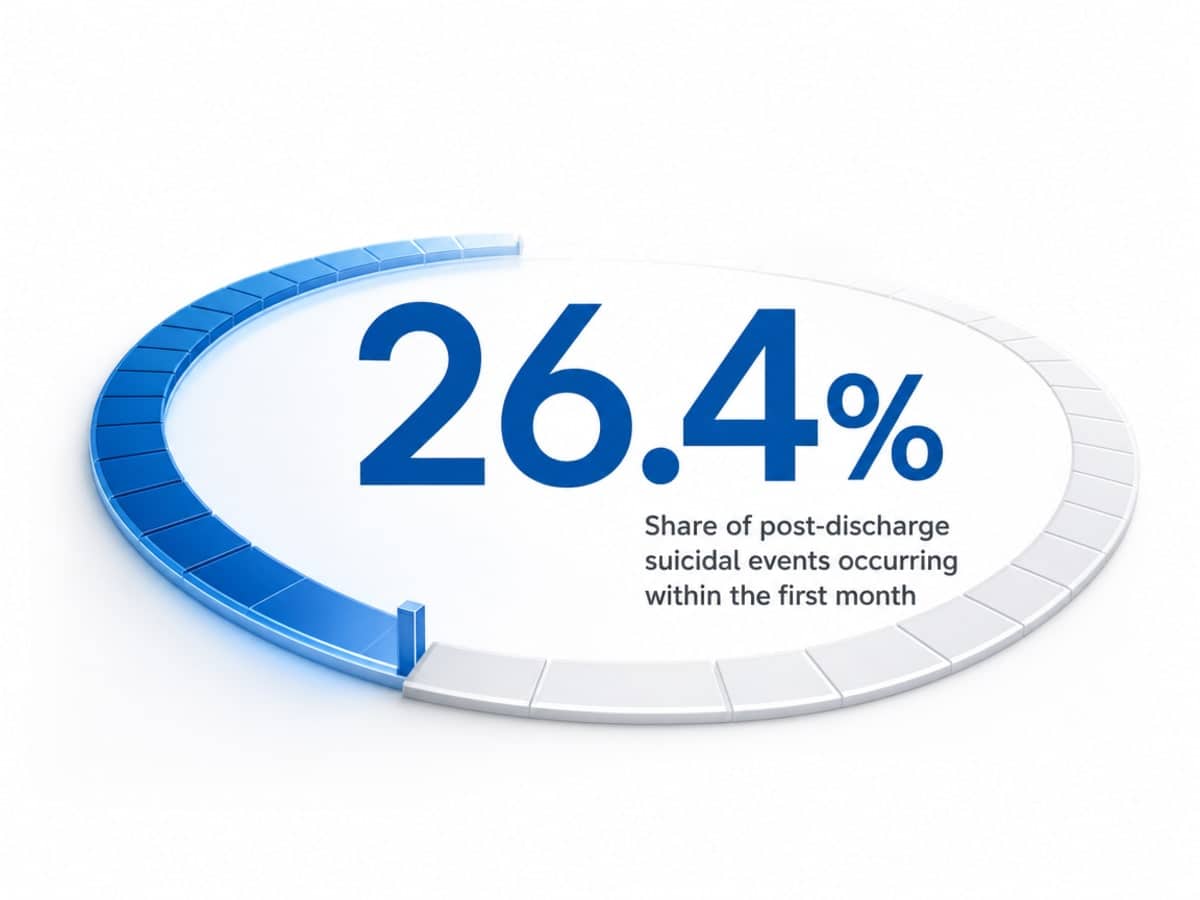
Think of the discharge date as a hinge, not a finish line. The week that follows carries risk unlike any other point in the care arc, and the month that follows the week is where most of the preventable damage happens. One review of post-discharge suicidal behavior found that 26.4% of suicidal events occurred within the first month after leaving the hospital 4. That is one in four. In a single 30-day window.
The time-concentration is clearest when you line the deaths up by day. In the retrospective study of 615,067 psychiatric discharges, 320 suicide deaths occurred within seven days of discharge, 771 within 30 days, and 1,325 within 90 days 6. The curve is steep early, then it bends but does not flatten. The first week carries the sharpest slope. The first month holds more than half of the 90-day total. That shape is why a generic “follow up in a few weeks” plan is not enough, and why the fixes have to be scheduled before anyone goes home.
Here is what makes this window different from, say, a stable patient three months out:
- the medication regimen is new or recently changed,
- the inpatient structure that organized the day is gone,
- the people who knew the current clinical picture are no longer in the room,
- and the first outpatient appointment, if there is one, may be two or three weeks away.
Any one of those gaps is manageable. Stacked on top of each other, they create a stretch of time where a bad night does not have a trained person in it.
You do not need to carry all of this alone, and you do not need to treat every rough hour as a crisis. What you need is a plan built with the clock in mind: something to do today, someone to call tomorrow, an appointment on the calendar this week, and a clear line that tells you when to stop waiting and call for more help. The rest of this guide walks through that plan, step by step, starting with the conversation that should happen while you are still on the unit.
Before you leave: the pre-discharge conversation that changes everything
Questions to ask the treatment team while you’re still on the unit
The most useful hour of this entire transition is the one where you are still on the unit, still in the same building as the people who have been treating your person for the past several days. Use it. Ask for a sit-down with the treatment team before discharge paperwork is signed. VA family guidance for exactly this moment recommends asking to meet with the treatment team, requesting a copy of the written safety plan, and confirming that every follow-up appointment is scheduled before anyone leaves 15.
Write your questions down the night before so you do not lose them in the relief of hearing “you can go home.” A workable list looks like this:
- Who on this team is responsible for my care until my first outpatient appointment, and how do I reach them?
- Can I have a written copy of the safety plan, including triggers, warning signs, coping steps, and the people and crisis numbers to call?
- What medications am I leaving with, what did you change from what I was taking before, and why?
- Which specific warning signs mean I should call the clinic, and which mean I should go back to the emergency department?
- When, where, and with whom is my first appointment, and is it already on the calendar?
Massachusetts guidance for co-occurring programs sets a similar bar: discharge planning should begin at admission and the packet you leave with should include names and contact information for continuing providers, the purpose of treatment, current medications, and refill status 14. If the team cannot answer those questions yet, that is useful information too. It tells you the plan is not done.
What the discharge packet should actually contain
A good discharge packet is not a stack of forms. It is a working document you can hand to the next clinician and understand on your kitchen table at 10 p.m. on a Tuesday.
At minimum, it should include a reconciled medication list that spells out every drug by name, dose, timing, and the reason it was prescribed, along with refill status and any prior authorization that is already in motion. It should include the names and direct phone numbers of the people continuing your care, not a general clinic line. It should include a written safety plan built with you, not a photocopied crisis card. The Safety Planning Intervention is designed to identify your specific triggers and early warning signs and to list the coping strategies and resources you will use before or during a crisis 16. Generic hotline numbers are not a substitute for that.
The packet should also name the warning signs that mean something has shifted enough to call for more help, and what “call for help” looks like in practice: the clinic line during business hours, the on-call number after hours, the ED if a specific threshold is crossed. If the paperwork you are handed does not include these pieces, ask for them before you sign.
Lock the first appointment before you walk out the door
If there is one thing to fight for before discharge, it is a confirmed first outpatient appointment on the calendar, in the next week, with the name and phone number of the clinician you will see. Not a referral. Not a list. An appointment.
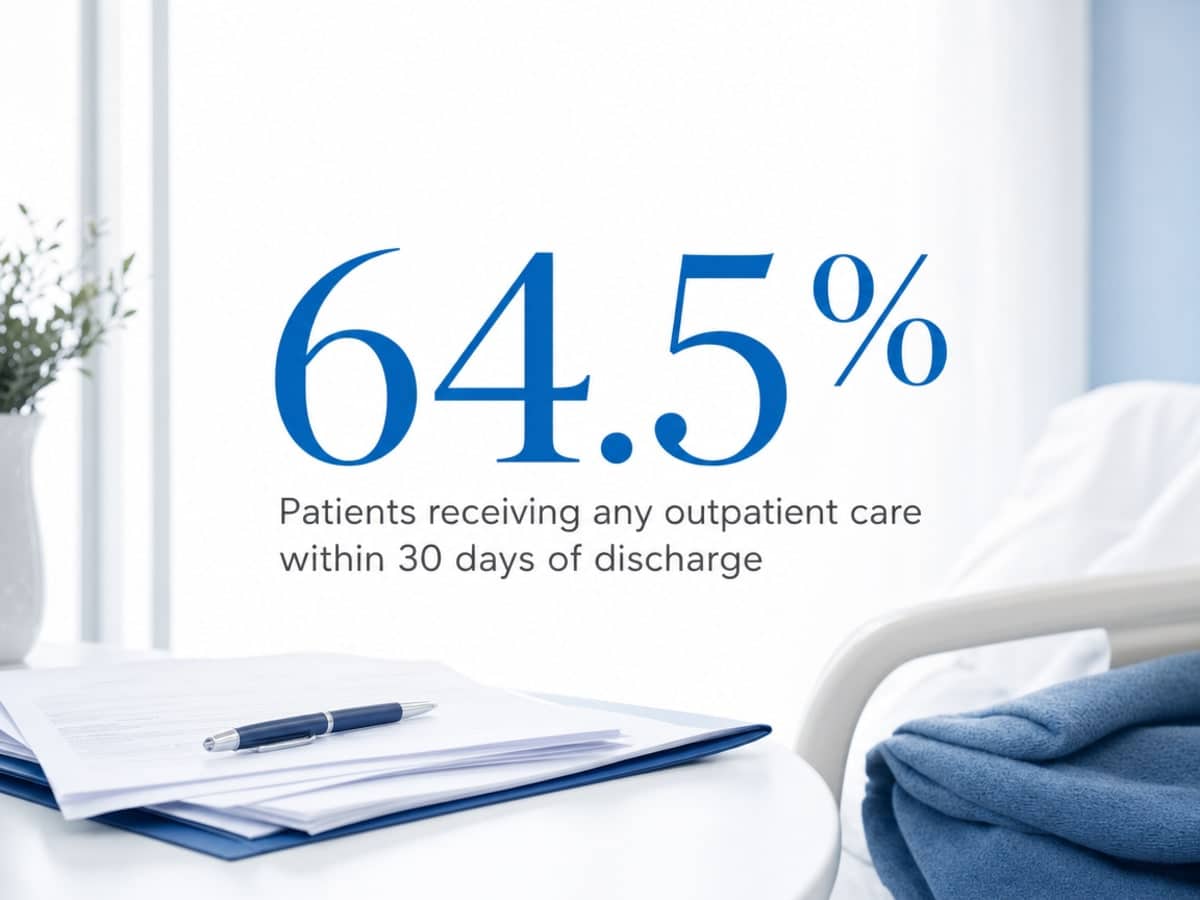
The reason is in the data. In a cohort of 49,319 patients who received any outpatient care within 30 days of psychiatric discharge, those seen within seven days had an adjusted hazard ratio for suicide of 0.82 (95% CI, 0.80–0.83) compared with patients who had no care within 30 days 2. That is a meaningful reduction tied to a scheduling decision. And the gap is wider than it looks on paper: only 64.5% of patients in that same study received outpatient care within 30 days at all 2. More than a third did not. A referral slip in a folder is how people end up in that third.
Ask the inpatient team to book the appointment while you are still there. If scheduling cannot be done from the unit, ask for the name of the staff member who will call, and a time window. Put the appointment in your phone and on paper. Confirm transportation before you leave. If the first available opening is two or three weeks out, say so plainly and ask what bridge contact, phone check-in, or step-down program can hold the week in between. That gap is exactly where the plan quietly falls apart, and asking the question out loud is often what gets it filled.
Medication continuity: the gap between a written prescription and a swallowed pill
Here is the quiet failure mode nobody warns you about: the discharge papers list the right medications, the prescriptions are sent to the pharmacy, and somewhere between the parking lot and next Tuesday, the regimen falls apart. Maybe the pharmacy doesn’t have the long-acting injectable in stock. Maybe the prior authorization for the new antipsychotic hasn’t cleared. Maybe the side effects at day four are rough enough that your person quietly stops taking one of the pills and doesn’t tell anyone. Maybe no one explained that the dose from the hospital is different from the dose on the old bottle still in the medicine cabinet.
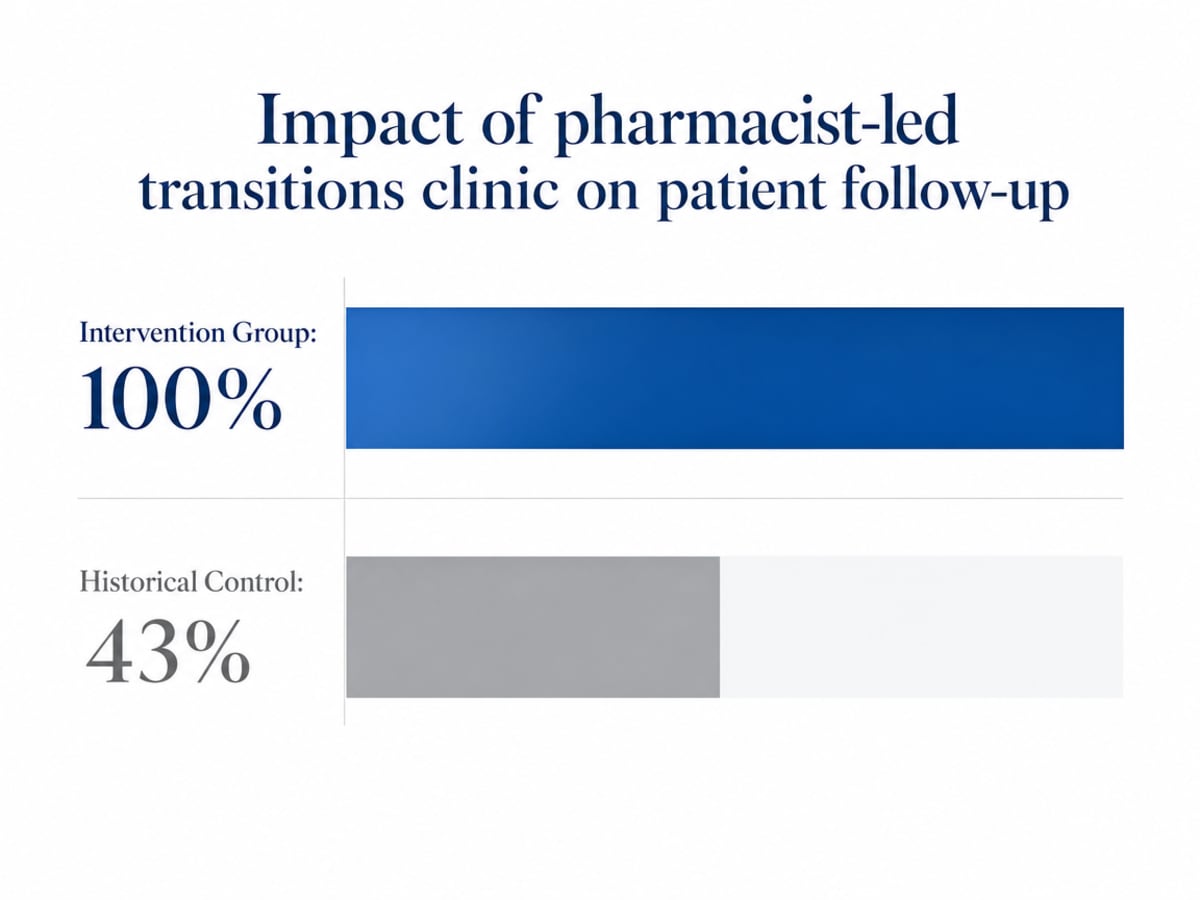
A pilot study of a pharmacist-led telemental health transitions clinic put real numbers on what closing the gap looks like. Patients in the pharmacist-led intervention group reached a medication possession ratio above 0.8 within 90 days at a rate of 100%, compared with 43% in the historical control group. The same intervention group received mental-health follow-up within 14 days at 100%, compared with 43% in the control 7. It was a small pilot with historical controls, not a definitive trial, but the direction is useful: a dedicated clinician making calls, reconciling pills, and checking tolerability moved both numbers from “fewer than half” to “nearly everyone.”
You can borrow that structure even if your care team doesn’t offer it formally. In the first week home, lay the bottles out on the counter and compare them line by line against the written discharge list. Call the prescribing team if anything doesn’t match, including dose changes, discontinued medications, or anything missing. Ask the pharmacy directly whether every prescription is in stock and whether any of them need prior authorization that is still pending. If a refill is going to come due before the first outpatient appointment, raise that now, not the day you run out.
Watch for the quiet drop-off. Side effects that show up in days three through ten are the ones most likely to end a regimen without a conversation. Nausea, sedation, restlessness, sexual side effects, the flat feeling that makes someone wonder if the medicine is working at all. None of these are reasons to stop a psychiatric medication on your own. All of them are reasons to call the prescriber the same day. Multicomponent discharge programs that include medication reconciliation and patient education have shown absolute readmission reductions in the range of 13.6% to 37.0% in a systematic review of 15 studies 8. The ingredient list matters, and medication is on it.
Celebrate the small wins here, because they are clinical wins. The first filled prescription. The first week of doses taken on schedule. The first honest conversation with a prescriber about a side effect instead of a silent discontinuation. Those are not small. Those are the plan working.
Days 1 through 7: the week that decides the next three months
Build the safety plan into daily life, not a folder
The safety plan does its job when it lives where you actually are at 2 a.m., not inside a discharge binder on the hall table. Take the written plan out of the packet on day one. Copy it. Put one page on the refrigerator, one in a bedside drawer, one in your wallet or phone notes. If a chosen support person is going to be a first call, hand them a copy too, and read it together so they are not seeing it for the first time during a hard hour.
The Safety Planning Intervention is built to be specific: your triggers, your early warning signs, the coping steps that have actually helped you before, and the exact people and services to contact as things escalate 16. Generic is not the point. If the plan says “call a friend” without a name, write the name. If it says “use a coping skill,” write the two or three skills you will actually try first, in order.
Walk through the plan out loud this week while things are relatively calm. Rehearsing it when you don’t need it is how you remember it when you do.
What family and chosen support people should actually do
If you are the family member or chosen support person reading this, your job this week is not to be a therapist. It is to be the person who notices and the person who makes the calls your loved one is too tired to make.
Concretely, that looks like:
- knowing where the medications are and whether they got taken each day,
- having the clinic number and the on-call number saved in your phone before you need them,
- keeping the first appointment on a shared calendar,
- and driving or arranging the ride so transportation is not the reason it gets missed.
Ask the treatment team directly to include you in planning while you are still on the unit, and request your own copy of the safety plan so you are working from the same page 15.
Check in daily, briefly and without interrogation. “How did today feel on a scale of one to ten” is often more useful than “are you okay.” If the number drops two points in a day, that is information worth a phone call to the care team.
Days 8 through 30: stabilizing without disappearing from care
The second week is where the plan quietly gets tested. The acute crisis has eased, the household is tired, and the natural pull is to treat “doing better” as proof the hard work is over. It isn’t. The elevated risk window extends well past the first week, with the first three months showing a pooled post-discharge suicide rate of 1,132 per 100,000 person-years in one systematic review 3. Feeling steadier is not the same as being out of the window.
The task for days 8 through 30 is simple to describe and surprisingly easy to drop: keep care continuous. That means the first outpatient appointment actually happens, a second contact is on the calendar before the first one ends, and someone on the team hears from you between visits if anything shifts.
Build the week around a few anchors. A medication check-in by phone or portal message by day ten, especially if the regimen was adjusted at discharge. A kept outpatient appointment within the first seven to fourteen days. A short daily routine your person can lean on when motivation is thin: the same wake time, one meal eaten with another person, a 15-minute walk, medications taken at the same hour. These are not self-care platitudes. They are the scaffolding that keeps the plan from collapsing when energy dips.
Watch for the no-news drift. Missed appointments, unanswered messages from the clinic, a quiet week where no one has actually laid eyes on your person — those are not neutral. Multicomponent transitional programs that include active outreach, care coordination, and communication between inpatient and outpatient providers have shown absolute readmission reductions in the 13.6% to 37.0% range, though reviews of newer randomized trials have found more mixed pooled results 8, 11. The honest read is that no single tactic guarantees stability, but the common ingredient across the programs that help is that someone keeps reaching in. If no one is reaching in, you reach out. Call the clinic. Reschedule the missed visit the same day. Ask for a bridge contact if the next opening is more than a week away. Finishing day 30 with care still in motion is the goal — not a perfect month, just an unbroken one.
When one condition is really two: dual-diagnosis handoffs
If your person was admitted for a psychiatric crisis but also drinks heavily, uses opioids, or has been managing a stimulant pattern no one talked about on the unit, the standard discharge plan may only solve half the problem. A referral to an outpatient psychiatrist and a separate referral to a substance use program is not the same as a plan. It is two plans, and the gap between them is where people fall.
SAMHSA is direct about this: integrated care, in which mental health and substance use disorders are treated concurrently by the same team, is the preferred model for co-occurring disorders 17. Treating one condition this month and the other next month, or asking the patient to carry messages between two clinics that do not talk to each other, leaves both diagnoses under-managed during the exact window when both are most volatile. The SAMHSA evidence-based toolkit adds that integrated treatment is often a long-term commitment with intensity adjusted to need, not a short-term fix that ends when acute symptoms calm down 18.
Before discharge, ask directly: does the outpatient plan address both the psychiatric diagnosis and the substance use, in the same program, with the same team seeing both? If the answer is a referral to one clinic for medication and a different clinic for recovery groups, ask what single clinician is responsible for keeping those plans aligned, and how they will communicate. That one question changes what the first 30 days look like.
One psychiatric team vs. the fragmented handoff
The usual version of post-discharge care looks like this: the inpatient team stabilizes your person over a week or two, writes a plan, and hands them off to an outpatient clinic where a new psychiatrist, a new therapist, and a new intake coordinator will meet them for the first time, sometimes three weeks later. The people who understand the current medication trial, the recent crisis, and the specific triggers are no longer the people making decisions. The chart travels, but the clinical memory doesn’t.
Single-team continuity flips that. The same psychiatric team that admitted your person stays responsible through stabilization and into outpatient follow-up. The medication work started inpatient keeps going without a reset. The therapist who heard the trauma history the first time is the one in the room the next time. Nothing has to be re-explained during the week it is hardest to re-explain anything.
Be honest about what the evidence does and doesn’t say here. Critical Time Intervention, a time-limited bridge model, reduced rehospitalization in one study of people leaving institutional care 13. But a 2024 review of transitional discharge interventions for schizophrenia found no clear evidence for or against them on readmission 10. Continuity of team is not a guarantee. It is a design choice that removes a specific failure mode — the stranger-at-the-first-appointment problem — during the window where that failure mode matters most. ViewPoint Dual Recovery accepts patients directly after hospitalization and keeps one psychiatric team on the case from admission through outpatient care. If that structure fits your situation, ask about it before discharge day, not after.
How to tell when it’s time to escalate
You will not always know whether what you are seeing is a bad day or a signal. That uncertainty is normal. The rule that helps most families: when in doubt, call. The clinic would rather hear from you on a Tuesday afternoon than meet you in an emergency room on Friday night.
Some shifts are clear enough to act on without debate:
- New or returning suicidal thinking, especially with a plan or access to means.
- A missed dose pattern that has stretched into days.
- A sudden stop in sleep, or a stretch of sleep that will not end.
- Paranoia, voices, or disorganized thinking that was not there last week.
- Drinking or using again after a period of not.
- A quiet withdrawal from the people and routines that had been holding the week together.
Any of these warrants a same-day call to the prescribing team or the on-call line listed in the safety plan 16.
Clarify Your Next Step After Hospital Discharge
Get expert guidance on post-discharge psychiatric care tailored to your complex clinical needs.
Frequently Asked Questions
How soon after discharge should the first outpatient appointment happen?
Within seven days is the target worth fighting for. In a cohort study, patients seen within seven days of discharge had an adjusted hazard ratio for suicide of 0.82 compared with patients who had no care within 30 days 2. If the first opening is further out, ask the inpatient team for a bridge contact or phone check-in to hold the gap.
What should I do if the prescription from the hospital can’t be filled right away?
Call the prescribing team the same day. A pharmacy stockout, a pending prior authorization, or a mismatched dose is a clinical problem, not a paperwork problem. Ask whether a short bridge supply can be sent to a different pharmacy, whether a temporary substitute is appropriate, and when the original medication will be available. Do not skip doses while waiting.
What belongs in a written safety plan, and where should it live at home?
A usable safety plan names your specific triggers, early warning signs, coping steps that have actually helped before, and the people and crisis numbers to call as things escalate 16. Keep copies where you spend time at 2 a.m.: on the refrigerator, in a bedside drawer, in your phone. Give a copy to the support person who may be a first call.
How do I know when to go back to the emergency room instead of waiting for the next appointment?
Go to the ED, or call 988, when safety cannot be held at home: active suicidal intent, a specific plan, access to a method, or distress neither of you can ride out until morning. For new voices, severe paranoia, a sudden stop in sleep, or returning self-harm, call the on-call line first — the clinic can often triage before an ED trip.
What if my loved one has both a psychiatric diagnosis and a substance use problem?
Ask for integrated care, not two separate referrals. SAMHSA identifies integrated treatment — mental health and substance use addressed concurrently by the same team — as the preferred model for co-occurring disorders 17. If the plan sends you to one clinic for medication and another for recovery groups, ask which single clinician is responsible for keeping both plans aligned.
Is it better to stay with the same psychiatric team or transfer to a new outpatient provider?
Continuity removes the stranger-at-the-first-appointment problem during the window where that matters most. The evidence on specific transitional models is mixed — a 2024 review of transitional discharge interventions for schizophrenia found no clear readmission benefit 10— so continuity is a design choice, not a guarantee. If one team can carry your person from admission through outpatient care, ask about it before discharge.
References
- Meta-analysis of suicide rates in the first week and the first month after psychiatric hospitalisation. https://pubmed.ncbi.nlm.nih.gov/30904843/
- Follow-Up Timing After Discharge and Suicide Risk Among Patients With Psychiatric Illness. https://pubmed.ncbi.nlm.nih.gov/37812420/
- Suicide Rates After Discharge From Psychiatric Facilities: A Systematic Review and Meta-analysis. https://pubmed.ncbi.nlm.nih.gov/28564699/
- Suicidal Risk Following Hospital Discharge: A Review. https://pubmed.ncbi.nlm.nih.gov/31274577/
- Premature Death, Suicide, and Nonlethal Intentional Self-Harm After Psychiatric Hospitalization. https://pubmed.ncbi.nlm.nih.gov/38922620/
- Suicide following discharge from inpatient psychiatric care: A retrospective case control study. https://pubmed.ncbi.nlm.nih.gov/40706278/
- Pharmacist-led telemental health transitions of care clinic improves antidepressant medication continuity posthospitalization. https://pubmed.ncbi.nlm.nih.gov/33224695/
- Transitional interventions to reduce early psychiatric readmissions in adults: systematic review. https://pubmed.ncbi.nlm.nih.gov/23457182/
- Effectiveness of Transitional Interventions in Improving Post-Hospital Care in Severe Mental Illness: A Systematic Review and Meta-Analysis. https://pubmed.ncbi.nlm.nih.gov/32038320/
- Transitional discharge interventions for people with schizophrenia. https://pubmed.ncbi.nlm.nih.gov/39212182/
- Effectiveness of Interventions After Psychiatric Hospitalization. https://pubmed.ncbi.nlm.nih.gov/41320836/
- Interventions to improve discharge from acute adult mental health inpatient care to the community: a systematic review. https://pubmed.ncbi.nlm.nih.gov/31760955/
- The impact of critical time intervention in reducing psychiatric rehospitalization among people with severe mental illness. https://pubmed.ncbi.nlm.nih.gov/22810163/
- Effective Treatment for Persons with Co-Occurring Disorders. https://www.mass.gov/doc/effective-treatment-for-persons-with-co-occurring-disorders/download
- Steps to take after the suicide attempt of a Veteran loved one One-Pager. https://www.mentalhealth.va.gov/suicide_prevention/docs/Support_After_an_attempt_One_Pager_508.pdf
- The Safety Planning Intervention. https://www.mirecc.va.gov/MIRECC/visn19/safety-planning/index.asp
- Substance Use Disorder Treatment for People with Co-Occurring Disorders. https://library.samhsa.gov/sites/default/files/pep20-06-04-006.pdf
- Integrated Treatment for Co-Occurring Disorders: Building Your Program. https://library.samhsa.gov/sites/default/files/ebp-kit-building-your-program-10112019.pdf