Key Takeaways
- Episode duration and triggers separate the two conditions more reliably than symptom lists: BPD shifts last hours to days and track interpersonal events, while bipolar episodes run days to weeks and persist regardless of relational cues 10, 11.
- Identity disturbance and relationship instability are BPD’s distinctive fingerprint; bipolar self-concept distorts during episodes but returns to baseline, whereas the BPD version does not have that return address 10, 3.
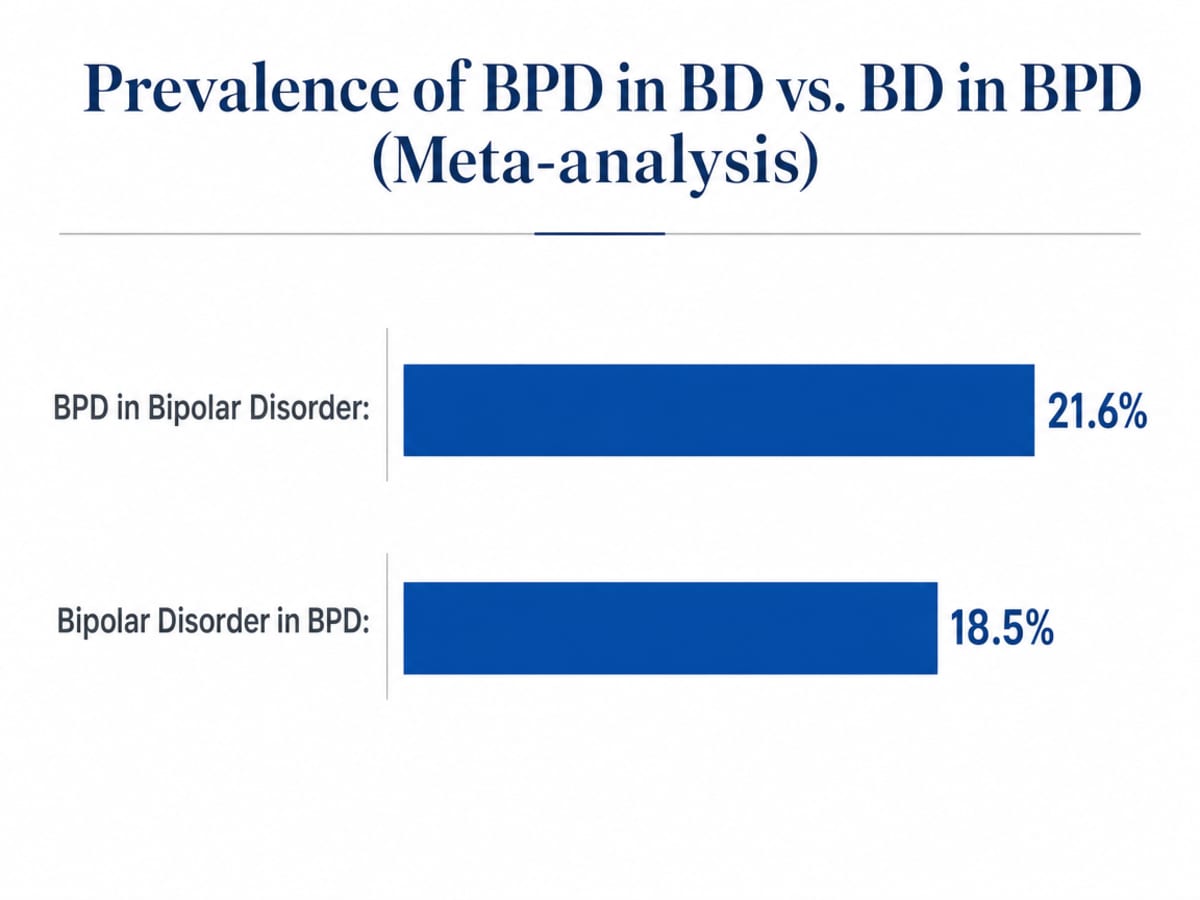
- Comorbidity is the baseline expectation, not an edge case, with BPD present in about 21.6% of bipolar patients and bipolar disorder present in about 18.5% of BPD patients 6.
- When both diagnoses are present, suicide risk stacks additively and the BPD contribution often outweighs the bipolar one, so safety planning must address interpersonally triggered crises alongside episode history 8, 9.
- Accurate treatment follows accurate formulation: bipolar disorder needs sustained pharmacotherapy, BPD responds primarily to structured psychotherapy like DBT or schema therapy, and dual presentations require both tracks running in parallel 12, 13, 14.
When the Diagnosis Keeps Changing but the Suffering Doesn’t
You already know the pattern. A diagnosis arrives, a prescription follows, the symptoms don’t quite fit the box, and six months later a new clinician floats a different label. By the time you’ve cycled through SSRIs, a mood stabilizer or two, maybe an atypical antipsychotic, the question stops being which medication and starts being which diagnosis actually explains what’s happening.
That question matters more than it gets credit for. In a study of 610 psychiatric outpatients assessed with structured diagnostic interviews, nearly 40% of patients who met DSM-IV criteria for borderline personality disorder and reported a previous bipolar diagnosis did not actually meet structured-interview criteria for bipolar disorder, compared with slightly more than 10% of patients without BPD 5. That gap is not a rounding error. It describes a sizable group of people being treated for an illness they may not have, while the condition driving their instability goes unaddressed.
If some version of that has happened to you or someone you support, the frustration is legitimate. Treatment resistance is often framed as a pharmacologic problem, as though the next molecule will finally be the right one. Sometimes the resistance is actually a formulation problem. The medications aren’t failing a disorder; they’re being aimed at the wrong one, or at only half of what’s present.
This article is written for readers who are past Psychiatry 101. The sections ahead focus on the differentiators that change clinical decisions: the shape of mood episodes, interpersonal reactivity, identity disturbance, how comorbidity presents, and what accurate reassessment and matched treatment actually look like. Being told your previous diagnosis may have been incomplete is heavy news. It is also, honestly, one of the most useful openings you have.
The Shape of Mood: Episode Duration and What Triggers a Shift
If there is a single clinical question that separates these two conditions more reliably than any other, it is this one: how long does a mood state last once it arrives, and what set it off? The DSM criteria matter, but duration and trigger pattern will tell you more at the bedside than any symptom checklist.
Bipolar episodes are built on time. A hypomanic episode requires at least four consecutive days of persistently elevated or irritable mood plus increased energy; a manic episode requires at least a week, or any duration if hospitalization is needed. Depressive episodes in bipolar disorder generally last weeks to months. The National Institute of Mental Health characterizes bipolar disorder as organized around these sustained mood episodes rather than reactive shifts, and emphasizes that treatment is usually lifelong because the illness is chronic or episodic 11. When you look back at a true bipolar episode, you can usually mark it on a calendar.
BPD mood states operate on a different clock. NIMH describes BPD episodes as commonly lasting from a few hours to a few days, and critically, they occur without the sustained elevation in mood or energy that defines mania or hypomania 10. You might feel fine at breakfast, drop into a desperate low by lunch after a text message you read as rejection, and feel reasonably steady again by evening. The ceiling and floor are both reached quickly, and they move again quickly.
Triggers matter too. BPD mood shifts are typically reactive, almost always keyed to something interpersonal: a perceived slight, a canceled plan, a shift in someone’s tone of voice. Bipolar episodes can be stress-sensitive, especially around sleep disruption or seasonal change, but they do not usually track moment-to-moment relational events. A hypomanic week does not evaporate because a friend returned your call. A BPD mood crash often does.
A systematic review comparing the two conditions found that depressive symptoms tend to emerge earlier in BPD, while bipolar disorder is more strongly characterized by manic or mixed features, even as the authors acknowledged substantial symptom overlap 1. Hold both of those facts at once. The phenomenology differs in characteristic ways, and the overlap is real enough that duration and trigger pattern deserve the weight you give them.
Identity, Relationships, and the Interpersonal Fingerprint of BPD
Duration tells you about the mood. Identity and relationships tell you about the person carrying it. This is where BPD leaves its most distinctive fingerprint, and where bipolar disorder, even in its most severe presentations, typically does not.
Identity disturbance in BPD is not ordinary self-doubt. The National Institute of Mental Health describes it as a persistently unstable sense of self, often accompanied by chronic feelings of emptiness, shifting values and goals, and a tendency to see yourself through whichever relationship happens to be defining the moment 10. You may find that your sense of who you are reorganizes depending on who is in the room. In bipolar disorder, self-concept can distort during a manic or depressive episode, grandiose during the high, worthless during the low, but it tends to return to a recognizable baseline between episodes. The BPD version does not have that return address.
Relationships carry the same signature. Intense, idealized attachments can collapse into equally intense disappointment over something a stable observer might consider minor. Fear of abandonment, real or anticipated, drives much of the behavior, and the mood shifts described earlier almost always key to this relational channel. A diagnostic review of BPD emphasizes that this interpersonal pattern, combined with identity disturbance, is what distinguishes BPD from major depression, bipolar disorder, and PTSD even when surface symptoms overlap 3. If the instability organizes itself around other people, that is clinically meaningful information.
Why Bipolar II Is the Hardest Call
Bipolar I usually declares itself. A full manic episode, with its grandiosity, pressured speech, impulsive spending, and sometimes psychosis, is hard to miss and hard to confuse with anything else. Bipolar II is a different story, and this is where the diagnostic ambiguity with BPD lives.
Hypomania is subtler. It can look like a few unusually productive days, elevated or irritable mood that friends might call being in a mood, less need for sleep, and a jumpier quality of thinking. The depressive episodes in bipolar II, by contrast, are often prolonged and severe. So you have a presentation dominated by depression, punctuated by shorter, less dramatic highs that the person themselves may not flag as abnormal. Now add emotional reactivity, impulsive behavior, and relationship chaos, and the clinical picture starts to look very much like BPD.
The epidemiology confirms the overlap. A narrative review of BPD comorbidity in bipolar disorder reports that BPD occurs in roughly 20% of people with bipolar II, compared with about 10% of those with bipolar I 7. That is a meaningful difference. In a bipolar II population, nearly one in five patients also carries BPD features, which means the clinician in front of you is looking at two overlapping symptom sets at the same time and trying to decide which is primary, which is secondary, and whether both are driving the presentation.
What this means practically: if your diagnosis has moved between bipolar II and BPD over the years, that is not necessarily a sign of careless assessment. It is a sign that the presentation sits in genuinely contested territory. The way through is not another coin flip between labels but a longitudinal view, which is exactly what the next section on comorbidity, and later the section on reassessment, will build toward.
Comorbidity Is the Rule, Not the Exception
One of the most useful mental adjustments you can make about these two diagnoses is to stop treating them as mutually exclusive. The either/or framing feels tidy, but it does not match what the data actually show. When clinicians and researchers run the numbers across large pooled samples, the two conditions co-occur at rates that make comorbidity the baseline expectation rather than an unusual complication.
A meta-analysis synthesizing 42 papers on BPD and bipolar disorder found that among 5,273 people with bipolar disorder, BPD was present in an estimated 21.6% (95% CI 17.0–27.1). Looking from the other direction, among 1,814 people with BPD, bipolar disorder was present in an estimated 18.5% (95% CI 12.7–26.1) 6. The symmetry is worth sitting with. Roughly one in five people on each side of the diagnostic line also meets criteria for the other condition. That is not a rare clinical curiosity. That is a planning assumption.
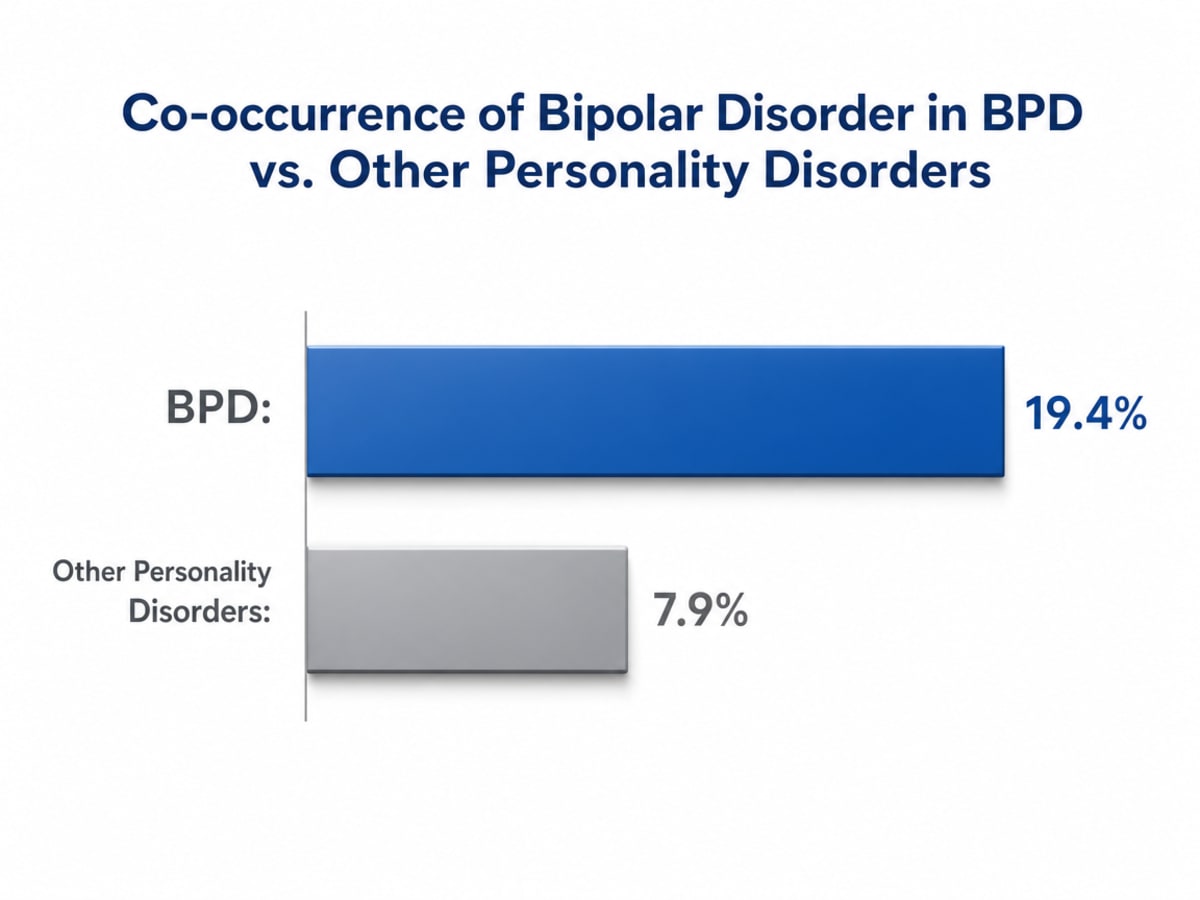
A separate four-year prospective study of 196 patients with BPD and 433 patients with other personality disorders adds depth to the picture. Bipolar disorder co-occurred in 19.4% of patients with BPD, compared with 7.9% of patients with other personality disorders 4. In other words, BPD meaningfully raises the probability that bipolar disorder is also present, more than you would expect from base rates across the personality disorders generally.
Suicide Risk When Both Diagnoses Are in Play
This is the section that deserves your full attention, because the risk arithmetic changes when both conditions are present, and the clinical response has to change with it.
Start with the baseline. In a six-month prospective cohort study tracking depressive, bipolar depressive, and BPD presentations, suicide attempts occurred in 22.2% of participants with BPD compared with 4.23% of participants without BPD, and BPD severity itself correlated with both attempt risk and clinically significant suicidal ideation 9. That is roughly a fivefold difference over half a year, and it reframes BPD from a diagnosis that sometimes gets dismissed as behavioral to one that carries acute medical risk on par with the mood disorders it is often confused with.
Now layer the two conditions. A narrative review of comorbid BPD in bipolar disorder reports an odds ratio of 1.418 for suicidality in bipolar patients who also meet BPD criteria compared with those who do not 7. The Rhode Island MIDAS project, which assessed 3,465 psychiatric outpatients using semistructured interviews, found that patients with both bipolar disorder and BPD were significantly more likely to have made a prior suicide attempt than bipolar patients without BPD, and concluded that the co-occurrence conferred additive risk, with the contribution of BPD greater than that of bipolar disorder 8. Translated into plain clinical terms: when both diagnoses are present, each one stacks on top of the other, and the BPD piece is doing more of the work than clinicians sometimes assume.
What this means for you is practical, not abstract. If a treatment plan has been built around bipolar disorder alone while BPD features have been dismissed as secondary, the risk estimate underlying that plan is probably too low. A thorough safety assessment should ask about interpersonally triggered crises, self-harm patterns, and dissociation, not just episode history and medication adherence. Risk is not a diagnostic label; it is a function of what is actually present.
What an Accurate Reassessment Actually Involves
If you’ve been through several diagnostic revisions already, the word reassessment probably lands somewhere between tedious and triggering. A good one is different from what you’ve likely experienced in a 20-minute medication check. It is longer, more structured, and more interested in your history than in your current symptom list.
- Start with the structured interview. The misdiagnosis finding that opened this article, that nearly 40% of BPD patients carrying a prior bipolar label did not meet structured-interview criteria for bipolar disorder 5, came out of exactly this kind of assessment. Instruments like the SCID or the DIPD-IV walk a clinician through criteria systematically rather than relying on pattern recognition from a brief visit. Screening tools have a supporting role, not a replacement one. The VA/DoD 2023 guideline for bipolar disorder recommends instruments such as the Mood Disorder Questionnaire, the Bipolar Spectrum Diagnostic Scale, or the Hypomania Checklist as supports to clinical decision-making when bipolar disorder is suspected, not as stand-alone diagnostic tests 12. One review found that selected MDQ items distinguished bipolar disorder from BPD with 88.7% sensitivity and 81.4% specificity 2, which is useful but not definitive on its own.
- Longitudinal observation. A single appointment cannot see the shape of a mood episode. A reassessment worth your time will ask you, or someone who has known you across months, to map the arc: when did the elevation or depression start, how long did it last, what preceded it, what resolved it. Daily or weekly mood charting over several weeks often reveals more than any questionnaire.
- Collateral history. If a partner, parent, or longtime friend can speak to what they have observed, especially around sleep, energy, and behavior during presumed hypomanic periods, that account can confirm or revise what self-report alone misses. People in a hypomanic state frequently do not experience it as abnormal.
- A trauma and substance-use history that is actually taken seriously. Both can mimic or amplify features of either diagnosis, and both change what the right treatment looks like. A clinician who skips this layer is building the formulation on an incomplete foundation.
Walking into this process is uncomfortable. You may be asked to revisit material you have told other clinicians three times already. The payoff is a formulation that finally accounts for what is actually there, which is the only ground on which a treatment plan can start to work.
Treatment That Matches the Formulation
Once the formulation is accurate, the treatment plan stops being a series of trials and starts being a response to what is actually there. Different conditions respond to different interventions. The sections below walk through what the evidence supports for each presentation, and what changes when both are in play.
Episode-Based Pharmacotherapy for Bipolar Disorder
Bipolar disorder is a pharmacologic illness in a way that BPD is not. The treatment logic organizes around preventing and shortening episodes, then holding stability between them. The 2023 VA/DoD clinical practice guideline recommends lithium or quetiapine as monotherapy options for acute mania and for recurrence prevention in specified circumstances, and treats maintenance pharmacotherapy as the backbone of long-term care 12. NIMH similarly describes bipolar disorder as chronic or episodic and usually requiring lifelong treatment, with mood stabilizers and atypical antipsychotics as the common classes and lithium noted for its effect on suicide risk 11.
What this means in practice: a bipolar formulation justifies committing to a mood stabilizer across years, not months, and tolerating the lab monitoring and side-effect management that comes with it. Antidepressant monotherapy is generally avoided because of switch risk. If your prior trials were a series of SSRIs without a stabilizer in place, that is relevant history to bring to the next appointment.
Structured Psychotherapy for BPD: DBT and Schema Therapy
BPD responds primarily to structured psychotherapy, and the evidence base is stronger than most people realize. A systematic review of dialectical behavior therapy for BPD covered 18 randomized controlled trials and 1,755 participants, with most studies supporting DBT’s effectiveness particularly for suicidality and self-injurious behaviors 13. Standard DBT is a demanding commitment, typically a year of weekly individual therapy, a weekly skills group, and between-session coaching, but the outcomes it targets are the ones that most reshape daily life: fewer self-harm incidents, fewer emergency visits, fewer hospitalizations.
DBT is not the only option. A randomized clinical trial directly comparing DBT with schema therapy in adults with BPD receiving intensive outpatient treatment found that at one-year naturalistic follow-up, the difference between the two was not statistically significant, and both groups showed substantial improvement, including among severely affected patients with comorbid disorders 14. If DBT has not been a fit, that is useful to know. Schema therapy, which works more deeply with early maladaptive patterns, is a legitimate alternative with evidence behind it. Medications may address co-occurring depression, anxiety, or sleep, but they are supportive, not primary.
Integrated Care When Both Diagnoses Apply
When both conditions are present, and the comorbidity data suggest this is the case for roughly one in five patients on either side of the diagnostic line 6, the treatment plan has to carry both at once. A mood stabilizer alone will not quiet the interpersonally triggered crises; a weekly skills group will not shorten a hypomanic episode. The pharmacologic track and the psychotherapy track run in parallel, not in sequence.
This is also where substance use, trauma history, and acute safety risk tend to compound the picture, and where fragmented outpatient care often cannot hold the complexity. Integrated psychiatric programs that coordinate medication management, structured psychotherapy, and co-occurring substance-use treatment under one clinical team, as ViewPoint Dual Recovery is built to do, give the formulation a place to actually be delivered. The goal is not more care. It is care that matches what is actually there.
Course and Prognosis: Reasons for Measured Optimism
If the earlier sections have landed heavily, this one is here to balance the ledger. The clinical course of both conditions is more hopeful than the acute presentation often suggests, and that matters because treatment-resistant readers sometimes carry an implicit assumption that the current state is the permanent state. It is not.
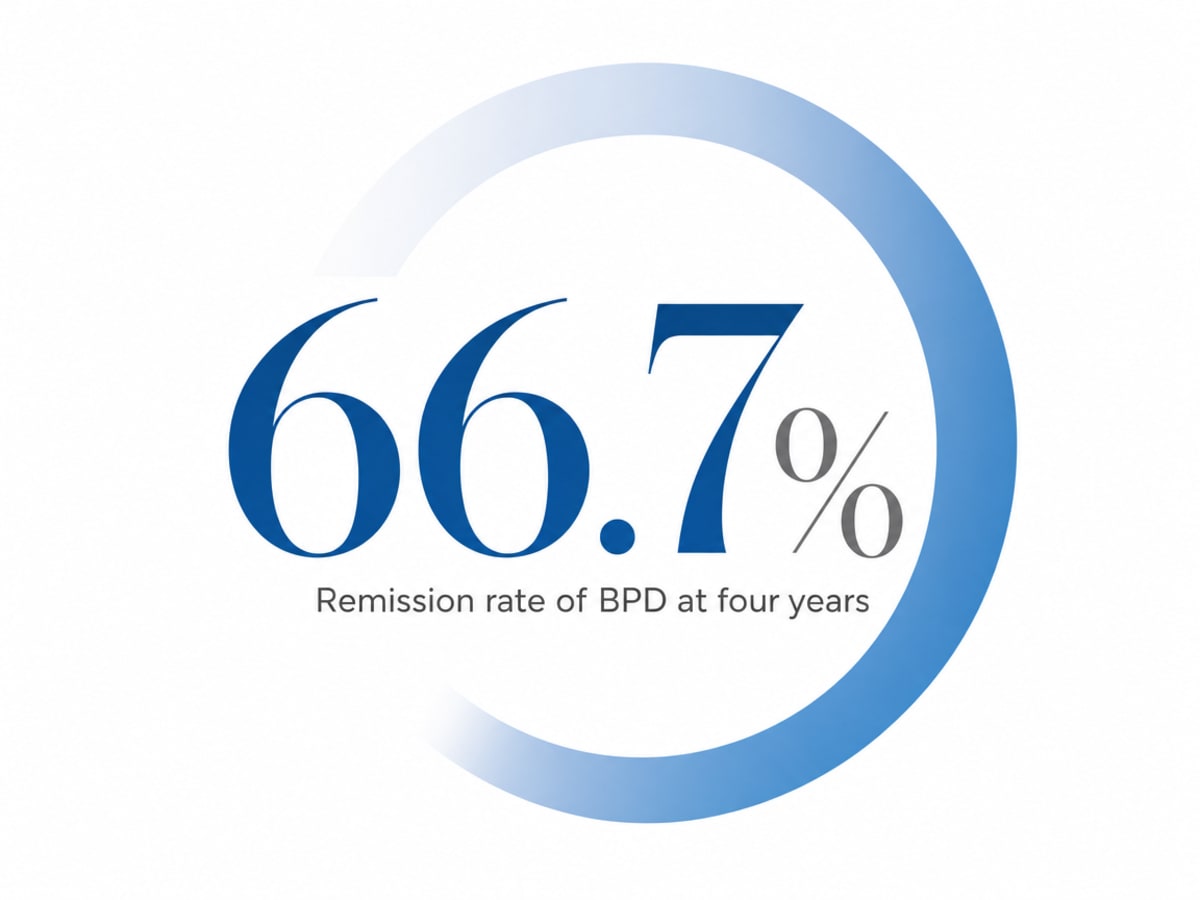
The four-year prospective study that tracked 196 patients with BPD found that roughly two-thirds, about 66.7%, experienced remission by the end of follow-up 4. That is not a cosmetic improvement. Remission in that research means no longer meeting diagnostic criteria. The same study found that only 8.2% of BPD patients developed a new bipolar diagnosis during the four years, which pushes back against the older framing of BPD as a reliable precursor to a bipolar outcome 4. Most people with BPD do not become bipolar. Most people with BPD get better.
Bipolar disorder follows a different arc. NIMH describes it as chronic or episodic, usually requiring lifelong treatment, with the realistic goal being long stretches of stability between episodes rather than a cure 11. That is a different kind of progress, but it is still progress. The work ahead is less about waiting for a verdict and more about measuring the right things over time.
What to Ask at Your Next Appointment
You don’t need a scripted monologue to walk into a reassessment appointment well-prepared. You need a short list of questions that force the formulation into the open, and the confidence to ask them without apology.
Try these:
- What specific criteria are you using to confirm or rule out bipolar disorder, and have I been assessed with a structured interview rather than a brief clinical impression?
- How are you distinguishing sustained mood episodes lasting days to weeks from the shorter, interpersonally reactive shifts that characterize BPD? 10, 11
- Have BPD features been formally evaluated, not just mentioned? Comorbidity is common enough that both diagnoses deserve direct screening 6.
- If both are present, how will the plan address pharmacotherapy and structured psychotherapy together, not in sequence?
- What is the current safety assessment, and does it account for interpersonally triggered risk, not just episode history?
You are allowed to ask these. A clinician who welcomes them is the kind of partner this process actually requires.
Clarify Diagnostic Overlap and Next Steps Now
Receive expert clinical insight to guide individualized treatment for complex mood and personality presentations.
Frequently Asked Questions
Can borderline personality disorder be misdiagnosed as bipolar disorder?
Yes, and more often than you might expect. In a study of 610 psychiatric outpatients assessed with structured diagnostic interviews, nearly 40% of patients with BPD who reported a prior bipolar diagnosis did not meet structured-interview criteria for bipolar disorder 5. If your treatment history has been built on an unconfirmed label, that is worth revisiting with a thorough reassessment.
How long do mood shifts last in BPD compared to bipolar disorder?
BPD mood states typically last from a few hours to a few days and tend to shift in response to interpersonal events 10. Bipolar episodes are longer and more sustained: hypomania requires at least four consecutive days, mania at least a week, and depressive episodes often run for weeks or months 11. Duration is one of the most reliable differentiators.
Can someone have both borderline personality disorder and bipolar disorder at the same time?
Yes, and comorbidity is common enough that assessment should actively look for it. A meta-analysis of 42 papers estimated BPD in 21.6% of people with bipolar disorder and bipolar disorder in 18.5% of people with BPD 6. If both are present, the treatment plan has to address pharmacologic episode management and structured psychotherapy together, not as an either/or decision.
Does treatment change if I have BPD instead of bipolar disorder?
Substantially. Bipolar disorder is managed primarily with mood stabilizers or atypical antipsychotics, often as long-term maintenance 11, 12. BPD responds primarily to structured psychotherapy; a systematic review of 18 randomized controlled trials and 1,755 participants supports dialectical behavior therapy, particularly for suicidality and self-injury 13. If your prior care has leaned entirely on medication, that mismatch alone can explain a lot.
Why is bipolar II so often confused with BPD?
Hypomania in bipolar II is subtler than full mania, and the depressive episodes are often prolonged, so the surface presentation can look like reactive mood instability. A narrative review estimates BPD in roughly 20% of bipolar II cases versus around 10% of bipolar I 7. The overlap is genuine, which is why longitudinal observation matters more than any single-visit impression.
What should a thorough reassessment include if I suspect my diagnosis is wrong?
A structured diagnostic interview rather than a brief clinical impression, longitudinal mood tracking across several weeks, collateral history from someone who has known you over time, and a serious trauma and substance-use history. Screening instruments like the Mood Disorder Questionnaire support but do not replace that process 12. The goal is a formulation that accounts for everything present, not just the loudest symptom.
References
- Clinical Features, Neuropsychology and Neuroimaging in Bipolar and Borderline Personality Disorder: A Systematic Review of Cross-Diagnostic Studies. https://pmc.ncbi.nlm.nih.gov/articles/PMC8220090/
- The Limits between Bipolar Disorder and Borderline Personality Disorder. https://pmc.ncbi.nlm.nih.gov/articles/PMC6787615/
- Diagnosing borderline personality disorder. https://pmc.ncbi.nlm.nih.gov/articles/PMC3494330/
- Descriptive and longitudinal observations on the relationship of borderline personality disorder and bipolar disorder. https://pubmed.ncbi.nlm.nih.gov/16816221/
- Borderline Personality Disorder and the Misdiagnosis of Bipolar Disorder. https://pmc.ncbi.nlm.nih.gov/articles/PMC2849890/
- The prevalence and predictors of bipolar and borderline personality disorders comorbidity: Systematic review and meta-analysis. https://pubmed.ncbi.nlm.nih.gov/26881339/
- Bipolar Disorder and Comorbid Borderline Personality Disorder: A Narrative Review. https://pmc.ncbi.nlm.nih.gov/articles/PMC6358827/
- Comorbid bipolar disorder and borderline personality disorder and suicide attempts. https://pubmed.ncbi.nlm.nih.gov/24256102/
- Borderline personality disorder and depression severity predict suicidal outcomes: A six-month prospective cohort study of depression, bipolar depression, and borderline personality disorder. https://pubmed.ncbi.nlm.nih.gov/37438939/
- Borderline Personality Disorder. https://www.nimh.nih.gov/health/publications/borderline-personality-disorder
- Bipolar Disorder. https://www.nimh.nih.gov/sites/default/files/health/publications/bipolar-disorder/bipolar-disorder_0.pdf
- VA DoD CPG for Management of Bipolar Disorder. https://www.healthquality.va.gov/guidelines/MH/bd/VA-DoD-CPG-BD-Full-CPGFinal508.pdf
- Efficacy of Dialectical Behavior Therapy in the Treatment of Borderline Personality Disorder: A Systematic Review of Randomized Controlled Trials. https://pmc.ncbi.nlm.nih.gov/articles/PMC10896753/
- The Effectiveness of Dialectical Behavior Therapy Compared to Schema Therapy for Borderline Personality Disorder: A Randomized Clinical Trial. https://pubmed.ncbi.nlm.nih.gov/38986457/