Key Takeaways
- Family involvement in an older parent’s psychiatric care is the norm, but your role is usually organizer and translator rather than decider, protecting the choices that remain theirs.
- Capacity is task-specific and rests on four clinical questions—understanding, appreciation, reasoning, and communication—so a refusal from a lucid parent carries weight even when it worries you.
- The first honest conversation works best when you describe specific behaviors without labels, then offer one small next step like a single evaluation rather than a full treatment plan.
- When a parent with intact capacity refuses, shift from winning this episode to building a safe-enough plan and preparing for the next one, using the dignity-of-risk framework 22.
- Use stable periods to complete a psychiatric advance directive and warning-signs plan, since directives are linked to a 25% reduction in compulsory admissions 13.
- Choose a program that reconciles the full medication list, builds family in structurally, uses shared decision-making, and owns the handoff to outpatient care after discharge.
- ViewPoint fits complex, treatment-resistant, or dual-diagnosis cases with on-site psychiatrists and integrated family care, but is not the right setting for memory care or mild outpatient needs.
When You’re the One Who Noticed First
You saw it before anyone else did. Maybe it was the third phone call in a week where your father sounded certain the neighbors were listening through the vents. Maybe your mother stopped answering her door, or started drinking again after twelve years dry, or told you flatly that she doesn’t need the lithium anymore because she feels fine. Maybe it’s quieter than that — she’s just not herself, and the primary care doctor keeps saying it’s normal aging.
You’re the one who noticed. That usually means you’re also the one who will have to do something about it, and you already know the job is heavier than it looks from the outside.
Helping an aging parent get psychiatric treatment is not the same as making a decision for them. It’s not a rehab intervention with a script. It’s a longer, quieter kind of work: adding structure, information, and follow-through your parent cannot manage alone right now, while protecting the parts of the decision that are still theirs to make. Sometimes that means booking an evaluation they agreed to reluctantly. Sometimes it means sitting with a refusal you disagree with and preparing for the next episode instead of forcing this one.
This guide is written for you — the adult child in your 40s, 50s, or 60s who is tired, probably arguing with a sibling, and trying to tell the difference between advocacy and overreach. You don’t need a lecture on what depression is. You need a way to move forward without losing your parent in the process.
What Your Role Actually Is (And Isn’t)
Family Involvement Is the Norm, Not Overreach
If part of you feels like you’re intruding by scheduling the appointment, calling the pharmacy, or asking the psychiatrist a pointed question, let that guilt go. Family involvement in the psychiatric care of an older parent is not the exception. It’s the pattern.
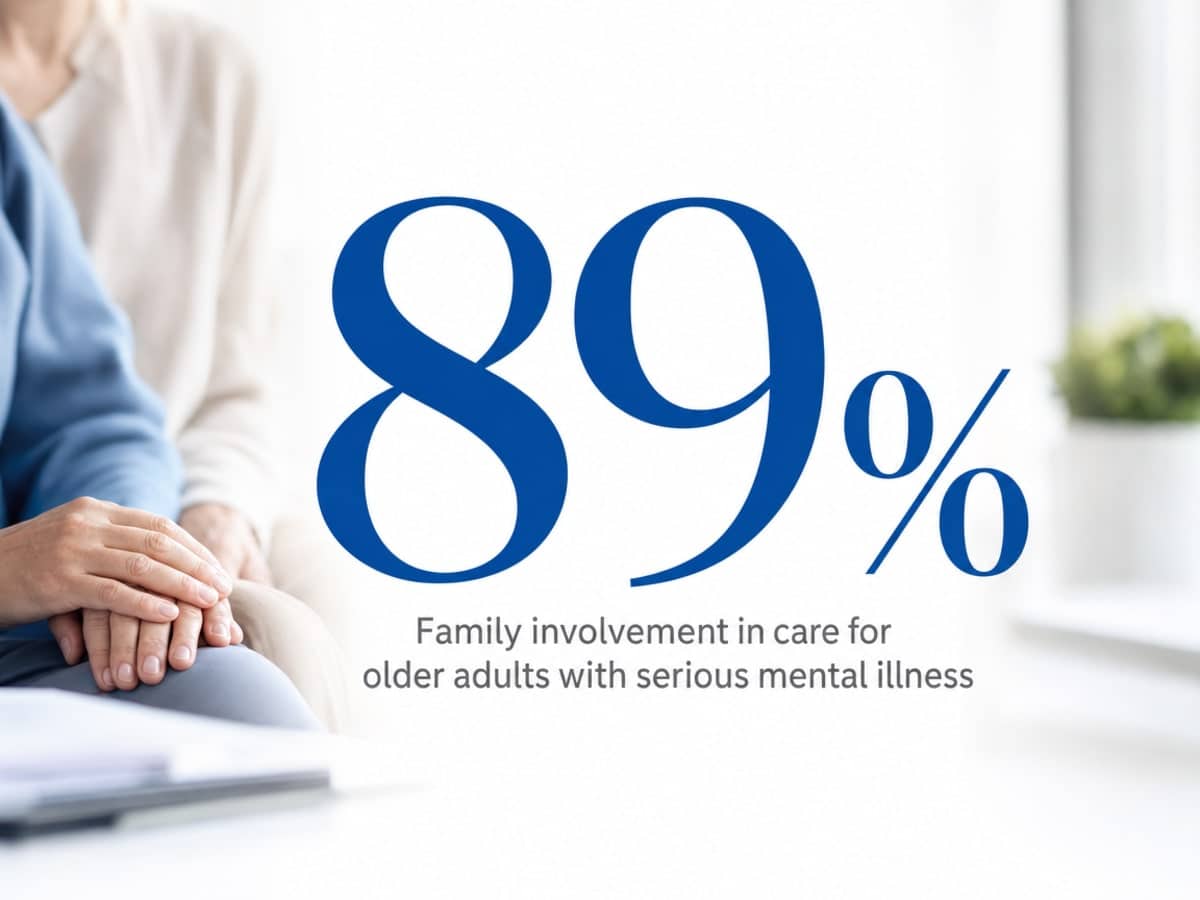
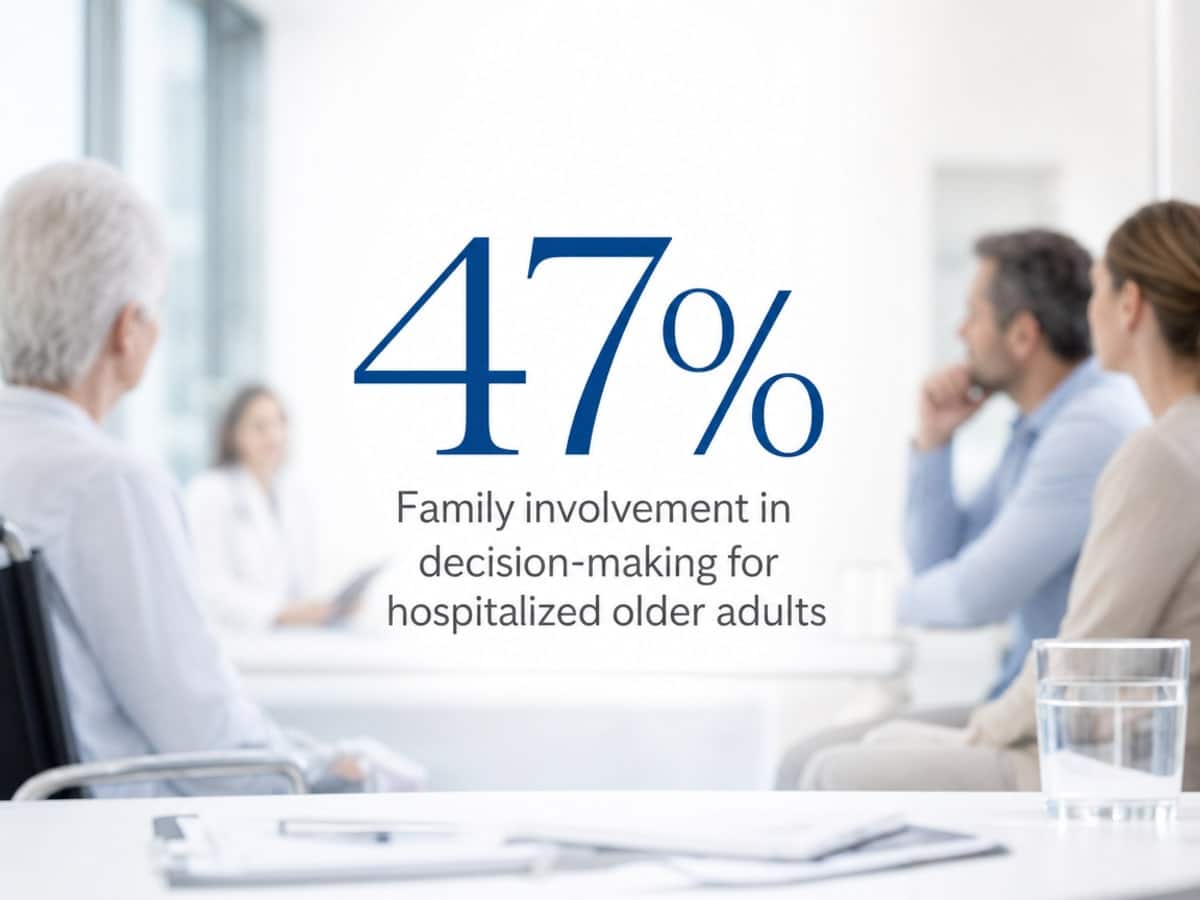
In a study of older adults living with serious mental illness, roughly 89% reported family involvement in at least one aspect of their care, and about 57% reported family participation in medical decision-making 7. Read those two numbers next to each other. Almost everyone has a family member in the picture somewhere — driving to appointments, refilling medications, noticing when something is off. Only a little more than half have family formally involved in the actual decisions. That gap is where most adult children live: doing the invisible work, but unsure whether they’re allowed at the table when it counts.
You are allowed. Clinicians who work with older adults with complex psychiatric conditions increasingly expect family to be part of care planning, and structured family-integrated care — active participation in planning, goal setting, and shared decisions — is treated as a feature of good treatment rather than a favor to relatives 10. For long-standing conditions like schizophrenia or bipolar disorder, family psychoeducation is part of what coordinated specialty care is supposed to include, not a bonus 15, 16.
So when you call the intake line and say, “I’m his daughter and I’ve been helping manage this,” you’re not overstepping. You’re describing the norm. The harder question is not whether you belong in the conversation. It’s how you show up in a way that adds to your parent’s voice instead of speaking over it.
The Uncomfortable Truth About Who Your Parent Wants Deciding
Here’s something most family-support articles skip, and it’s worth sitting with for a minute.
In a prospective study of psychiatric inpatients, most patients said they wanted their doctors — not their family — to make treatment and admission decisions on their behalf, and relatively few wanted a relative in that role 21. Your parent may love you. Your parent may trust you with a house key and a bank card. And your parent may still, quietly, want the psychiatrist to be the one calling the shots on the medication, the diagnosis, and the hospital stay.
That is not a rejection of you. It’s often a form of dignity. Adults who have spent decades being the parent do not always want their child to become the person who decides whether they take an antipsychotic. Naming this out loud can actually loosen the knot. “Dad, I’m not trying to take over. I want to help you get to the right doctor and understand what they say. You get to decide what you do with it.”
Your role, most of the time, is not decider. It’s organizer, translator, note-taker, and steady presence. You gather the medication list, remember the questions your mother wanted to ask, follow up on the referral no one called back about, and sit in the waiting room so she doesn’t have to do this alone. The decision stays with her. The infrastructure that makes a real decision possible — that’s yours to build.
Capacity Is Task-Specific, Not a Verdict
The Four Questions Clinicians Actually Ask
One of the most useful things you can carry into this whole situation is a working definition of capacity — because capacity is not a single yes-or-no label stamped on your parent. It is, in the language of the VA’s clinical training materials, “situation-specific and task-specific” 17. Your mother can lack the capacity to weigh a complicated antipsychotic regimen and still have the capacity to decide what she wants for breakfast, whether she wants you at the appointment, or which of two therapists she prefers.
When a clinician assesses capacity, they are usually asking four questions 17:
- Does she understand?
- Can she take in the basic information — this is the diagnosis the doctor is considering, this is what the medication does, these are the common side effects, this is what happens if we do nothing. Not in medical vocabulary. In her words.
- Does she appreciate that it applies to her?
- This is where things often get subtle with psychiatric illness. Your father might understand that antipsychotics treat psychosis and still insist that he doesn’t have psychosis, that the voices are real, that the doctor is mistaken. Understanding is intact. Appreciation is not.
- Can she reason through it?
- Can she compare options, weigh trade-offs, and connect a choice to a likely outcome — even if the reasoning is not the reasoning you would use?
- Can she communicate a choice?
- Can she tell someone, consistently, what she wants?
You are not the person who makes this determination. A physician is. But knowing the four questions changes how you listen in the room. When the psychiatrist says, “I have some concerns about her insight,” you now know they are pointing at appreciation, not intelligence. When your mother refuses a medication and clearly walks through why, that refusal carries weight — even if you hate it. Capacity is not a verdict on your parent as a person. It is a snapshot of one decision, on one day, about one thing.
When Capacity Is Clearly Impaired: Substituted Judgment
Sometimes the four questions land in an obvious place. Your father cannot tell you what year it is, cannot follow a two-step explanation, cannot say what he wants. A psychiatrist documents that he lacks capacity for the treatment decision in front of him. Now what?
In the absence of an advance directive naming someone else, family usually becomes the default surrogate decision-maker under widely used clinical ethics guidance 19, 23. That’s the legal-ethical shorthand. The harder work is how you decide.
The standard you are supposed to use is substituted judgment, not what you would want and not even, in the first instance, what you think is best. Substituted judgment asks: what would this specific person, with their history, values, faith, fears, and past decisions, choose right now if they could? 19, 23 Your mother spent forty years telling you she never wanted to be “drugged up like Aunt Ruth.” That is data. Your father always chose the less aggressive option, even when doctors pushed. That is data too.
The First Real Conversation
There isn’t a perfect script for this. There is only a first honest exchange, and it usually goes better than you expect once you stop trying to win it.
Pick a time when your parent is not exhausted, not just off the phone with the pharmacy, not in the middle of a bad news cycle. A quiet morning at the kitchen table works. A drive works, because eye contact is optional. Start with what you have actually seen, in specifics, not diagnoses. “Mom, you’ve called me three nights this week worried about the neighbors, and I noticed you haven’t been sleeping. I’m not trying to argue with you about the neighbors. I’m worried about how tired you are.” Concrete beats clinical. Your parent has probably been told for months that she is anxious, depressed, or paranoid. She has not necessarily heard someone describe what they saw, without a label attached.
Then ask, and mean it: what does she want to do about it? This is the moment where shared decision-making stops being a phrase and becomes a conversation. Federal guidance describes it as a collaborative process shaped by evidence, clinician experience, and the patient’s own values, goals, and circumstances 1. AHRQ explicitly recommends that family members be meaningfully involved in the communication and diagnostic process for older adults 2. That’s the frame you’re working inside. You are not delivering a verdict. You are opening a door.
Offer one concrete next step, not five. “Would you be willing to see your doctor together next week, and I’ll take notes?” A single evaluation is a smaller ask than a treatment plan. If she says no, ask what she would be willing to do. Maybe she’ll agree to a phone call with the nurse. Maybe she’ll agree to nothing today but let you bring it up again in two weeks. Both count.
Before the appointment, write things down together:
- What symptoms has she noticed.
- What she wants the doctor to know.
- What she does not want — no new medications without a conversation, no hospital unless it’s an emergency, whatever her lines are.
Bring the current medication list, including the supplements her friend recommended. If she takes anything for sleep or pain, bring that too. Older adults on multiple medications need the psychiatrist to see the whole picture.
One quiet win at this stage is enormous. A scheduled evaluation. A signed release so the doctor can talk to you. An agreement that you’ll sit in the waiting room. You are not solving her illness in one conversation. You are building the runway for a decision she can actually make.
What to Do If Your Parent Refuses
Your mother says no. Not to a specific medication, not to a specific doctor — to the whole thing. She is not going to see another psychiatrist. She is not sick. You are overreacting.
That framework gives you something more useful than a script — it gives you a sequence:
- Start with her values and goals. What does she actually care about protecting right now? Independence? Not being hospitalized? Staying in her home? Any plan you build has to sit inside those.
- Then look honestly at capacity. Is she refusing because she has weighed it and said no, or because the illness itself is blocking appreciation?
- Distinguish everyday risk from high risk. Skipping a therapy appointment is not the same as stopping lithium mid-episode.
- Weigh psychological benefits alongside physical ones — being pushed into treatment she rejects can cost her trust in you for years.
- Finally, document a “safe enough” plan together: what she is willing to do, what warning signs would change the plan, who she agrees you can call 22.
When capacity is intact and she still refuses, your job shifts. You are no longer trying to win this episode. You are preparing for the next one — which is where the real work starts.
Planning for the Next Episode Before It Happens
The refusal in front of you is not the last conversation you’ll have about this. Your mother’s depression will come back. Your father’s mania will cycle again. The window you have right now — when she is stable enough to talk, when he is between episodes and thinking clearly — is the most valuable planning window you’ll get. Use it while it’s open.
Start with a psychiatric advance directive. This is a legal document your parent completes while they have capacity, spelling out what treatment they want and don’t want if a future crisis takes their voice away. Which medications have worked. Which ones caused side effects they refuse to repeat. Which hospital they’d prefer. Who they authorize to speak with the treatment team. The evidence on why this matters is unusually clean: meta-analytic data show a 25% reduction in compulsory admissions for people with psychiatric advance directives compared with usual care 13. That is a real number attached to a document your parent can complete at a kitchen table.
Broader advance directive completion among older adults sits at about 45.6%, and the intervention that worked best was straightforward — oral information delivered over multiple conversations, not a single form thrust across a desk 12. Translation: you don’t have to have the entire discussion in one sitting. You can bring it up now, come back to it next week, finish it the week after.
Alongside the directive, build a warning-signs plan together. What does the beginning of an episode actually look like for your father — the two or three tells that come before the full picture? Sleeping four hours instead of seven. Spending sprees. Calling old girlfriends. Write them down in his words. Decide together what he wants to happen when those signs show up: a call to his psychiatrist, a medication adjustment, permission for you to reach out to his prescriber directly. Family psychoeducation and structured warning-sign work are core parts of what coordinated care for schizophrenia and bipolar disorder is supposed to include, not extras 15, 16.
None of this requires your parent to agree they’re sick today. It only requires them to acknowledge that episodes happen and that they’d rather shape the response now than have it shaped for them later. That’s a smaller ask, and most parents can meet it.

Choosing a Program Built Around an Older Adult
What Actually Distinguishes a Program That Fits Your Parent
Most psychiatric programs are designed with a 32-year-old in mind. That’s not a criticism — it’s just the shape of the field. When you’re helping a 74-year-old parent, you’re looking for something narrower: a program that treats age and life stage as clinical variables, not scheduling problems.
A few concrete things separate a program that fits your parent from one that doesn’t.
It plans around a real medication list, not a diagnosis. Your father is probably on something for blood pressure, something for cholesterol, maybe an old sleeping pill, plus whatever psychiatric medications have accumulated over the years. A program built for older adults reconciles all of it before adjusting anything. Ask directly: who reviews the full medication list on intake, and how do you handle drug interactions with existing cardiac or diabetes medications?
It builds family in structurally, not on request. The evidence on family involvement in older-adult mental illness is consistent — engagement improves adherence and reduces relapse when it’s built into the program rather than tolerated at the margins 24. Family-integrated care means active participation in planning, goal setting, and shared decisions, with formal coordination structures behind it 10. Ask what family counseling actually looks like, how often you’d be invited in, and how they handle information-sharing when your parent signs a release.
It uses structured shared decision-making, not just “we’ll talk with your mom.” A systematic review of 140 studies found that supported and shared decision-making interventions in mental healthcare affected outcomes across hospital admissions, treatment engagement, and use of coercion 3. That’s a program feature you can ask about: do clinicians use a specific SDM approach, and how is your parent’s own voice documented in the treatment plan?
It treats treatment length as a clinical question. An older adult with a long illness history and complex medications is rarely well-served by a fixed 30-day container. Ask how the program decides when someone is ready to step down, and whether that decision is driven by clinical stability or insurance calendars.
It has a plan for what happens after discharge. For long-standing schizophrenia or bipolar disorder, coordinated care that includes family psychoeducation is a core part of what NIMH describes as good treatment, not an add-on 15, 16. Ask what the first 30 days after discharge look like and who owns the handoff to outpatient care.
Where ViewPoint Fits (and Where It Doesn’t)
ViewPoint Dual Recovery, in Prescott, Arizona, is built for a specific kind of case: adults whose psychiatric conditions have not responded to standard treatment, whose diagnoses are complex, or who need integrated psychiatric and substance use care in one place. That includes treatment-resistant schizophrenia, rapid-cycling bipolar disorder, and cases where a mood or psychotic disorder is tangled with alcohol or drug use — the kind of picture that’s common in an older parent with a long treatment history.
Its individualized assessment is designed to look at the whole medication list, past treatment failures, and current life stage before setting a plan. Board-certified psychiatrists lead treatment on site, which matters when advanced medication strategies — including clozapine protocols for treatment-resistant schizophrenia — are on the table. Individual and group therapy, trauma-focused treatment, and family counseling are part of the same integrated team rather than referred out.
ViewPoint is not the right call for every situation. If your parent needs primarily geriatric medical care, memory care, or straightforward outpatient therapy for mild depression, a different setting will fit better. Where it does fit is the case other programs have declined or where past programs haven’t held — the parent whose bipolar has cycled through three medication trials, the father whose drinking is masking an untreated mood disorder, the mother whose schizophrenia has become harder to manage as she’s aged.
If that sounds like the situation you’re in, a call with ViewPoint’s admissions team is a conversation, not a commitment. You can describe what’s actually happening with your parent, ask what an assessment would look like, and find out whether this is the right fit before anyone signs anything.
Talk With a Team That Understands Complex Cases
Gain clarity on next steps for your parent’s psychiatric care and discuss options with experienced clinical professionals.
Frequently Asked Questions
Does Medicare cover psychiatric treatment for my parent?
Original Medicare (Part A and Part B) covers inpatient psychiatric hospitalization, outpatient psychiatric care, and medication management, with a lifetime limit of 190 days in a freestanding psychiatric hospital. Part D covers most psychiatric medications. Medicare Advantage plans package these benefits differently and often require in-network providers. For residential or specialized programs, call the admissions team directly and ask what portion Medicare covers, what your parent’s plan requires, and what remains out-of-pocket.
My siblings disagree about whether Mom needs treatment. How do we move forward?
Stop trying to reach consensus first. Get information first. Schedule a psychiatric evaluation and invite the sibling who’s most skeptical to attend or read the report. Disagreements often shrink once a clinician documents what’s actually happening. When you do decide together, use substituted judgment as the anchor question: what would Mom, at her clearest, have chosen 19, 23? That reframes the argument away from who loves her more and toward what she would want.
What happens if my parent walks out of a treatment program partway through?
If your parent has capacity, they can leave against medical advice, and no program can hold them without a legal hold based on imminent danger. Ask the program in advance what their discharge planning looks like when someone leaves early — a good program will still coordinate a warm handoff to outpatient care, share the medication plan, and give you contact information. Walking out is not the end of treatment. It’s a difficult transition to manage.
Does ViewPoint accept patients who have failed multiple prior psychiatric programs?
Yes. ViewPoint Dual Recovery is built specifically for treatment-resistant cases, including patients whose schizophrenia, bipolar disorder, or dual diagnosis has not stabilized in previous programs. Advanced medication strategies, including clozapine protocols, are part of what the psychiatric team offers on-site. When you call admissions, bring the history — prior programs, medication trials, what worked briefly, what didn’t. That history shapes the individualized assessment rather than being treated as a reason to decline.
Can I attend appointments and speak with my parent’s psychiatrist directly?
Only if your parent signs a release authorizing the clinician to share information with you. HIPAA protects that decision, even when you’re deeply involved in care. Ask your parent, ideally before the first appointment, whether they’ll sign a release naming you. If they will, bring the form. If they won’t, you can still share observations with the treatment team in one direction — clinicians can listen, they just can’t share back without permission.
How do I tell the difference between a psychiatric symptom and normal aging?
Aging brings slower recall, changes in sleep, and shifts in energy. It does not typically bring paranoia, hallucinations, persistent hopelessness, sudden personality change, or a return of symptoms your parent hasn’t had in years. When in doubt, describe what you’re seeing to the primary care doctor in specifics — sleep hours, appetite, statements that seem out of character — and ask for a psychiatric referral. NIMH maintains overview resources for older-adult mental health that can help you frame the conversation 14.
References
- About Shared Decision Making. https://www.ahrq.gov/sdm/about/index.html
- Implications for Practice Improvement, Research, and Policy – AHRQ. https://www.ahrq.gov/diagnostic-safety/resources/issue-briefs/dxsafety-older-adults3.html
- Supported Decision-Making Interventions in Mental Healthcare: A Systematic Review of Evidence on the Outcomes for People With Mental Ill Health. https://pubmed.ncbi.nlm.nih.gov/39711033/
- Supported decision-making interventions in mental healthcare. https://pubmed.ncbi.nlm.nih.gov/38433012/
- Supported Decision Making in Serious Mental Illness. https://pmc.ncbi.nlm.nih.gov/articles/PMC6093283/
- Family Caregiving Roles and Impacts. https://www.ncbi.nlm.nih.gov/books/NBK396398/
- A Mixed Methods Exploration of Family Involvement in Medical Care for Older Adults with Serious Mental Illness. https://pmc.ncbi.nlm.nih.gov/articles/PMC4825808/
- Family Contact and Health Status among Older Adults with Serious Mental Illness. https://pmc.ncbi.nlm.nih.gov/articles/PMC5662185/
- A mixed methods exploration of family involvement in medical care for older adults with serious mental illness. https://pubmed.ncbi.nlm.nih.gov/25377153/
- Achieving Family-Integrated Care for Older Patients with Major …. https://pmc.ncbi.nlm.nih.gov/articles/PMC12294450/
- A scoping review of decision-making tools to support substitute decision-makers for adults with impaired capacity. https://pubmed.ncbi.nlm.nih.gov/38400764/
- Assessing the effectiveness of interventions to promote advance directives among older adults: a systematic review and multi-level analysis. https://pubmed.ncbi.nlm.nih.gov/18644667/
- Psychiatric advance directives for people living with schizophrenia …. https://pmc.ncbi.nlm.nih.gov/articles/PMC6935101/
- Older Adults and Mental Health – National Institute of Mental Health. https://www.nimh.nih.gov/health/topics/older-adults-and-mental-health
- Schizophrenia. https://www.nimh.nih.gov/health/publications/schizophrenia
- Bipolar Disorder. https://www.nimh.nih.gov/health/publications/bipolar-disorder
- Capacity 101 Handouts. https://www.va.gov/files/2021-12/Capacity-101-Handouts%20.pdf
- Supported decision making: a review of the international literature. https://pubmed.ncbi.nlm.nih.gov/25676814/
- AMA Code of Medical Ethics’ Opinions on Patient Decision-Making Capacity and Competence and Surrogate Decision Making. https://journalofethics.ama-assn.org/article/ama-code-medical-ethics-opinions-patient-decision-making-capacity-and-competence-and-surrogate/2017-07
- Processes of Consent in Research for Adults with Impaired Mental Capacity. https://pmc.ncbi.nlm.nih.gov/articles/PMC7374835/
- Mental Capacity to Consent to Treatment and Admission Decisions in Psychiatric Patients: A Prospective Study. https://pubmed.ncbi.nlm.nih.gov/19378346/
- Safe Enough to Thrive: A Dignity of Risk Framework for Older Adult Mental Health Care. https://pmc.ncbi.nlm.nih.gov/articles/PMC13482054/
- AMA Journal of Ethics, June 2016 (Mental Health and Ethics Issue). https://journalofethics.ama-assn.org/sites/joedb/files/2018-06/joe-1606.pdf
- Family Involvement in Treatment and Recovery of Older Adults with Mental Illness. https://pubmed.ncbi.nlm.nih.gov/21326160/