Key Takeaways
- In Prescott and Yavapai County, rising overdose deaths and documented trauma histories among justice-involved residents make integrated PTSD and substance use care a clinical necessity, not an optional add-on 23, 24.
- Sequential care that postpones trauma work until someone is ‘stable enough’ often drives relapse, because removing the substance leaves the underlying PTSD symptoms louder and unmanaged 12, 17.
- Evidence-based protocols like COPE, CPT, EMDR, and Seeking Safety can run safely alongside addiction treatment, though effects are modest and depend on pacing, clinician skill, and adequate length of stay 9, 17, 18.
- Before choosing a program, compare whether one team runs both the trauma and addiction work, whether psychiatric care is on-site, and whether length of stay reflects clinical need rather than a fixed 30-day insurance cycle.
Why the Last Rehab Didn’t Hold
You already know how this story goes. You did the 30 days. You worked the steps, sat through the groups, called your sponsor. Maybe you strung together a few weeks, or a few months. Then the nightmares came back, or the hypervigilance, or that specific hollowed-out feeling that only one thing has ever numbed. And suddenly you were back where you started, being told you needed to try harder next time.
You didn’t fail. The sequence did.
If a program treated your substance use as the whole problem and set your trauma aside until you were “stable enough,” it left the engine of your relapse running the entire time. That’s not a personal shortcoming. It’s a well-documented clinical pattern: people with co-occurring PTSD and substance use disorders show greater functional impairment, more suicide attempts, and worse treatment adherence than people managing either condition alone 3. The research also shows something worth sitting with, individuals with PTSD are two to four times more likely to meet criteria for a substance use disorder than those without it 3. Your body found something that quieted the alarm. Of course it kept reaching for it.
SAMHSA’s own guidance is direct on this point: trauma symptoms should not disqualify anyone from substance use treatment, and both conditions need to be addressed in the same plan 12. When the last rehab treated one and postponed the other, it wasn’t holding a complete picture of what you were up against. The next section explains what a complete picture actually looks like, and why the word “integrated” has to mean something specific to matter.
What ‘Integrated’ Actually Means When PTSD and Addiction Show Up Together
The Overlap Isn’t Rare, It’s the Default
If you’ve been quietly wondering whether your trauma history is really connected to your substance use, or whether that’s just a story you’re telling yourself to explain the drinking, the pills, the stimulants, the whole pattern, here is what the data says: the connection is the norm.
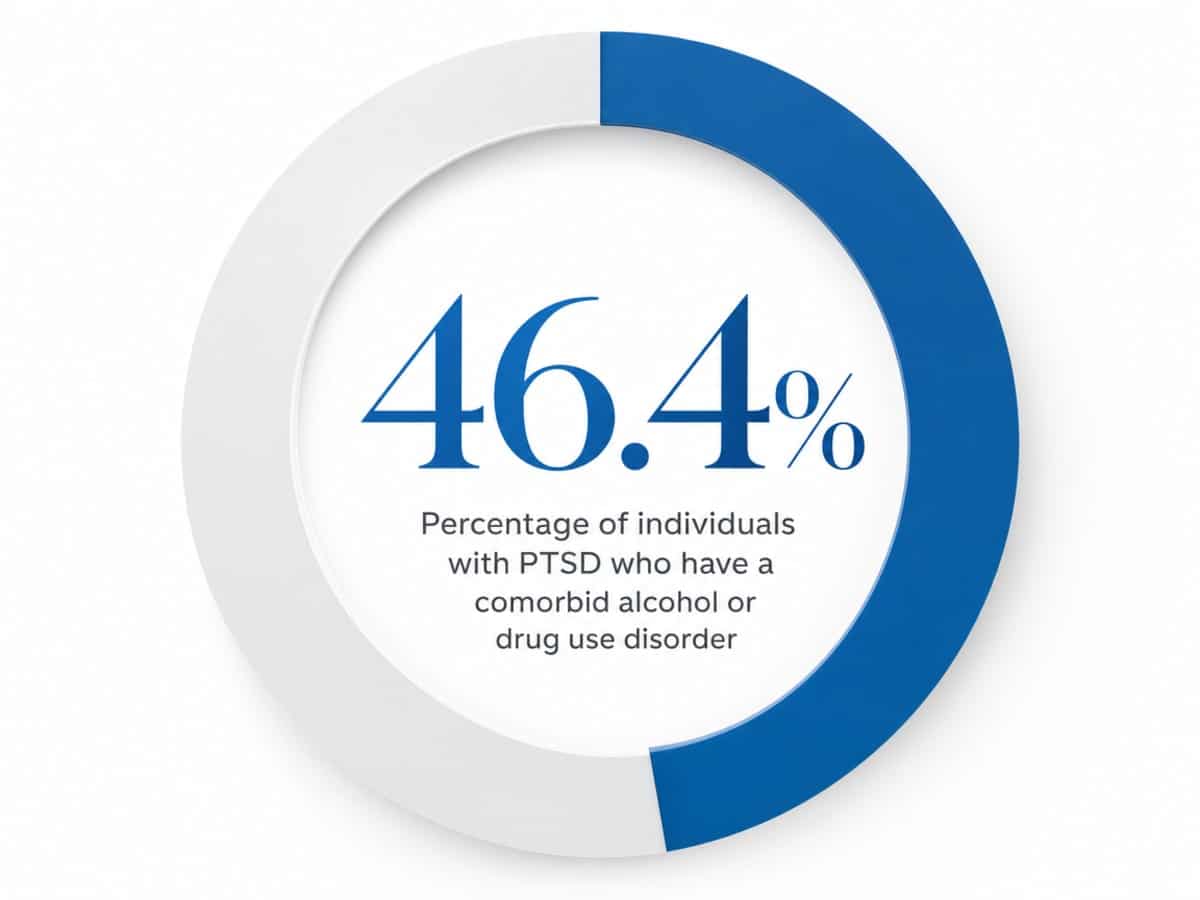
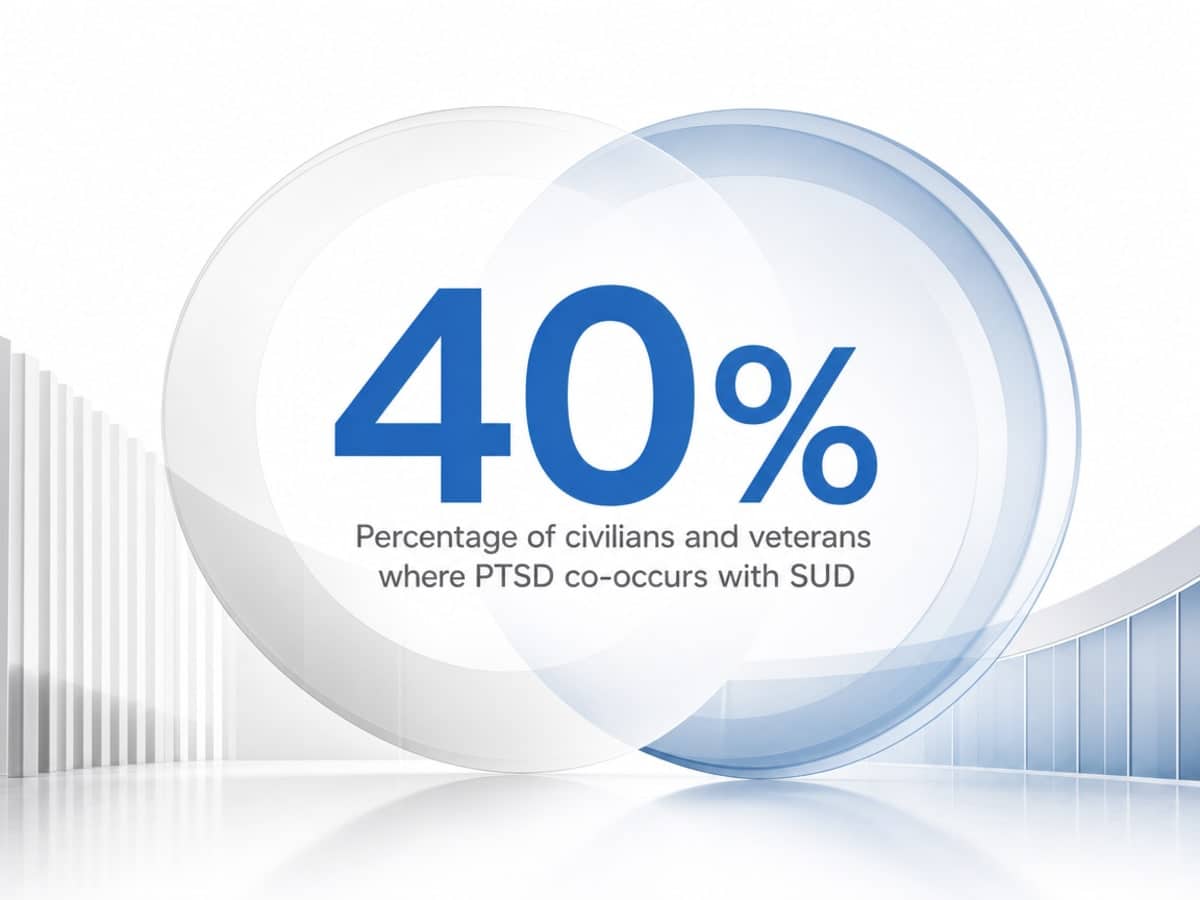
In a nationally representative sample, 46.4% of people with PTSD also met criteria for an alcohol or drug use disorder 5. That isn’t a small overlap at the margins. That is nearly half of everyone carrying a PTSD diagnosis also carrying a substance use disorder alongside it. When you widen the lens to include both civilians and veterans, PTSD and SUD co-occur in roughly 40% of cases 4. The two conditions travel together so often that clinicians who treat one without screening for the other are essentially working with half a chart.
NIDA describes the mechanism in plain terms. Traumatic experiences, whether abuse, violence, neglect, or the sudden loss of someone you loved, make a person measurably more vulnerable to developing a substance use disorder 1. And people already living with PTSD, depression, or anxiety are more likely to use substances and more likely to develop dependence once they do 2.
So if you’ve been carrying the sense that your case is uniquely tangled, uniquely complicated, uniquely stuck, this is worth hearing clearly. What you’re dealing with is the pattern the research keeps finding. That doesn’t make it easier. It does mean there’s a body of evidence built specifically around people like you.
How Untreated Trauma Sabotages Recovery
Here’s the part that’s hard to sit with, and worth sitting with anyway. When PTSD stays untreated in the background, it doesn’t just make you uncomfortable. It actively works against every tool you’re being handed in a standard addiction program.
Coping skills groups assume you can tolerate the feelings you’re learning to sit with. Trauma symptoms make that tolerance window narrow, sometimes to nothing. Sleep hygiene worksheets assume you can actually sleep. Nightmares and hyperarousal decide otherwise. Relapse prevention plans assume that when a craving hits, you can slow down and use the plan. A trauma response bypasses that entire circuit, because the body registers the trigger as a threat and reaches for whatever has reliably shut the threat down before.
This is why the clinical picture for PTSD/SUD is harder than either condition alone. Compared to people managing just PTSD or just substance use, people managing both have:
- greater functional impairment
- more suicide attempts
- more legal problems
- worse treatment adherence 3
The self-medication pathway is well documented: PTSD often precedes the substance use, and the substances start as something that worked, until they didn’t 3.
None of that means you can’t recover. It means the trauma isn’t the sideshow. It’s often the thing driving the relapses that got labeled as motivation problems, or willpower problems, or you-not-taking-it-seriously problems. It was taking something seriously. It was taking a wound seriously that no one had helped you close.
Sequential vs. Integrated Care: What the Evidence Actually Says
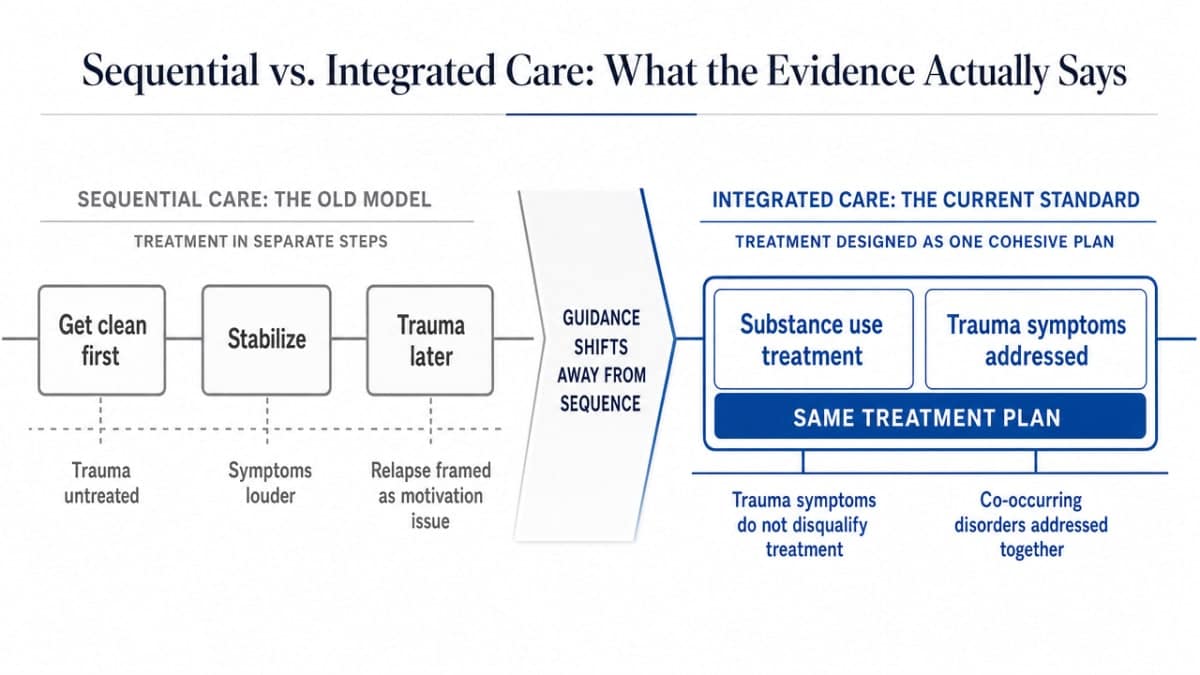
The old model went like this: get clean first, then, once you’re stable, we’ll look at the trauma. It sounded responsible. It also sent a lot of people back out.
The sequence assumed that abstinence would settle the nervous system enough to make trauma work possible later. For many people with PTSD, the opposite happened. Removing the substance without addressing what the substance was managing left the trauma symptoms louder, not quieter. Then relapse got framed as a motivation issue instead of what it often was: a nervous system that had lost its only regulator and was reaching for it again.
Current guidance moves away from that sequence. SAMHSA is explicit that trauma symptoms should not disqualify someone from substance use treatment, and that co-occurring disorders need to be addressed in the same treatment plan rather than queued up 12. The VA/DoD clinical guidance, reviewing the evidence across trials, concluded that integrated, trauma-focused interventions that address both disorders produce the greatest benefit relative to treatment-as-usual and to single-disorder approaches 17. Individuals with PTSD and SUD can safely engage in trauma-focused CBT protocols like Prolonged Exposure, Cognitive Processing Therapy, and EMDR while receiving addiction treatment 17.
There’s also flexibility in the evidence worth naming. A VA trial comparing integrated versus phased delivery of PTSD and SUD treatments found both approaches produced clinically meaningful reductions in PTSD and substance use, with no meaningful difference between them 10. What matters isn’t a rigid formula. What matters is that both conditions are being actively treated, by people talking to each other, in a plan built for the person in front of them.
The Prescott and Yavapai County Context
None of this is happening in the abstract. If you’re reading this from a house in Prescott, or a case manager’s office in Prescott Valley, or a family kitchen in Chino Valley, the pressure on the ground has been getting worse, not better. Arizona’s Medicaid agency, AHCCCS, documented a 53.2% increase in drug-related overdose deaths during the period covered by its most recent State Opioid Response narrative 23. That isn’t a slow drift. That is a step change, and it hit rural and semi-rural counties like Yavapai alongside the metro areas.
The trauma side of the picture is just as concrete here. The Yavapai Justice & Mental Health Coalition, working with Arizona’s Governor’s Office of Youth, Faith and Family, has documented high rates of severe victimization and trauma histories among justice-involved people in the county 24. Many of the people cycling through local jails, drug courts, and probation caseloads are carrying trauma histories that were never treated, only managed with whatever substance was available. When they land in a standard 30-day program and the trauma gets postponed again, the pattern the coalition data describes keeps repeating.
What that means for you, sitting with this on a Tuesday afternoon, is straightforward. The overdose numbers say the stakes of another failed episode are higher than they used to be. The local trauma data says you are not an outlier in this county, you are part of a population the system has consistently under-served. A trauma-focused program based here in Prescott is not a nice-to-have. It’s the piece that has been missing from most of the treatment episodes people around you have already tried.
The Protocols With Evidence Behind Them
COPE: Prolonged Exposure Inside Addiction Treatment
COPE, which stands for Concurrent Treatment of PTSD and Substance Use Disorders Using Prolonged Exposure, is the protocol that most directly answers the old worry that trauma work will blow up your recovery. It combines prolonged exposure therapy for PTSD with standard addiction treatment, in the same weekly sessions, with the same clinician.
In the randomized trial that put COPE on the map, participants with full PTSD who received COPE showed greater PTSD symptom improvement than those in relapse prevention alone, and, importantly for you, without a worsening of substance use 9. That last piece matters. If you’ve been told trauma work is too destabilizing while you’re still using or recently sober, this trial is one of the reasons that framing has shifted.
Prolonged exposure asks you to approach the memories and situations you’ve been avoiding, in a controlled and paced way, with a clinician who knows how to titrate the work to what your nervous system can hold. It’s not comfortable. It’s also not reckless. When it’s done inside an integrated program, the addiction side of the plan doesn’t pause. It runs alongside, catching the cravings and urges that come up as the avoidance loosens.
CPT and Trauma-Focused CBT
Cognitive Processing Therapy takes a different route into the same territory. Instead of leaning primarily on exposure, CPT works on the thoughts that got stuck around what happened to you, the beliefs about safety, trust, control, and self-worth that the trauma installed and the substance use often reinforced.
The VA/DoD guidance places CPT alongside prolonged exposure and EMDR as trauma-focused cognitive behavioral therapies that people with co-occurring PTSD and SUD can safely engage in while receiving addiction treatment 17. That’s the operative word here. Safely. For years, clinicians hesitated to offer these protocols to people still working on their substance use, and the guidance now says that hesitation cost patients care they could have benefited from.
CPT typically runs about 12 sessions, structured and predictable, which tends to work well for people who have found less-structured therapy hard to stay in. You know what’s coming each week. You know what the homework will ask of you. For a nervous system that has learned to distrust surprises, that scaffolding is part of the treatment.
EMDR for PTSD and Mood Symptoms
Eye Movement Desensitization and Reprocessing takes a different mechanism entirely. Rather than talking through the traumatic memory in detail or restructuring beliefs on paper, EMDR uses bilateral stimulation, usually guided eye movements, while you hold a target memory in mind. The theory is contested, the results less so.
In a randomized controlled trial of people with substance use disorder and comorbid PTSD, EMDR added to treatment-as-usual produced greater PTSD symptom reduction than usual care alone, along with significant decreases in depressive symptoms and improvement in self-esteem 21. Effects on substance use itself weren’t significant in that trial, and it’s worth being straight about that. EMDR is doing its work on the trauma and mood side of the picture, and the addiction side needs its own tools running in parallel.
If you’ve tried talk-heavy therapy and found yourself either dissociating in session or unable to get close enough to the memory to make anything shift, EMDR gives you another door in. It tends to be shorter than CPT or prolonged exposure, and some people find it less verbally demanding, which matters when the words for what happened have never come easily.
Seeking Safety and Present-Focused Coping
Not everyone is ready to walk directly into the memory. Seeking Safety was built for exactly that reality. It’s a present-focused, coping-skills-based group and individual protocol that addresses PTSD and substance use together without requiring you to process the trauma story in detail. The topics are practical: asking for help, honesty, setting boundaries, grounding when you’re triggered, staying safe from people and situations that pull you toward use.
The evidence on Seeking Safety is genuinely mixed, and worth telling you honestly. A multisite randomized trial in women with co-occurring PTSD and SUD found that adding a brief dose of Seeking Safety or relapse prevention to standard care did not significantly outperform standard care on PTSD symptoms, though both approaches were safe and acceptable to participants 7. In a study of incarcerated men, Seeking Safety and a related trauma recovery model did show improvements in PTSD severity and general mental health when the longitudinal data were modeled well 8.
What Seeking Safety does reliably is meet you where you are early on, before the nervous system has settled enough for exposure work. It’s often the on-ramp, not the whole road.
What to Realistically Expect From Trauma-Focused Care
Here is the honest version, because you have earned honesty by now. Trauma-focused care alongside addiction treatment works. It also doesn’t work the way a movie would show it working.
The 2022 meta-analysis that pooled the strongest available trials found modest benefits when trauma-focused therapy was added to substance use treatment. PTSD symptoms improved at end of treatment and stayed improved at six to thirteen months, and alcohol use showed a small delayed benefit at that later follow-up window rather than immediately 18. The same review was candid about the ceiling: average effects are modest, many people don’t fully engage with the trauma work, and evidence for direct impact on drug use beyond alcohol is limited 18. A separate review of exposure-based protocols noted the same pattern, effective but with small effects and high dropout rates, plus real clinician reluctance to run trauma work concurrently with active substance use 20.
What that means for you, practically, is this. Progress will probably not feel like a switch flipping. It will look like:
- a week where the nightmares thin out
- a group session where you stayed present instead of leaving your body halfway through
- a craving that came and went in twenty minutes instead of pulling you under
- a phone call to your sponsor that you actually made
Those are the wins the data is measuring, aggregated across hundreds of people. Yours will be specific to you, and they count.
The delayed alcohol-use benefit is worth knowing about too. It suggests the trauma work keeps doing something after the sessions end, as the coping tools settle in and the nervous system reorganizes around them. Expecting immediate transformation sets you up to quit at week four. Expecting steady, sometimes uneven, meaningful change over months matches what the research actually shows.
How ViewPoint’s Trauma-Focused Program Is Structured
Assessment, Sequencing, and Psychiatric Care
The first week is not a treatment week. It’s a listening week. Before anyone hands you a protocol, the team is building a case formulation that accounts for what actually happened, what you’ve tried, and what stopped working. Board-certified psychiatry sits at the center of that assessment, which matters when the picture includes a mood disorder, sleep disruption, or medication that stopped doing what it used to do. Root-cause assessment goes past the standard intake because a standard intake is what missed the trauma the first three times.
From there, sequencing gets built for your nervous system, not a manual. If the alarm system is still screaming, the early work looks more like Seeking Safety and stabilization, grounding tools, sleep, medication adjustment, containment of the crisis in front of you. When the window widens, trauma-focused protocols move in, whether that’s prolonged exposure inside a COPE structure, CPT, or EMDR. The evidence supports this flexibility. A VA trial comparing integrated and phased delivery of PTSD and SUD treatments found both produced clinically meaningful reductions in symptoms with no meaningful difference between them 10. What holds it together is a single team, one psychiatrist and one therapist talking to each other weekly, working from the same chart.
Individualized Duration Instead of a Fixed 30 Days
At ViewPoint, treatment duration is set by what your clinical picture calls for, not by the calendar a payer prefers. If you need more time in stabilization before exposure work is safe, you get it. If the trauma protocol needs the full arc of sessions instead of a truncated version, it runs the full arc. Progress is measured in things you can actually feel, a stretch of sleep without nightmares, a group where you stayed in your body, a craving that passed without pulling you back. Those are small on paper. They are the ones the research is quietly counting, and they are the ones that hold.
For Referring Clinicians and Case Managers in Yavapai County
A note to the clinicians, probation officers, drug court coordinators, and family members reading alongside the person this is written for: the referral question you’re weighing is usually not whether trauma matters. It’s whether the receiving program can hold a case where the trauma has driven multiple prior treatment episodes into the ground.
What tends to be useful about ViewPoint for higher-acuity Yavapai County referrals is the combination of board-certified psychiatric leadership, clinical-need-based treatment duration rather than a fixed 30-day cycle, and a single team running the trauma protocol and the addiction work from the same case formulation. That structure is aligned with the VA/DoD position that integrated, trauma-focused interventions addressing both disorders produce greater benefit than treatment-as-usual or single-disorder approaches 17, and with SAMHSA’s stance that trauma symptoms should not disqualify anyone from substance use treatment 12.
Practically, that means you can refer:
- patients who have failed prior episodes
- patients carrying active suicidality alongside PTSD/SUD
- patients whose medication regimens have become complicated
Warm handoffs, records requests, and coordination with existing outpatient providers or drug court teams are welcome. Call the admissions line to discuss a specific case before sending paperwork.
Take the First Step Toward Targeted Recovery
Find out if integrated trauma and substance use care is the right next move for complex cases.
Frequently Asked Questions
Do I have to be sober before starting trauma therapy?
No. SAMHSA’s guidance is explicit that trauma symptoms should not disqualify anyone from substance use treatment, and both conditions belong in the same treatment plan rather than queued up 12. What tends to happen in an integrated program is that early sessions focus on stabilization and coping tools, then trauma-focused work moves in as your nervous system can hold it.
Which trauma therapies does an integrated program actually use?
The protocols with the strongest evidence in PTSD/SUD populations are Prolonged Exposure delivered inside a COPE structure 9, Cognitive Processing Therapy, EMDR 21, and Seeking Safety for present-focused coping. VA/DoD guidance concludes that people with both conditions can safely engage in trauma-focused CBT while addiction treatment continues 17. The right starting protocol depends on your history, current symptoms, and what has and hasn’t worked before.
Will doing trauma work make my substance use worse?
The concern is real, and the data is reassuring. In the randomized trial of COPE, participants with full PTSD who received prolonged exposure inside their addiction treatment showed greater PTSD improvement without a worsening of substance use 9. That’s part of why the old rule of waiting until you were fully stable has shifted. Trauma work does need pacing and a clinician who knows how to titrate it.
How long does trauma and substance abuse treatment take?
Longer than 30 days, in most cases. The meta-analytic evidence shows modest average effects and high dropout partly because treatment often ends before the trauma work can settle 18. At ViewPoint, treatment duration is set by your clinical picture, not a payer’s calendar. Expect stabilization first, then the trauma protocol running its full arc, then step-down planning built around your outpatient supports at home.
What if I’ve already failed multiple rehabs?
Multiple prior episodes usually point to something the earlier programs missed, and untreated trauma is one of the most common missed pieces. People with PTSD/SUD show worse treatment adherence and greater functional impairment than either condition alone 3. That pattern is clinical, not personal. A program built for treatment-resistant cases treats prior episodes as information about what your care actually needs, not evidence that you can’t recover.
How can a clinician or family member refer someone to ViewPoint?
Call the admissions line before sending paperwork so the team can discuss the specific case, current medications, and any active safety concerns. ViewPoint accepts referrals from outpatient providers, drug court coordinators, probation officers, hospital discharge planners, and family members. Warm handoffs and records requests are welcome. For higher-acuity Yavapai County cases where prior treatment episodes have failed, that early phone call helps align on sequencing before intake.
References
- Trauma and Stress | National Institute on Drug Abuse (NIDA). https://nida.nih.gov/research-topics/trauma-and-stress
- Mental Health – National Institute on Drug Abuse (NIDA). https://nida.nih.gov/research-topics/mental-health
- Posttraumatic Stress Disorder and Co-Occurring Substance Use Disorders: Clinical Implications for Assessment and Treatment. https://pmc.ncbi.nlm.nih.gov/articles/PMC3811127/
- Concurrent Treatment of Substance Use and PTSD. https://pmc.ncbi.nlm.nih.gov/articles/PMC4928573/
- Integrated Treatment of PTSD and Substance Use Disorders. https://pmc.ncbi.nlm.nih.gov/articles/PMC5294962/
- Posttraumatic Stress Disorder and Substance Use Disorders: Clinical Considerations. https://pubmed.ncbi.nlm.nih.gov/39407067/
- A multisite randomized controlled trial of Seeking Safety vs. Relapse Prevention Training for women with co-occurring PTSD and SUD. https://pmc.ncbi.nlm.nih.gov/articles/PMC6383607/
- Implementation and effectiveness of integrated trauma and addiction treatment for incarcerated men. https://pubmed.ncbi.nlm.nih.gov/25617774/
- Concurrent Treatment of PTSD and Substance Use Disorders Using Prolonged Exposure (COPE): A randomized clinical trial. https://pubmed.ncbi.nlm.nih.gov/28490022/
- A randomized controlled trial evaluating integrated versus phased application of evidence-based psychotherapies for veterans with comorbid PTSD and SUD. https://pubmed.ncbi.nlm.nih.gov/31675546/
- Treating posttraumatic stress disorder in substance use disorder patients: The TOPA study. https://pubmed.ncbi.nlm.nih.gov/34493253/
- TIP 57: Trauma-Informed Care in Behavioral Health Services. https://library.samhsa.gov/sites/default/files/sma14-4816.pdf
- Integrated Treatment for Co-Occurring Disorders: Trauma-Informed Care and Co-Occurring Disorders. https://library.samhsa.gov/sites/default/files/SAMHSA_Digital_Download/PEP20-02-01_004.pdf
- Implementing and evaluating a trauma-informed model of care in a community-based alcohol and other drug treatment service. https://pmc.ncbi.nlm.nih.gov/articles/PMC10572352/
- A Systematic Review of Trauma-Informed Care in Substance Use Settings. https://pubmed.ncbi.nlm.nih.gov/39641885/
- Managing Life with Co-Occurring Disorders. https://www.samhsa.gov/mental-health/serious-mental-illness/co-occurring-disorders
- Treatment of Co-Occurring PTSD and Substance Use Disorder in VA. https://www.ptsd.va.gov/professional/treat/cooccurring/tx_sud_va.asp
- A systematic review and meta-analysis of psychological interventions for co-occurring post-traumatic stress disorder and substance use disorder. https://pubmed.ncbi.nlm.nih.gov/35558682/
- Treatment of post-traumatic stress disorder and substance use disorder: A systematic review. https://pmc.ncbi.nlm.nih.gov/articles/PMC9948894/
- Treating posttraumatic stress disorder in substance use disorder patients. https://pmc.ncbi.nlm.nih.gov/articles/PMC8423329/
- Effectiveness of Eye Movement Desensitization and Reprocessing (EMDR) in patients with substance use disorder and comorbid PTSD. https://pmc.ncbi.nlm.nih.gov/articles/PMC5356401/
- Behavioral Interventions for Comorbid PTSD and Substance Use Disorder. https://www.ptsd.va.gov/publications/rq_docs/V31N2.pdf
- Arizona State Opioid Response (SOR IV) Narrative Update (2024). https://azahcccs.gov/Resources/Downloads/SORIV/SORIV_Narrative.pdf
- Yavapai Justice & Mental Health Coalition: Trauma and Victimization Data. https://goyff.az.gov/sites/default/files/meeting-documents/materials/yavapai_justice_mental_health_coalition.pdf