Key Takeaways
- Psychotic features appear in more than half of bipolar cases and sharply raise relapse risk, with a 3.66 odds ratio and 61.2% relapsing after remission 8, 9.
- First-line care pairs a mood stabilizer like lithium or valproate with a second-generation antipsychotic such as quetiapine or risperidone, held at therapeutic doses long enough to judge response 2, 4, 11.
- Clozapine is a third-line, off-label option for treatment-refractory cases, requiring 12.5 mg starts, gradual titration to 300–450 mg, and at least 12 weeks with hematologic monitoring 3, 5, 6.
- Choose programs offering 24/7 board-certified psychiatry, structured clozapine capability, clinically driven length of stay, and unified charts between prescriber and therapist rather than fragmented care 9, 11.
When Voices, Paranoia, or Delusions Enter a Bipolar Episode
If you have experienced a manic or depressive episode where a voice narrated your thoughts, where you became certain a family member was hiding something, or where your own bedroom felt unsafe, you know this is not the version of bipolar disorder typically discussed. Something shifted. The mood swing intensified, and reality began to blur.
You are not imagining that shift. Psychotic symptoms occur in more than half of individuals with bipolar disorder over their lifetime, and their presence alters the illness’s course, outcome, and required treatment 7. This is not a rare occurrence; it is a well-documented subgroup that clinicians treat differently for valid reasons.
It’s important to understand that if lithium alone stopped working, if the first antipsychotic made you feel unlike yourself, or if you’ve had multiple hospital stays, none of this means you are the problem. It indicates that your illness requires more precise medication management, closer monitoring, and a team experienced in handling this level of acuity.
This guide explains how the clinical picture changes when psychosis is involved, outlines evidence-supported treatments, and helps you identify programs equipped to manage such complex cases.
Why Psychotic Features Change the Clinical Picture
The Elevated Relapse Risk
In a UK study of 2,649 individuals with bipolar disorder followed over five years, the presence of psychotic symptoms was associated with a significantly higher risk of relapse, with an odds ratio of 3.66 8. This indicates that the illness exerts greater pressure on the treatment plan compared to bipolar disorder without psychotic features.
Even after achieving remission, the challenge persists. A four-year study of individuals hospitalized for the first time with bipolar I disorder and psychotic features found that 61.2% of those who achieved complete remission later relapsed, with 24.3% relapsing within six months 9. This short timeframe highlights the fragility of remission in these cases.
If you’ve experienced frequent relapses and questioned your own efforts, understand that you are not an exception. This is a recognized pattern that clinicians specializing in severe bipolar illness anticipate. This pattern is not a judgment of your effort but a clear signal that your treatment plan needs to be tailored to your actual illness trajectory, not a milder version.
Practically, this means relapse prevention must be a central focus, not an afterthought. This involves a medication regimen designed for long-term stability, consistent monitoring to detect early warning signs, and a care team that is not surprised by relapses. Every period of stability is significant progress and provides valuable data for your team.
Medication Sensitivity and Treatment Challenges
When psychosis accompanies a mood episode, medication management becomes more complex than a single-drug approach. A mood stabilizer alone, even if previously effective, is often insufficient to manage both mood swings and psychotic symptoms simultaneously. Evidence consistently shows that adding an antipsychotic to a mood stabilizer is generally more effective than mood stabilizer monotherapy, though it may increase side effects, underscoring the need for individualized regimens in complex presentations 2.
Therefore, if your prescriber has added multiple medications to your plan, it reflects an effort to treat the actual condition, not a simplified version. Acute episodes with psychosis frequently require immediate adjustments to the treatment plan. When agitation, aggression, or sleep disturbances are present, the regimen must be modified to address these symptoms, with atypical antipsychotics like quetiapine or risperidone often being initial choices for such adjustments 11. This explains why a single clinic visit or dose change is rarely sufficient; the plan must adapt to the illness’s dynamic nature.
The experience can be exhausting: trying a medication, feeling numb or restless, being told to wait, then switching medications and repeating the cycle. This exhaustion is real and does not signify treatment resistance. Instead, it indicates that your case requires a psychiatrist with the capacity to thoughtfully iterate, monitor, and combine agents, rather than one limited to brief, infrequent appointments.
The Treatment Ladder: Guidelines for Psychotic Bipolar Disorder
First-Line Treatment: Combined Regimens
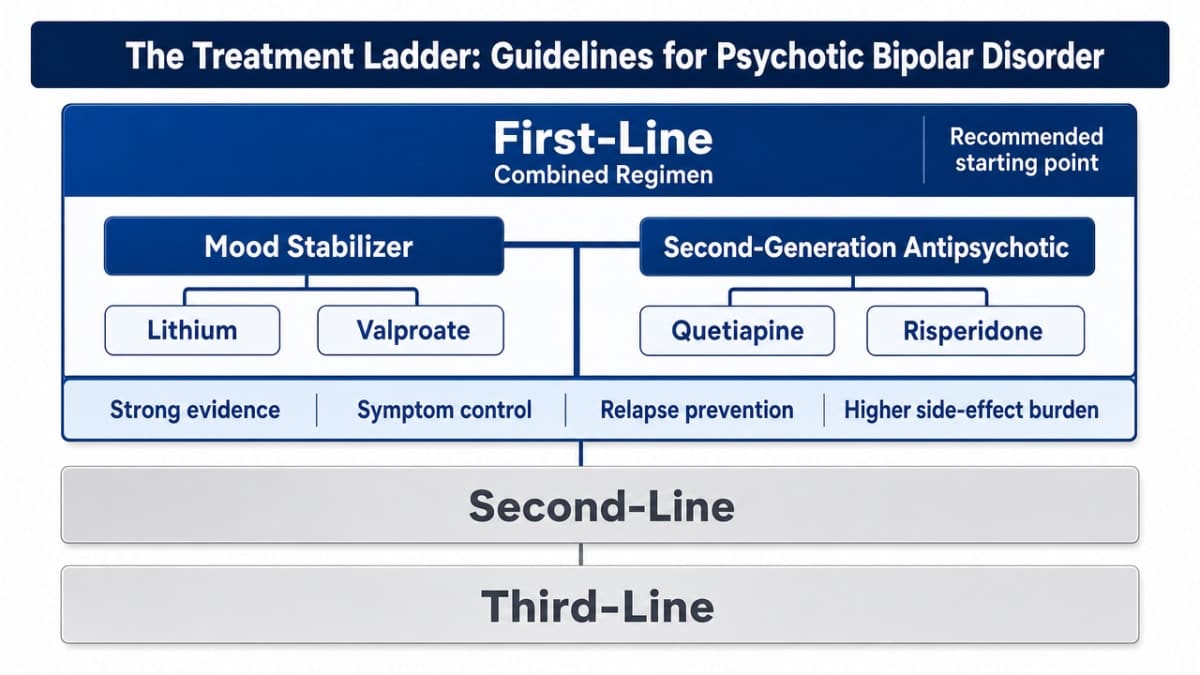
For bipolar disorder with psychosis, the CANMAT/ISBD guidelines recommend a combined regimen from the outset: a mood stabilizer (typically lithium or valproate) paired with a second-generation antipsychotic 4. This combination is not a secondary option but the recommended starting point for this presentation of bipolar disorder.
The evidence supporting this combination is robust. Studies consistently show that combining a mood stabilizer with an antipsychotic surpasses mood stabilizer monotherapy in achieving critical outcomes like symptom control and relapse prevention, despite a potentially higher side-effect burden 2. Quetiapine, in particular, has strong evidence in combination therapy, and both quetiapine and risperidone are common initial choices for acute psychotic features during a mood episode 2, 11.
If you’ve been frustrated by your prescriber adding medications rather than simplifying, this is why. While monotherapy may be suitable for milder bipolar illness, it is often insufficient for cases involving psychosis.
An effective first-line trial involves:
- A stable dose of lithium or valproate maintained long enough to achieve a therapeutic blood level,
- An antipsychotic titrated to a therapeutic dose (not just a starting dose), and
- Structured check-ins that monitor sleep, mood, psychotic symptoms, and side effects comprehensively.
A trial prematurely abandoned due to initial side effects is an incomplete trial, not a failed medication. If a complete first-line trial does not resolve psychotic symptoms, this provides crucial information for the next treatment step.
Managing Depressive Episodes with Psychotic Features
The depressive phase of bipolar disorder with psychosis is often particularly challenging. After a manic episode subsides, individuals may experience a depression accompanied by persistent voices or a profound sense of unease. Standard antidepressants alone are typically ineffective and can exacerbate mood cycling.
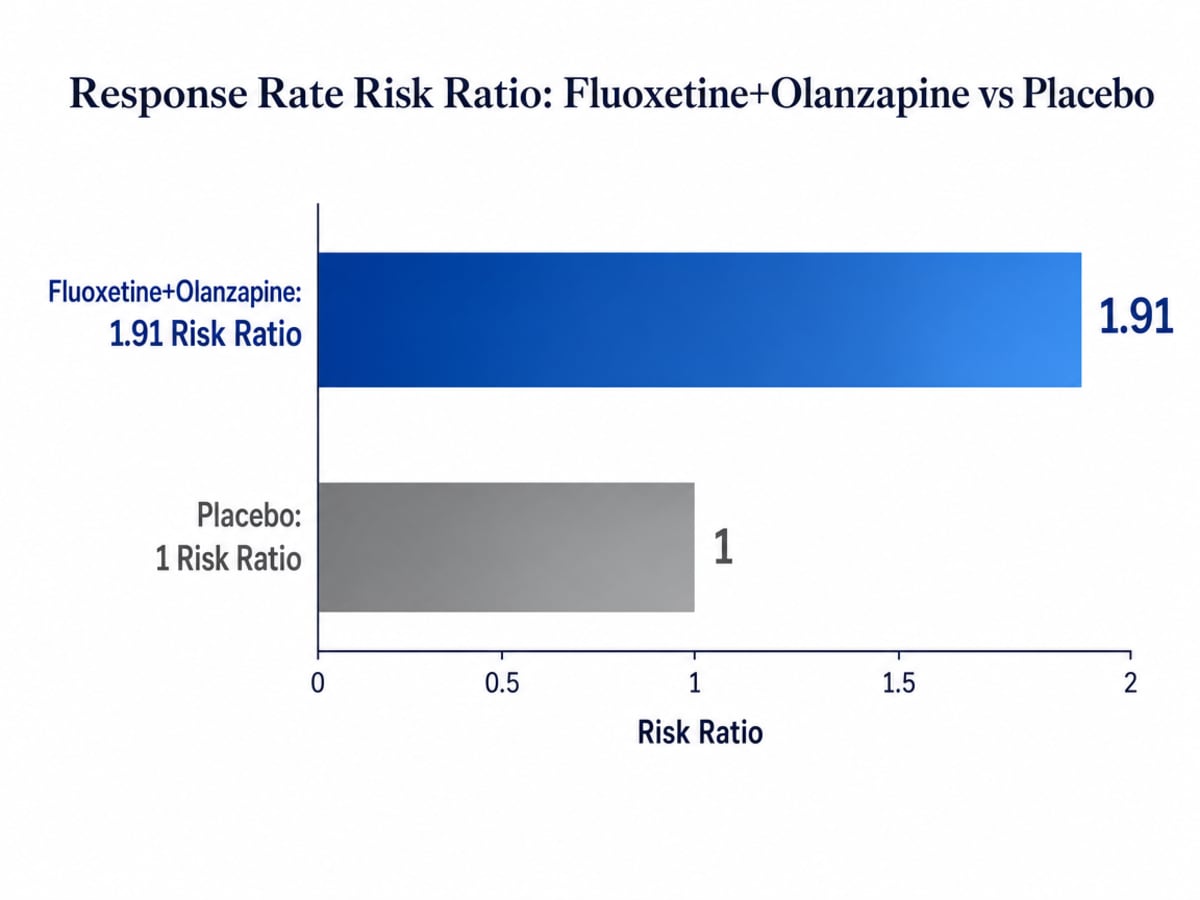
One effective combination for treatment-resistant bipolar depression is fluoxetine paired with olanzapine. A network meta-analysis of second-generation antipsychotic and antidepressant combinations found that fluoxetine plus olanzapine yielded the highest response rate compared to placebo, with a risk ratio of 1.91 (95% CI 1.27–2.85), and no significant difference in safety 1. This means individuals on this combination were nearly twice as likely to respond as those on placebo, without a worse tolerability profile in the trial data.
While not suitable for everyone, and not a replacement for antipsychotic coverage for psychotic symptoms, this evidence-supported combination is valuable if you’ve tried SSRIs alone or been advised against antidepressants. It specifically targets treatment-resistant depressive phases.
When seeking a prescriber, look for someone who addresses the depressive phase as a distinct clinical problem, not merely as the “other side of mania.” They should be willing to try evidence-backed combinations rather than simply adjusting doses. If depression consistently leads to setbacks, it signals a need for a strategic shift, and the literature offers concrete options like this combination.
Second-Line Adjustments Before Escalation
If a comprehensive first-line trial proves insufficient, the next step is typically not clozapine. The guidelines outline a series of second-line adjustments to explore first 4.
These adjustments include:
- Switching to a different second-generation antipsychotic,
- Considering a long-acting injectable if adherence is an issue,
- Adding a second mood stabilizer, or
- Refining the combination when agitation, sleep disruption, or aggression are prominent acute symptoms 4, 11.
Careful cross-tapering between antipsychotics is crucial, as abrupt changes can cause destabilization and be misinterpreted as treatment failure.
This phase particularly highlights the importance of an experienced psychiatrist’s judgment. A prescriber seen only twice a year cannot adapt at the pace your illness requires. A team that conducts weekly reviews, monitors sleep and psychotic symptoms alongside mood, and performs careful cross-tapering can often stabilize cases that appear treatment-resistant on paper.
If you have undergone two or three genuine second-line trials, each maintained long enough at therapeutic doses, and psychotic features still recur, it warrants a serious discussion about third-line options. This is not a failure but a process of gathering evidence to justify the next necessary step.
Clozapine: A Third-Line Option for Treatment-Resistant Cases
Why Clozapine is Effective When Other Antipsychotics Fail
Clozapine stands apart from other antipsychotics. It is not a medication typically prescribed in routine outpatient settings or initiated in most residential programs. The CANMAT/ISBD guidelines place it as a third-line option for acute mania and for treatment-refractory bipolar disorder, with a clear recommendation for selective use and close monitoring 4. This positioning is not due to ineffectiveness, but because it works in cases where little else does, requiring a level of oversight that many programs are not equipped to provide.
Its efficacy in psychotic bipolar illness makes clozapine a critical consideration after other options have been exhausted. Head-to-head data across psychiatric diagnoses show that individuals with schizoaffective disorder and bipolar disorder with psychotic features respond to clozapine at significantly higher rates than those with schizophrenia 12. Reviews describe clozapine as effective and relatively well-tolerated in both acute and long-term treatment of psychotic bipolar disorder for individuals who have not responded to conventional pharmacotherapies 10. A 2019 analysis of clozapine in bipolar I disorder documented reductions in hospitalizations, bed-days, psychotropic polypharmacy, self-harm incidents, and aggressive behavior 3.
Structured Clozapine Titration Protocols
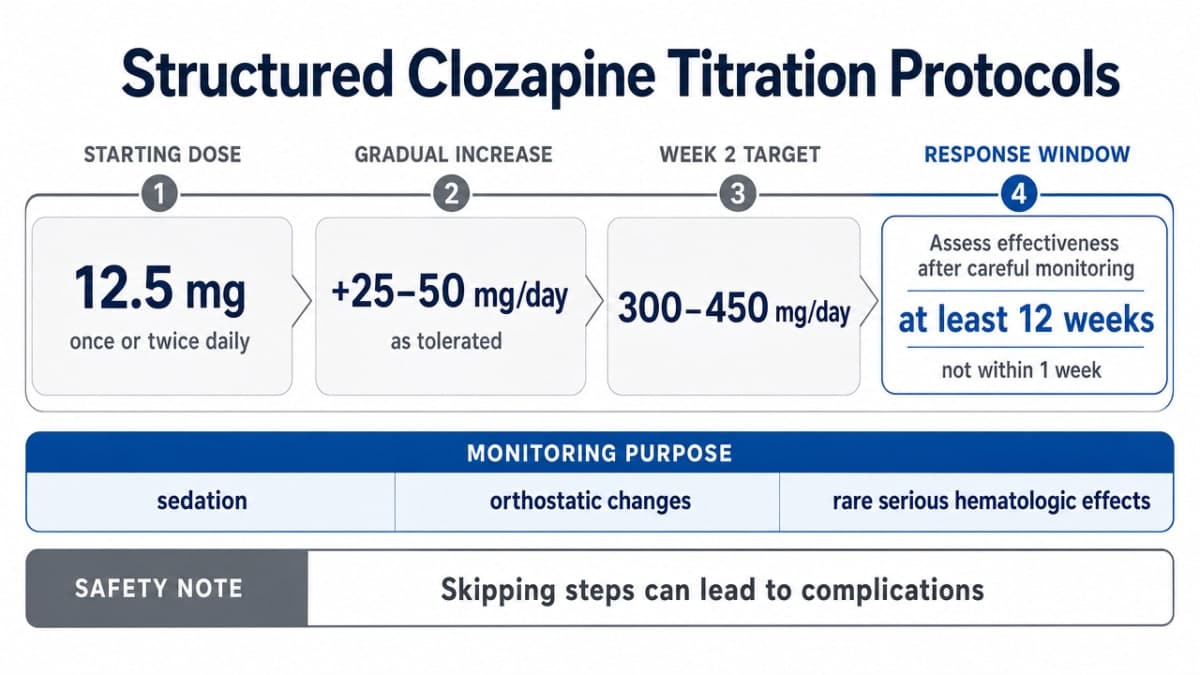
When a program claims to offer clozapine protocols, it’s crucial to understand what that entails. A structured titration is a defined process, not an improvisation. A typical titration begins with a low dose, usually 12.5 mg once or twice daily, increasing by 25 to 50 mg per day as tolerated, aiming for a target dose of 300 to 450 mg per day by the end of the second week 5, 6. This gradual increase is essential due to clozapine’s side-effect profile, which includes sedation, orthostatic changes, and, rarely, serious hematologic effects. The titration is designed to identify problems before they become emergencies; skipping steps can lead to complications.
After the initial titration, response is not assessed within a week. Careful monitoring is recommended for at least 12 weeks before determining the medication’s effectiveness 5. This extended window is vital. If previous programs changed medications every 10 days, you likely haven’t undergone a true clozapine trial. Twelve weeks of consistent dosing, structured symptom tracking, and hematologic monitoring is the minimum for a fair assessment.
The monitoring aspect distinguishes a clozapine-capable program from one that merely lists it on its formulary. This includes:
- Regular blood tests to monitor white blood cell counts,
- Cardiac and metabolic surveillance,
- Vital sign checks during early titration, and
- A psychiatrist who reviews these results in real-time.
It also requires a contingency plan for abnormal lab values, ensuring prompt action.
You should directly ask a program about their starting dose, titration rate, target range, who reviews labs, and how often the psychiatrist sees you in the first two weeks. A team experienced with this protocol will answer confidently, while an inexperienced one may hesitate. This distinction is important to recognize.
Characteristics of a High-Acuity Treatment Program
If you’re reading this, you’ve likely experienced various treatment programs. Some were well-intentioned, others driven by insurance timelines rather than clinical need. Here’s a direct list of what a program equipped for bipolar disorder with psychotic features should offer, based on acute-care and long-term treatment literature for this level of illness:
24/7 Board-Certified Psychiatric Care: Psychotic symptoms don’t adhere to business hours. Acute presentations involving agitation, aggression, or severe sleep disturbance often require same-day medication adjustments 11. A program lacking on-site psychiatric coverage after hours is not adequately equipped for this level of acuity.
Combined Regimens, Not Just Swaps: The evidence supports mood stabilizer plus antipsychotic combinations for psychotic bipolar illness, maintained at therapeutic doses for sufficient duration to assess effectiveness. Cross-tapering must be managed carefully when changes are necessary 2, 11. If a program’s default is to abruptly discontinue one medication and start another, this indicates churn rather than thoughtful iteration.
Genuine Clozapine Capability: This means a psychiatrist experienced in structured titration, on-site hematologic monitoring, and a 12-week response window integrated into the treatment plan, rather than a brief trial 5, 6. Given clozapine’s proven ability to reduce hospitalizations, bed-days, polypharmacy, and self-harm in bipolar I disorder, this capability is crucial for cases other programs cannot manage 3.
Clinically Driven Length of Stay: With over 60% of first-admission bipolar I patients with psychotic features relapsing after remission, discharging someone on day 30 simply due to a calendar date often leads to re-hospitalization 9. A program designed for this trajectory bases discharge decisions on the stability of the regimen, not on billing cycles.
Integrated Team Communication: Your psychiatrist, therapist, and the nurse monitoring your vitals should all access the same chart and collaborate on your case. Fragmented care can turn medication sensitivity into treatment failure. If the therapist and prescriber haven’t communicated regularly, the comprehensive picture is not being addressed.
For Referring Clinicians and Case Managers
For clinicians or case managers seeking higher-acuity placement for a patient who has not progressed at your current level of care, here’s how to distinguish truly capable programs:
Inquire about their clozapine workflow first. A program with established protocols will detail a 12.5 mg starting dose, 25 to 50 mg per day titration, a 300 to 450 mg target by the end of week two, and a 12-week response window with integrated hematologic monitoring 5, 6. Vague responses indicate a lack of structured protocol.
Ask how second-line adjustments are managed when combination regimens are insufficient, particularly regarding cross-tapering during agitation or sleep disruption 11. Also, ask if the length of stay is clinically determined rather than insurance-driven, considering the 61.2% post-remission relapse rate in first-admission bipolar I with psychotic features 9. The answers to these questions will reveal whether the transition will be effective.
A Note on ViewPoint and Next Steps
If you’ve read this far, you understand that your case requires specialized care beyond what a general outpatient clinic offers. ViewPoint Dual Recovery, a Joint Commission-accredited psychiatric facility in Prescott, Arizona, is designed for this level of acuity. Our board-certified psychiatrists lead every treatment plan, structured clozapine titration for treatment-resistant cases where guidelines support it 4, 5, and a treatment duration determined by your clinical needs, not billing cycles. Our psychiatrists and therapists share a unified chart and collaborate on your care, ensuring medication sensitivity is managed effectively.
While this doesn’t erase past challenges, it means your next treatment experience can occur in a program equipped to handle complex cases like yours. If you wish to learn more, ViewPoint’s Bipolar Disorder Treatment page is a valuable resource.
Get expert insight on complex bipolar presentations
Receive tailored recommendations for managing bipolar disorder with psychotic features from advanced psychiatric specialists.
Frequently Asked Questions
How is bipolar disorder with psychosis different from bipolar disorder without psychotic features?
Psychotic features occur in over half of individuals with bipolar disorder during their lifetime, significantly altering the illness’s course, outcome, and treatment approach 7. These cases often require combined medication regimens, carry a higher relapse risk, and necessitate a care team capable of rapid adjustments rather than infrequent meetings.
Why do my medications keep failing even though I’m taking them as prescribed?
Medication failure is often not due to adherence. Bipolar illness with psychosis typically requires a mood stabilizer combined with an antipsychotic, and even then, trials often involve careful cross-tapering and adjustments, especially when agitation or sleep problems arise 2, 11. Trials that are too short (e.g., two weeks) or dosed below therapeutic range are incomplete, not failed. Your adherence is likely not the issue.
Is clozapine approved for bipolar disorder, and when should it be considered?
Clozapine is not FDA-approved for bipolar disorder but is used off-label as a third-line option for treatment-refractory cases, including acute mania, rapid cycling, suicidality, aggression, and psychotic features 3, 4. It becomes a consideration after genuine first- and second-line trials at therapeutic doses have been completed and psychotic symptoms persist. It should not be the initial medication a program tries.
What kind of monitoring does a clozapine trial actually require?
A proper clozapine trial begins with 12.5 mg once or twice daily, increasing by 25 to 50 mg per day as tolerated, aiming for a target of 300 to 450 mg per day by the end of week two 5, 6. Response is evaluated over at least 12 weeks, not days, and the protocol includes regular blood work for white cell counts, along with cardiac and metabolic checks 5.
How do I know if a treatment program is equipped to handle bipolar disorder with psychosis?
Ask specific questions: Is board-certified psychiatry available after hours for acute episodes requiring same-day changes 11? Does the program conduct structured clozapine titration with hematologic monitoring and a 12-week response window 5, 6? Is the length of stay determined by clinical need or billing cycles? Do the psychiatrist and therapist share a unified patient chart? Vague answers indicate potential shortcomings.
What can families do when a loved one keeps relapsing after remission?
First, understand that this pattern is not a personal failing. In first-admission bipolar I with psychotic features, 61.2% of individuals who achieved complete remission later relapsed 9. Families should track early warning signs together, especially changes in sleep and returning psychotic symptoms, and share this data with the care team. If two or three medication trials have not sustained stability, it signals a need to consider a higher-acuity program designed for this specific trajectory.
References
- A systematic review and network meta-analysis of second-generation antipsychotics and antidepressant combinations for treatment-resistant bipolar depression. https://diposit.ub.edu/dspace/bitstream/2445/209827/1/846678.pdf
- Is the combination of a mood stabilizer plus an antipsychotic more effective than monotherapy for bipolar disorder?. https://pubmed.ncbi.nlm.nih.gov/24041717/
- Clozapine as Transformative Treatment in Bipolar Patients. https://pmc.ncbi.nlm.nih.gov/articles/PMC6790347/
- Clinical practice guidelines for the management of bipolar disorder (CANMAT/ISBD). https://pmc.ncbi.nlm.nih.gov/articles/PMC12900052/
- A Guideline and Checklist for Initiating and Managing Clozapine Treatment in Patients with Schizophrenia. https://pmc.ncbi.nlm.nih.gov/articles/PMC9243911/
- Clozapine National Protocol Guidance – Monitoring Mar 2025. https://www.va.gov/formularyadvisor/DOC_PDF/CRE_Clozapine_National_Protocol_Guidance_-_Monitoring_Mar_2025.pdf
- Psychotic symptoms in bipolar disorder and their impact on the illness: A systematic review. https://pmc.ncbi.nlm.nih.gov/articles/PMC9521535/
- Rates and associations of relapse over 5 years of 2649 people with bipolar disorder: a retrospective UK cohort study. https://pmc.ncbi.nlm.nih.gov/articles/PMC10313572/
- Time to remission and relapse after the first hospital admission in bipolar I disorder with psychotic features. https://pubmed.ncbi.nlm.nih.gov/15685401/
- Clozapine for Treatment-Refractory Schizophrenia, Schizoaffective Disorder, and Psychotic Bipolar Disorder. https://pubmed.ncbi.nlm.nih.gov/10847306/
- Managing Bipolar Disease Complicated with Psychosis in Acute Care Settings. https://pmc.ncbi.nlm.nih.gov/articles/PMC9098339/
- Clozapine in the Treatment of Psychotic Mood Disorders, Schizoaffective Disorder, and Schizophrenia. https://pubmed.ncbi.nlm.nih.gov/1938976/