Key Takeaways
- Cook County residential SUD capacity has tightened, with Illinois HFS reporting an 11.1% drop in Medicaid IMD beneficiaries in FY24, so Chicago clinicians need a rebuilt referral list that includes out-of-state options 13.
- 590/591 crisis teams and CCBHCs stabilize acute moments and expand outpatient access 6, 16, but they are not substitutes for the residential step-up a decompensating dual diagnosis client already needs.
- Before calling any program, translate clinical instinct into shared code: name the ASAM level per Ill. Admin. Code § 2060.401, cite two or more dimensions meeting severity, and document treatment resistance with an adequate med trial table 15, 9, 5.
- When Chicago beds are closed or waitlists outrun the client’s safety window, an integrated out-of-state placement like ViewPoint Dual Recovery in Prescott handles complex psychiatric acuity, on-site clozapine protocols, and response-driven treatment duration 11.
The Tuesday You Realize Weekly Sessions Aren’t Holding
You know the feeling before you can name it. Your client sits down for the 4 p.m., and something has shifted since last week. The drinking is back, or it never really stopped. The voices are louder, or the sleep is gone, or the plan they denied having on Friday has an address now. You run the safety plan again. You call the psychiatrist. You extend the session. And somewhere between the 15-minute mark and the goodbye, you know the truth: weekly outpatient is no longer the right container for this person.
That recognition is skilled clinical work. It is not a failure of your treatment plan. Holding a decompensating dual diagnosis client on your caseload while you wait for a bed is one of the hardest things this profession asks of you, and you have probably done it more than once this month.
This piece is written for Chicago-area LCSWs, LCPCs, LMFTs, PsyDs, and prescribers who already carry the complex cases. It covers what Cook County can actually absorb right now, how to name the step-up decision in language that holds up on paper, and what to do when the local waitlists are closed and your client cannot wait. When Chicago beds are full this week, ViewPoint Dual Recovery in Prescott is one number that will pick up.
What Cook County Can and Can’t Actually Absorb Right Now
The IMD Utilization Drop and What It Means for Your Referral List
You are not imagining that placements have gotten harder to close. The data agrees with your inbox. Illinois HFS reported that the number of Medicaid beneficiaries with a claim for residential or inpatient SUD treatment in an IMD dropped 11.1% in FY24 (DY6) under the state’s Section 1115 SUD waiver 13. That is a statewide contraction in exactly the level of care your dual diagnosis clients most often need, and it is happening while acuity in your caseload has almost certainly not softened.
A few things follow from that number. First, the beds you used to reliably call on are not just busy this week. Fewer distinct people are getting through the door across a full fiscal year, which means the average time from referral to admission has real friction in front of it. Second, the drop is happening under a waiver specifically designed to expand residential SUD access, so the constraint is not a policy prohibition. It is downstream reality: workforce shortages, closed units, tightened admission criteria, and IMD payment mechanics that make some programs quietly narrow the doors they will open.
What this means for your referral list is practical. The three or four Chicago-area residential SUD programs you have on speed dial are not necessarily going to say yes faster than they did two years ago, and the shortlist that used to feel sufficient is not sufficient anymore. If your working list has not been rebuilt since 2022, rebuild it. Add out-of-state options that will accept Illinois clients, verify current admissions criteria in writing rather than trusting last year’s memory, and note which programs will hold a bed for a client still waiting on funding confirmation. Your clients do not have the luxury of your list being out of date.
What 590/591 Crisis Teams and CCBHCs Are Built to Do (and What They Aren’t)
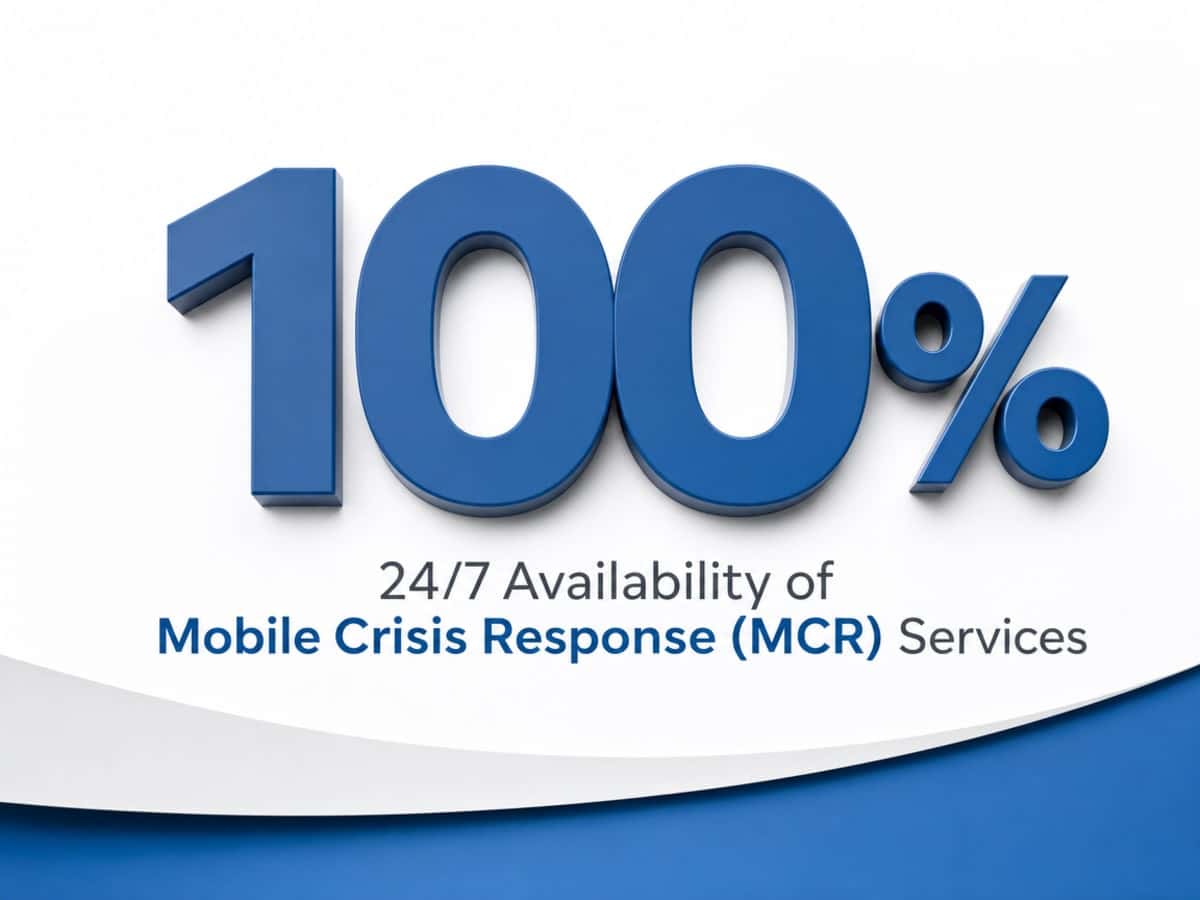
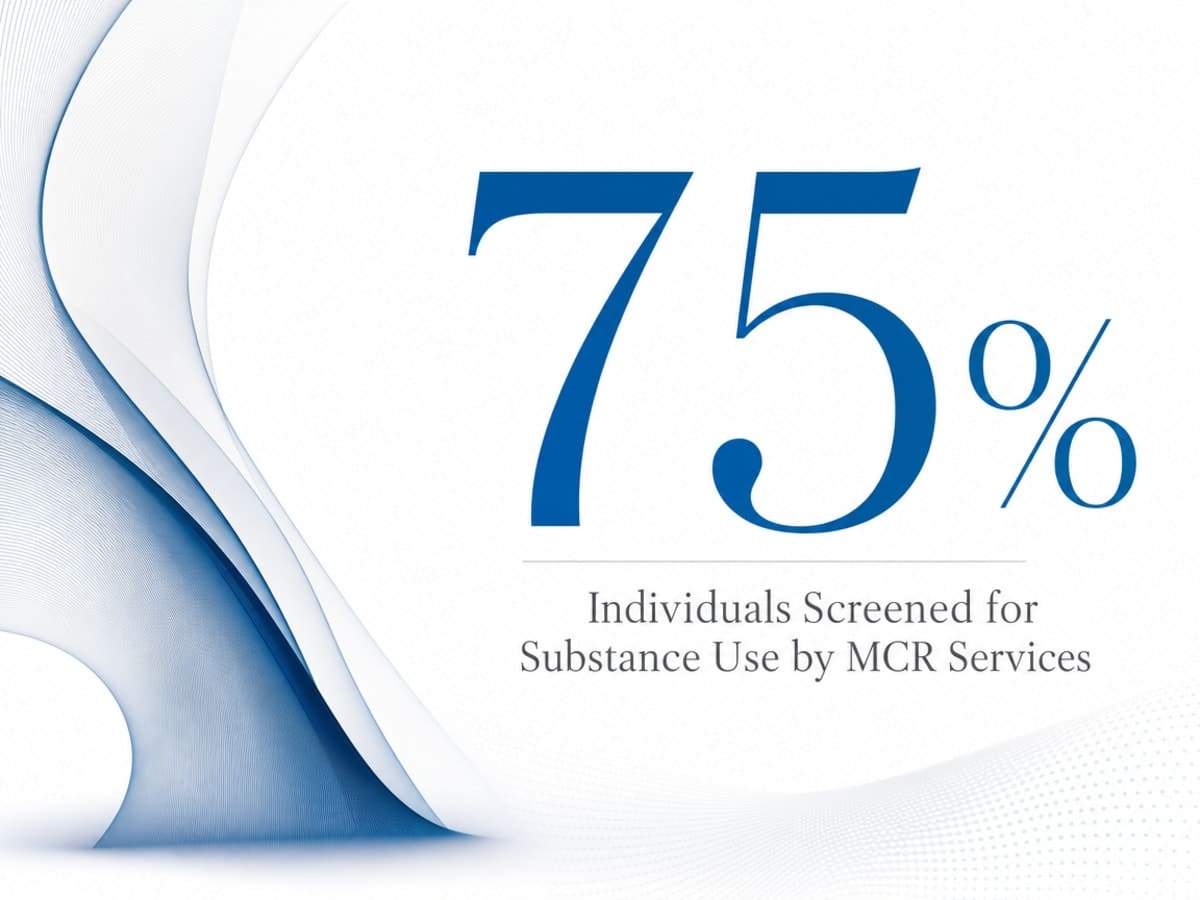
Illinois’ 590 Crisis Care System is genuinely useful, and you should know exactly what it is useful for. Mobile crisis response provides on-demand, in-community, team-based care and follow-up regardless of ability to pay, reachable through direct call, 988, or 911 6. The 591 program pushes performance standards further: CCBHC-based mobile crisis teams are expected to be available 24/7 for 100% of days in a reporting period, with 75% of individuals served screened for substance use 7. On paper and often in practice, that is a real safety net for a client in acute crisis at 2 a.m.
Here is what those teams are not. They are not extended treatment for a client with treatment-resistant schizophrenia and an active alcohol use disorder who has decompensated three times in six months. They are stabilization infrastructure. A crisis team can meet your client where they are, de-escalate, connect to an ED or short-term crisis residential, and hand back. They cannot run a 12-week clozapine titration or hold a client through a protracted post-acute stabilization.
CCBHCs sit adjacent to this problem. Illinois requires CCBHCs to provide specified outpatient mental health and SUD services immediately upon enrollment 16, which meaningfully expands community access. But immediate outpatient is still outpatient. If your client has already been in weekly individual therapy plus a psychiatric prescriber and is deteriorating, a lateral move to a CCBHC’s outpatient slot is not a step up in acuity. It is a change of setting at the same level of care.
CapMan, the Illinois Helpline, and the Waitlist You’re Already On
You know the drill. State-licensed ASAM Level 3.5 residential and OMT programs in Illinois are expected to use the Capacity Management (CapMan) system, accessed through the Illinois Helpline, to report bed availability 10. In theory, that is a single window into where a bed exists today. In practice, CapMan tells you what a program self-reported, not whether that program will accept your specific client this week.
The gap between listed availability and actual admission is where your Tuesday afternoon disappears. A bed shows open. You call. The bed is technically open but reserved for a Medicaid MCO referral, or the program is not taking clients with active psychosis, or the intake coordinator is out until Thursday. None of that shows up in the field you can see. So you do what you always do: you call three more programs, you put your client on two waitlists, and you extend your own session capacity to hold them while the queue moves.
What helps: call CapMan-listed programs and ask for their current exclusionary criteria in writing, not their advertised admissions criteria. Ask specifically about active suicidality with substance use, prior clozapine trials, and whether they can medically monitor a taper. Note the answers in your referral file. When you have a client whose acuity puts them outside those exclusions, you already know which two or three programs are non-starters, and you can move to out-of-state options on the same day instead of losing a week to voicemail.
The Clinical Line: When Holding Outpatient Becomes Risk
Reading the Six Dimensions as a Step-Up Signal
You already run the six ASAM dimensions in your head when a case gets loud. The value of putting them on paper is not for you. It is for the referral coordinator on the other end of the phone who has thirty seconds to decide whether your client fits their program’s admission grid.
The step-up threshold most clinicians underweight is not withdrawal risk. It is the interaction between dimensions. Inpatient placement under ASAM-style patient placement criteria requires meeting the corresponding severity criteria in at least two of the six dimensions 9. That is a low bar for the dual diagnosis clients you carry, and it is a bar many of them cleared weeks ago.
Run it against your Tuesday client.
- Dimension 1, acute intoxication and withdrawal potential: are they using at a level where an unmedicated taper carries real risk?
- Dimension 2, biomedical conditions: is there anything medical, poorly controlled diabetes, liver disease, pregnancy, that outpatient cannot monitor?
- Dimension 3, emotional, behavioral, and cognitive conditions: is the psychiatric acuity beyond what a weekly hour plus a med check can hold?
- Dimension 4, readiness to change: is engagement collapsing, no-showing, splitting between providers?
- Dimension 5, relapse or continued use potential: is the pattern getting shorter between crises?
- Dimension 6, recovery environment: is home actively unsafe, unhoused, or filled with active use?
When two or more of those dimensions have crossed into the moderate-to-severe range, the placement criteria say the client’s setting should move up. Your clinical judgment already told you that. The dimensions give you the language to defend it in an intake call, a utilization review, or a court-ordered treatment recommendation.
Treatment Resistance: The 12-Week, Two-Trial Threshold
Treatment resistance is a diagnostic category, not a mood. When you find yourself calling a case treatment-resistant in supervision, check whether the client actually meets the criteria your intake partners will look for.
The TRRIP consensus threshold for treatment-resistant psychosis requires at least moderate severity of current symptoms, a minimum of 12 weeks of persistent symptoms, and at least moderate functional impairment, after at least two adequate antipsychotic trials 5. The treatment-resistant schizophrenia literature runs parallel: active and persistent symptoms for 12 weeks or more with impaired functioning, alongside documented failure of prior trials 4.
The two words that matter most on that list are adequate and documented. Adequate means dose in the therapeutic range and duration long enough to judge response, typically six weeks per trial. Documented means you can name the medication, the dose, the duration, and why it stopped. If your client has cycled through four antipsychotics over three years but nobody, including you, can produce that record, an intake coordinator hears pseudo-resistance and defers to another round of outpatient med management.
So before you call a program about a treatment-resistant client, spend the twenty minutes it takes to build a med trial table. Drug, dose, dates, response, reason discontinued. Note active substance use separately, because substance use during a trial complicates the resistance call. That table is what turns your clinical instinct into an admission the receiving program can justify to their medical director on Monday morning.
Suicidality Plus Active Use: Where the APA Guideline Stops Being Optional
Chronic suicidal ideation in a client with strong supports and a stable use pattern is one clinical picture. A client with a plan, means, active substance use, and a shrinking safety net is a different one, and the guideline language reflects that.
The APA practice guideline for patients with suicidal behaviors names hospitalization as indicated when the patient poses a serious threat of harm to self or others, or is unable to care for themselves and needs constant supervision or support 1. The international consensus goes further for high-risk configurations: for patients with severe diagnoses, poor support, and substance dependence, admission is generally indicated unless a significant change reduces risk, with strong consideration for hospitalization after attempts using violent methods, persistent intent, social isolation, and active substance abuse 2.
Read that stack against your caseload. A client with treatment-resistant depression, an alcohol use disorder that has escalated in the last month, a partner who just left, and a plan they mentioned Friday and denied Monday is not a client outpatient care can safely hold with a safety plan and a weekly check-in. The guideline stops being advisory at that point.
When you make the call to step up, document what you weighed. Note the risk factors present, the protective factors that are no longer present, and the outpatient interventions you had already tried. That documentation protects the client, protects you, and gives the receiving inpatient or residential program a defensible admission on their end.
Matching Acuity to Illinois Levels of Care
The vocabulary you use on the phone matters. When you tell an intake coordinator your client needs “higher care,” you are handing them a puzzle. When you tell them your client presents at ASAM Level 3.5 with active Dimension 3 concerns and a Dimension 6 environment that will not hold sobriety, you are handing them a placement. Illinois has codified these levels in Ill. Admin. Code tit. 77, § 2060.401, and using that exact scaffolding shortens every referral call you make 15.
Here is the short version, in the state’s own terms.
- Level I outpatient
- What most of your caseload receives: sessions that average less than nine hours per week 15.
- Level II
- Covers intensive outpatient and partial hospitalization, where structured programming runs multiple hours per day, several days per week.
- Level III
- Inpatient subacute and residential, and it is where most of your dual diagnosis step-up cases land. Level III splits further in practice: 3.1 for low-intensity residential, 3.5 for clinically managed high-intensity residential (the CapMan-tracked level), and 3.7 for medically monitored inpatient.
- Level IV
- Medically managed intensive inpatient, reserved for clients whose acute biomedical, emotional, or behavioral problems are severe enough to require primary medical and nursing care with 24-hour medically directed oversight 15.
ASPE’s Illinois summary uses the same scaffolding, labeling 3.7 as Medically Monitored High Intensity Inpatient and 4.0 as Medically Managed Intensive Inpatient 14.
Matching acuity is less about picking the highest number and more about picking the number that fits.
- A client with treatment-resistant schizophrenia, active alcohol use without withdrawal risk, and unstable housing usually fits 3.5, not 4.0.
- A client mid-withdrawal from benzos with unstable vitals fits 3.7 or 4.0, not 3.5.
- A client stable medically but decompensating psychiatrically with active substance use fits 3.5 or 3.7 depending on medication complexity.
Naming the level up front tells the receiving program whether you are calling the right door before either of you spends an hour on intake questions.
One practical note. When you draft the written referral, cite the level by number and by state definition, not just by clinical impression. Intake coordinators, utilization reviewers, and Medicaid MCOs all read the same statute. Speaking in that shared code moves your client from your waitlist to theirs faster than any narrative summary will.
When Chicago Beds Are Full: Working an Out-of-State Referral
Why Integrated Residential Beats Parallel Outpatient for This Population
You have probably watched this pattern play out. Your client sees you for therapy, sees a psychiatrist across town for meds, and picks up a SMART Recovery meeting on Thursday nights. Three providers, three chart notes, no shared treatment plan. When the drinking picks up, the psychiatrist adjusts the mood stabilizer. When the mood destabilizes, you adjust the safety plan. Nobody is holding the whole picture at the same time in the same room.
The evidence on this is not subtle. Integrated treatment of substance use and psychiatric disorders is more effective than non-integrated approaches, with better adherence and better symptom outcomes, particularly for the treatment-resistant end of the dual diagnosis population 11. SAMHSA’s guidance is aligned: careful assessment should identify clients who require secure inpatient settings, 24-hour monitoring, detoxification, or residential treatment rather than continued outpatient patchwork, especially when suicidality, homicidality, or serious SUDs are in play 12.
Parallel outpatient works for the middle of your caseload. It stops working when the psychiatric and substance use pieces are actively feeding each other and no single provider has the authority, the hours, or the setting to interrupt the cycle. A residential program built for co-occurring care puts psychiatry and addiction treatment on the same team, in the same building, on the same day. That is what your client needs when the loop closes.
ViewPoint Dual Recovery in Prescott as a Relief Valve
This is the colleague-to-colleague part. When your Chicago shortlist has told you no this week, or told you yes with a three-week wait your client does not have, an out-of-state option is not a compromise. It is the placement that actually happens.
ViewPoint Dual Recovery is a Joint Commission-accredited psychiatric facility in Prescott, Arizona built specifically for the cases other programs decline as too complex: treatment-resistant schizophrenia, rapid-cycling bipolar, co-occurring substance use with severe psychiatric acuity, and trauma-driven addiction. Board-certified psychiatrists lead every treatment plan. Clozapine protocols are run in-house rather than referred out, which matters when your client has cycled through two or three antipsychotics without response and meets the TRRIP threshold you documented earlier 5. Treatment duration is set by clinical response rather than by an insurance day count, which matters when the client’s Illinois Medicaid MCO would have authorized nine days at a Chicago 3.5 program that discharged them mid-stabilization.
The practical pitch: ViewPoint accepts referrals directly from Chicago outpatient providers, will run an admissions call the day you place it, and has admitted clients other regional programs excluded on grounds of psychiatric complexity or prior treatment failures. If you are working a case this week that fits that description, calling ViewPoint about a specific client, with your med trial table and referral packet in hand, is a reasonable next step. It is not a Hail Mary. It is the same clinical work you would do with Rush or Hartgrove, on a phone number that answers.
The Referral Packet: What to Have Open Before You Dial
The difference between a 20-minute admissions call and a two-day back-and-forth is what you have in front of you when the intake coordinator picks up. Build the packet once. Update it as the case moves. Keep it in one place your colleague can grab if you are out.
Have these open before you dial.
- Current diagnoses with dates and clinician of record.
- Med trial table: drug, dose, duration, response, reason discontinued, with active substance use noted for each trial 4, 5.
- Last three hospitalization or ED dates with discharge summaries if you have them.
- Substance use timeline for the last 90 days including quantity, frequency, and last use.
- Suicidality documentation using the APA framework: current ideation, plan, means, prior attempts, protective factors present and absent 1, 2.
- ASAM level recommendation with the two or more dimensions that meet severity criteria named explicitly 9.
- Insurance card front and back, or a note that the client is self-pay with the funding source identified.
- Legal status, custody or guardianship notes, and any court-ordered treatment context.
- Contact information for the psychiatric prescriber and any collateral family.
One last note. Send the packet in writing after the call, not before. A written summary that lands in the intake coordinator’s inbox while your voice is still in their head moves the case to their medical director’s desk faster than a cold PDF ever will.
Refer your client for a higher-level assessment
Get rapid feedback on clinical fit for clients outgrowing outpatient care.
Frequently Asked Questions
When is a client too acute for me to keep holding outpatient?
When two or more ASAM dimensions cross into moderate-to-severe range, the placement criteria say the setting should move up 9. Add active suicidality with substance use, per APA guideline language on serious threat of self-harm or inability to self-care 1, and the answer is not a judgment call anymore. Your instinct got there first. Trust it.
How do I use CapMan and the Illinois Helpline to find a residential bed in Cook County?
CapMan tracks bed availability for state-licensed ASAM Level 3.5 residential and OMT programs through the Illinois Helpline 10. Listed availability is self-reported, not admission-ready. Call each program, ask for current exclusionary criteria in writing, and note who declines active psychosis or complex medication cases. That short list of non-starters saves you a week the next time a similar client walks in.
Can a 590/591 crisis team or CCBHC actually take over a treatment-resistant dual diagnosis case?
No. The 590 system delivers on-demand, in-community mobile crisis response regardless of ability to pay 6, and 591 CCBHC teams are held to 24/7 availability with substance use screening 7. That is stabilization infrastructure, not extended care. CCBHCs provide immediate outpatient services 16, which is a lateral move, not a step-up, for a client already deteriorating in weekly therapy.
What should I have ready before I call an out-of-state program like ViewPoint Dual Recovery?
A med trial table with drug, dose, duration, response, and reason discontinued 4, 5. Recent hospitalization dates. A 90-day substance use timeline. Suicidality documentation with plan, means, and prior attempts 1. The ASAM level you are recommending with the two dimensions that meet severity 9. Insurance or self-pay information, and legal status. Twenty minutes of prep saves two days of back-and-forth.
Why refer to integrated residential instead of adding another outpatient service?
Integrated treatment of co-occurring psychiatric and substance use disorders produces better adherence and better symptom outcomes than parallel or sequential outpatient care 11. When the psychiatric and substance use pieces are actively feeding each other, one team in one setting on the same day can interrupt the cycle. Three providers across town, each holding a slice of the case, cannot.
How do I document a step-up recommendation when the client refuses hospitalization?
Document the risk factors present, protective factors absent, and the outpatient interventions already tried. Cite the APA threshold when the client poses serious threat of self-harm or cannot self-care 1, and note high-risk configurations where admission is generally indicated 2. Record the client’s refusal, the safety plan built in its place, and your follow-up interval. That record protects the client and you.
References
- The American Psychiatric Association Practice Guideline for the Assessment and Treatment of Patients With Suicidal Behaviors. https://www.med.unc.edu/psych/epi-nc/wp-content/uploads/sites/720/2024/01/APA-2020-guidelines-1.pdf
- Clinical Practice Guidelines for Management of Suicidal Behaviour. https://pmc.ncbi.nlm.nih.gov/articles/PMC10096207/
- For Persons With Co-Occurring Disorders: Improving Assessment, Treatment, and Systems of Care. https://files.eric.ed.gov/fulltext/ED491572.pdf
- Treatment-Resistant Schizophrenia. https://pmc.ncbi.nlm.nih.gov/articles/PMC7725152/
- Treatment Response and Resistance in Psychosis (TRRIP) Working Group – Consensus Guidelines. https://pmc.ncbi.nlm.nih.gov/articles/PMC6231547/
- 590 Crisis Care System – CSFA Program Description. https://omb.illinois.gov/public/gata/csfa/Program.aspx?csfa=3834
- 591 Crisis Care CCBHC Providers – CSFA Program Description. https://omb.illinois.gov/public/gata/csfa/Program.aspx?csfa=3898
- The People’s Vision for Mental and Behavioral Health – Mental Health System Expansion Working Group Report (Chicago, 2024). https://www.chicago.gov/content/dam/city/sites/treatment-not-trauma/pdfs/MHSE/MHSE-Report-May-31-2024.pdf
- Patient Placement Criteria: Linking Typologies to Managed Care. https://pmc.ncbi.nlm.nih.gov/articles/PMC6876533/
- Fixed Rate Substance Use and Gambling Disorder Services. https://omb.illinois.gov/public/gata/csfa/Program.aspx?csfa=3931
- Integrated Treatment of Substance Use and Psychiatric Disorders. https://pmc.ncbi.nlm.nih.gov/articles/PMC5830926/
- Chapter 7—Treatment Models and Settings for People With Co‑Occurring Mental and Substance Use Disorders. https://www.ncbi.nlm.nih.gov/books/NBK571024/
- Medicaid Section 1115 SUD Demonstrations Monitoring Report (Illinois, DY7Q2). https://hfs.illinois.gov/content/dam/soi/en/web/hfs/sitecollectiondocuments/IL_1115-DY7Q2_Report_Part-B_03012025-final.pdf
- Illinois Summary — State Residential Treatment for Behavioral Health Conditions. https://aspe.hhs.gov/sites/default/files/2021-08/StateBHCond-Illinois.pdf
- Ill. Admin. Code tit. 77, § 2060.401 – Levels of Care. https://www.law.cornell.edu/regulations/illinois/Ill-Admin-Code-tit-77-SS-2060.401
- Illinois CCBHC Service Requirements. https://hfs.illinois.gov/content/dam/soi/en/web/hfs/medicalproviders/ccbhc/Illinoisccbhcservicerequirements.pdf