Key Takeaways
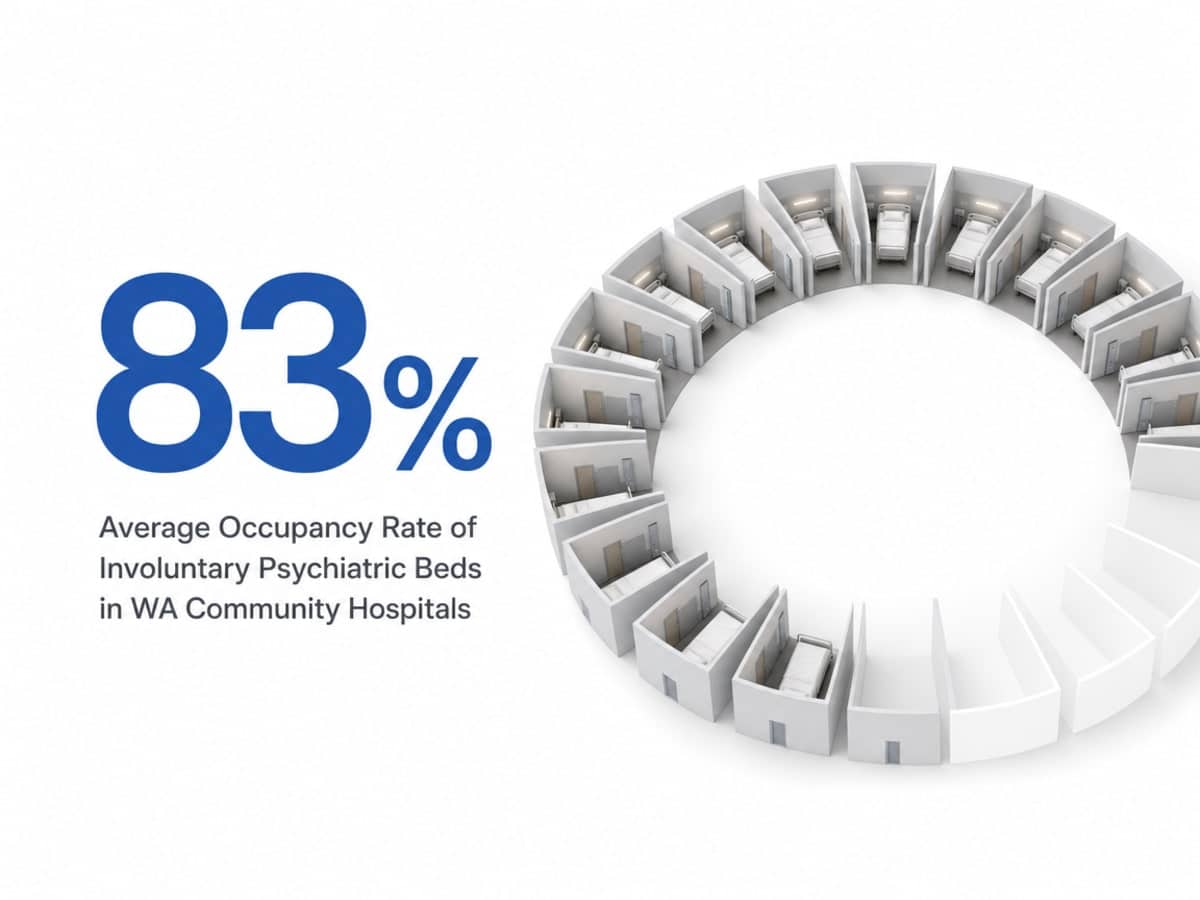
- Washington’s acute psychiatric system runs tight: only 13 community hospitals are certified for involuntary admissions, staffing 453 beds at 83 percent average occupancy 3.
- State hospital access has narrowed under forensic caseload pressure 6, and just 297 civil commitment beds serve the entire 90- and 180-day pathway statewide 8.
- For treatment-resistant or dual-diagnosis cases, workforce shortages mean licensed beds don’t always translate into admissions, making local waits stretch into weeks 11.
- Families in the tightest bottlenecks can run a Washington intake and an out-of-state specialty conversation in parallel, keeping local options open without losing another week.
When the Waitlist Becomes the Crisis: Navigating Washington’s Mental Healthcare Bottlenecks
You’ve already made more phone calls this month than you can count. The intake coordinator at the Seattle hospital said they’d call back. The E&T center in Snohomish County said they were full through the weekend. Your loved one’s outpatient psychiatrist is booked into next quarter. And the person you’re trying to help — the one with the treatment-resistant depression, or the psychosis that came back after the last medication trial, or the bipolar cycling that no one has been able to stabilize — is still at home, still struggling, still waiting.
You’re not overreacting. Washington’s system is genuinely tight at the top end of acuity. Only 13 community hospitals across the state are certified for involuntary psychiatric admissions, and those beds run at high occupancy year-round 3. The result is a queue that forms before you even know you’re in it.
This guide is written for the family member acting as the case manager, the spouse tracking every discharge summary, and the clinician looking for a higher-acuity option than what’s locally available. It walks through what Washington actually offers at each level of care, where the bottlenecks sit, and when it becomes reasonable — sometimes clinically necessary — to look outside state lines. No pep talks. No checklists you’ve already outgrown. Just the math of the system you’re inside, and what to do next.
The Capacity Math Behind Washington’s Long Waits
Why Acute Involuntary Beds Are So Hard to Reach
When the intake line tells you there’s no bed available, you’re not hearing a stall. You’re hearing the arithmetic of a system that was built tight and never quite loosened. Across Washington, only 13 community hospitals are certified to accept involuntary psychiatric admissions, and together they staff 453 beds that run at an average occupancy of 83 percent 3. That’s the pool your loved one is trying to enter from an ER, a mobile crisis team, or a Designated Crisis Responder’s evaluation.
Eighty-three percent doesn’t sound catastrophic on paper. In a hospital, it is. Psychiatric units can’t flex the way a med-surg floor can — patients can’t share rooms across sex or acuity, discharge planning takes days rather than hours, and a single high-acuity admission can hold a bed for weeks. When you sit at that occupancy rate statewide, most units on most days are functionally full for the next person who calls. The bed you need has to open before your loved one can be considered, and the person ahead of you in the queue is often already boarding in an emergency department somewhere else in the state.
This is why the phrase “we’ll call you when something opens” lands so hard. It’s honest. It’s also why families who have already cycled through one or two of those 13 hospitals — and who need something more specialized than a general psych unit anyway — start asking whether a program outside the state can respond faster. That’s not impatience. That’s reading the room correctly.
State Hospitals Are Increasingly a Forensic System
If you’ve been told a referral to Western State or Eastern State Hospital might be the next step, it’s worth understanding what those hospitals have quietly become. Washington’s state psychiatric hospitals now serve a caseload weighted heavily toward forensic patients — people admitted through the criminal legal system — along with a smaller slice of civil patients with psychotic disorders or bipolar diagnoses classified as high acuity. Lengths of stay and occupancy at the state hospitals both run higher than at other inpatient facilities 6.
What that means for a family: the door isn’t closed, but it’s narrow, and the wait inside is long. A civil high-acuity patient can be appropriate for state hospital care and still spend weeks or months waiting for a bed while forensic admissions take priority. For treatment-resistant conditions that need active medication changes, clozapine titration, or an integrated dual-diagnosis approach, a state hospital placement isn’t always the clinical match either — it’s often a holding pattern for stability rather than a specialty environment for progress.
None of this is anyone’s fault. It’s a policy trajectory. But it’s part of why the civil high-acuity beds you actually want are so scarce downstream.
Workforce Is the Ceiling Nobody Sees
Beds are the number everyone quotes. Staff are the number that actually decides whether a bed can be used. Washington’s 2022 Behavioral Health Workforce Assessment flagged a limited supply of residential and substance use disorder facilities relative to the broader behavioral health workforce, and identified staffing gaps that shape access to intensive psychiatric and dual-diagnosis care 11.
That’s why bed expansions don’t fully close the gap. A unit can be licensed for 16 beds and only staff 12. A new civil commitment contract can add capacity on paper and take a year to fill because there aren’t enough psychiatric nurses, psychiatric mental health nurse practitioners, or board-certified psychiatrists to run the shift. When you hear about new facilities opening, it’s real progress — and it doesn’t necessarily shorten the wait for the person you’re helping this week.
What Washington Actually Offers at Each Level of Care
Crisis Stabilization, E&T Centers, and Community Hospital Psych Units
When someone needs more than a few hours of acute mental health care, Washington sorts them into one of two structural paths: a freestanding evaluation and treatment (E&T) facility, or a psychiatric unit inside a community hospital 9. That distinction matters more than it sounds. Freestanding E&T centers are licensed only for mental health treatment and can’t provide acute medical care, which means if your loved one has a co-occurring medical issue — an unstable heart rhythm from a medication reaction, a recent overdose, an eating disorder complication — an E&T center often can’t take them 10.
Below that tier sits crisis stabilization. The Department of Commerce counts 1,063 licensed crisis behavioral health treatment beds across Washington, a category that folds stabilization and E&T services together 4. That number sounds generous until you remember it’s spread across the whole state and split across acuity levels, age groups, and voluntary versus involuntary status. A 16-bed E&T facility in one county doesn’t help a family in another county at 2 a.m.
Community hospital psych units are the workhorses for higher-acuity cases and for patients who need medical oversight alongside psychiatric care. They’re also where the queue is longest. If your loved one has been cycling between an ER, a crisis stabilization stay, and discharge home without ever landing in a unit that can actually hold them long enough to change a medication regimen, you’re seeing the seams in the system, not a failure of your advocacy.
The 90- and 180-Day Civil Commitment Bottleneck
Acute inpatient care buys days, sometimes a couple of weeks. For a treatment-resistant condition — the kind where the last three medication trials didn’t hold, or the psychosis keeps returning within a month of discharge — that isn’t enough time to do the work. The next tier is 90- and 180-day civil commitment, which is the longer-term involuntary track designed for exactly those cases.
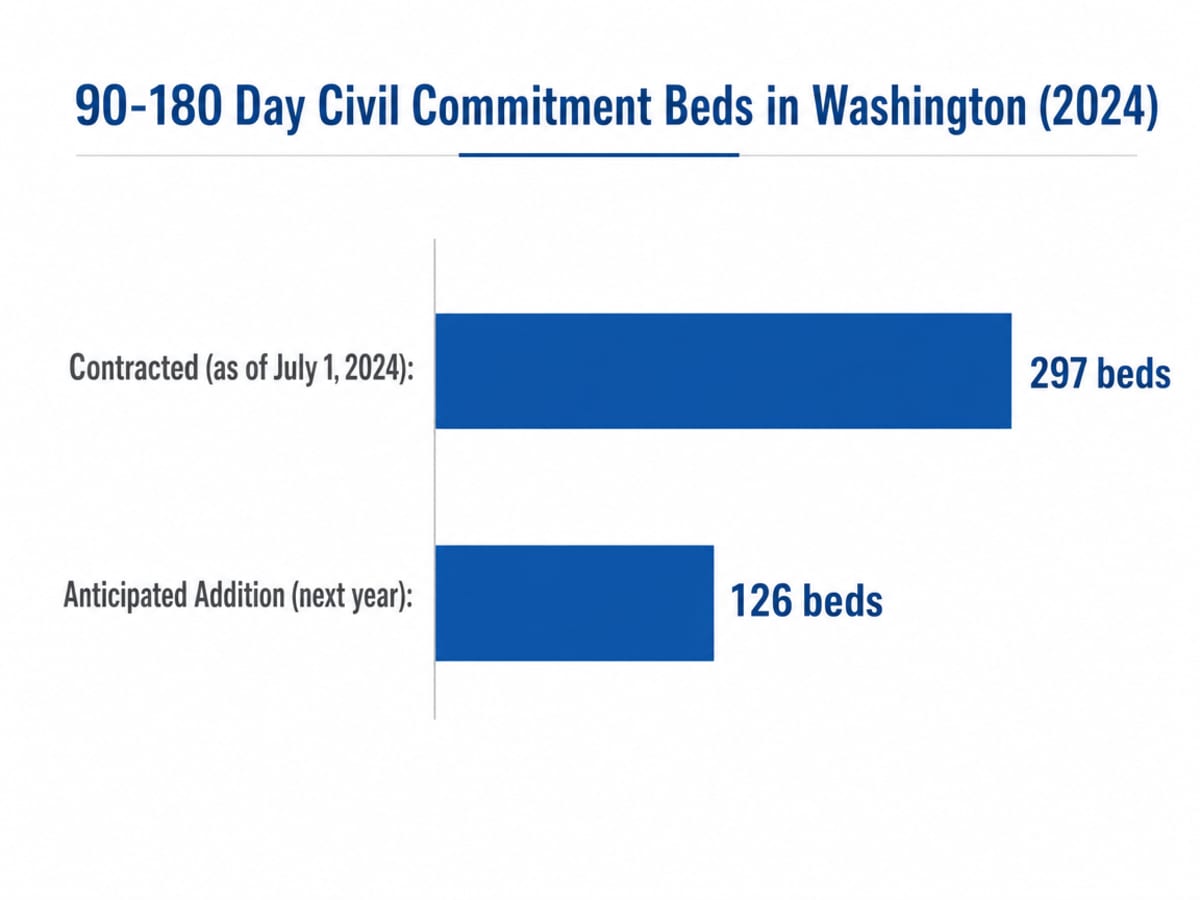
Here’s the scale you’re working with. As of July 1, 2024, the Health Care Authority contracted 297 civil commitment beds across community hospitals and freestanding E&T facilities for 90- and 180-day treatment statewide, with an anticipated addition of 126 beds within the following year 8. Two hundred ninety-seven beds. For a state of nearly eight million people. Even after the planned expansion lands, you’re looking at 423 beds total for the entire longer-term civil pathway.
What that means in practice: when the acute team tells you they’re going to “pursue a 90-day” for your loved one, they’re entering a queue that has almost no slack. The wait can stretch weeks. During that wait, your loved one is usually still on the acute unit, which is under its own occupancy pressure, or worse, discharged home with a plan that doesn’t match the acuity. The new beds are real progress. They also don’t shorten this month’s wait for the person you’re helping right now, which is why so many families of treatment-resistant patients start asking about specialty programs that can admit within days rather than weeks.
Secure Withdrawal for Co-Occurring Substance Use
If your loved one is using — actively, and in a way that’s tangled with the psychiatric symptoms — you’ve probably already learned that most psychiatric units want the substance use handled first, and most substance use programs want the psychiatric symptoms stabilized first. That circular referral is exhausting, and it’s why Ricky’s Law created Secure Withdrawal Management and Stabilization (SWMS) facilities as a distinct involuntary detox track.
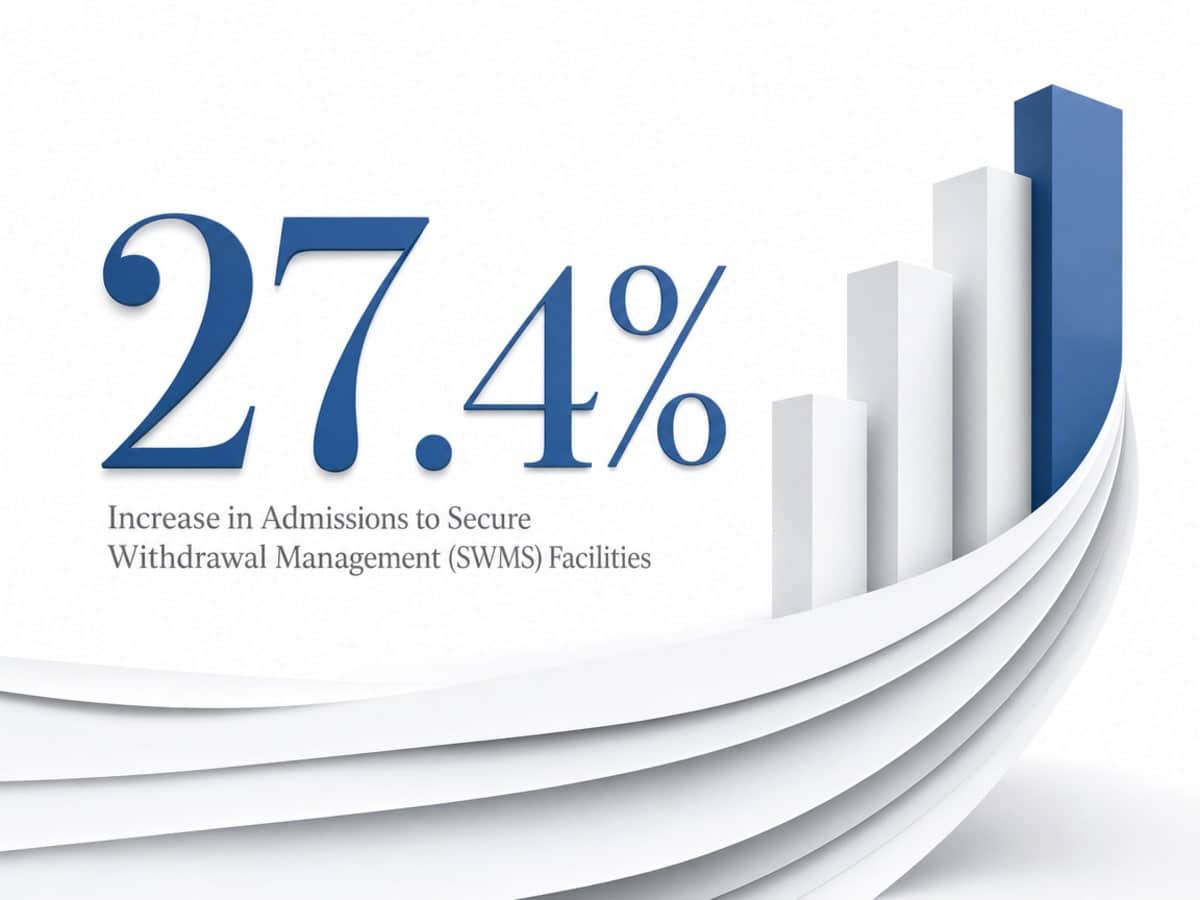
The trouble is capacity. Four SWMS facilities across Washington operate at a combined bed count of 57. In the reporting year ending September 30, 2024, those beds served 889 individuals and absorbed 1,050 admissions, a 27.4 percent jump in admissions from the prior 12-month period 1. That’s demand rising quickly against a nearly fixed supply. Looking further back, SWMS served 1,013 individuals in the year ending September 2020, dipped to 640 in 2022 during the pandemic period, and has been climbing since — 745 in 2023 and 889 in 2024 1.
For a dual-diagnosis family, that means the detox door is its own separate wait, not a shortcut around the psychiatric bed shortage. And SWMS is designed for stabilization, not for the layered work of clozapine titration, trauma processing, and medication management for co-occurring bipolar or schizophrenia. Once the detox stay ends, you’re back in the same queue for the psychiatric side of the care your loved one actually needs. This is the moment where families start asking whether one program that treats both — under one clinical team, on one timeline — is a more honest answer than assembling the pieces one wait at a time.
What the Next 72 Hours Look Like After a Call for Help
You’ve called the crisis line. Maybe a Designated Crisis Responder came out. Maybe your loved one is sitting in an ER right now, in a paper gown, waiting for a psychiatric consult. Here’s what the next three days usually look like, so you can stop guessing.
In the first 24 hours, the ER stabilizes any medical issue and requests a psychiatric evaluation. If your loved one meets involuntary criteria, a petition gets filed. Then the search for a bed begins — and it happens over the phone, one hospital at a time, across the 13 community facilities certified to accept involuntary admissions 3. If no bed opens, they board in the ER. Boarding for 48 to 72 hours is common. Boarding for a week is not unheard of.
By hour 48, one of three things has usually happened:
- A bed opened somewhere in the state and your loved one was transported, often far from home.
- Or the acute crisis softened enough that the team is talking about discharge with an outpatient follow-up you already know won’t hold.
- Or you’re still boarding, and the conversation has shifted to whether a freestanding E&T center might take them — which it can’t if there’s a co-occurring medical issue 10.
By 72 hours, the initial involuntary hold expires and a probable cause hearing decides whether to extend. If extended, the queue for a 90- or 180-day civil bed starts, and that queue moves in weeks, not days 8.
Knowing this timeline in advance lets you make one important call earlier: whether to also open a parallel intake conversation with an out-of-state specialty program while the Washington process runs. Running both tracks at once isn’t giving up on the local option. It’s refusing to lose another week.
When Crossing State Lines Becomes the Faster Clinical Path
Who Actually Benefits from Out-of-State Specialty Care
Out-of-state care isn’t the right answer for everyone. Plenty of Washington residents do well with a community psychiatrist, an intensive outpatient program, and a good therapist. If that’s working for your loved one, keep going.
The families who benefit from crossing state lines are usually in a narrower situation:
- Their loved one has cycled through two or three medication trials without a durable response.
- Or the diagnosis sits in the treatment-resistant category — schizophrenia that hasn’t stabilized on standard antipsychotics, rapid-cycling bipolar disorder, severe depression that hasn’t lifted with first- and second-line agents.
- Or there’s active substance use tangled into the psychiatric picture, and the local system keeps handing them back and forth between programs that only treat one side at a time.
These are the cases where Washington’s tightest bottlenecks show up. State hospital access is narrowed by forensic caseload pressure 6. The 90- and 180-day civil bed queue moves in weeks 8. And workforce shortages mean even licensed beds don’t always translate into admissions this week 11. If you’re inside that Venn diagram, looking outside the state isn’t a failure of loyalty to local care. It’s a reasonable read of the math.
How ViewPoint in Prescott, Arizona Fits Treatment-Resistant and Dual-Diagnosis Cases
ViewPoint Dual Recovery is a Joint Commission-accredited psychiatric treatment facility in Prescott, Arizona. The clinical focus is narrow on purpose: treatment-resistant psychiatric conditions and dual diagnosis. That means treatment-resistant schizophrenia, rapid-cycling bipolar disorder, severe depression that hasn’t responded to standard care, trauma-related addiction, and co-occurring mental health and substance use disorders being treated at the same time by the same team.
A few things about the setup matter for a Washington family. Psychiatry is board-certified and available 24/7, which is what makes advanced medication strategies possible — including clozapine protocols, which many general psychiatric units aren’t staffed to initiate. Psychiatrists and therapists collaborate on each case rather than working in parallel silos, so the medication changes and the therapy work happen on the same clinical timeline. Length of stay is set by clinical need, not by an insurance calendar, which matters when the point of admission is to actually finish a titration or work through a trauma protocol instead of getting discharged mid-process.
The admissions team is set up to move quickly for out-of-state clients. That responsiveness is the specific thing families ask about when they’ve already waited weeks at home.
Comparing Three Paths Over the Next Two to Six Weeks
Here’s what the next two to six weeks tend to look like across three realistic paths. This isn’t a promise about any individual case — every situation depends on acuity, legal status, insurance, and what beds happen to open. But it maps the shape of the decision you’re actually making.
| Path | Typical acuity served | Where the wait sits | What the next 2–6 weeks look like |
|---|---|---|---|
| Stay on a Washington community hospital waitlist | Acute involuntary or voluntary psychiatric admission | Bed availability across 13 certified community hospitals running at 83% average occupancy 3 | ER boarding or home waiting, periodic callbacks, possible admission when a bed opens, often far from home |
| Pursue a Washington 90- or 180-day civil bed | Longer-term high-acuity civil commitment | Queue for 297 contracted beds statewide, with 126 more anticipated within a year 8 | Weeks in an acute unit or in limbo while the petition moves; placement into a longer-term bed if and when one opens |
| Out-of-state specialty admission (e.g., ViewPoint, Prescott, AZ) | Treatment-resistant psychiatric and dual-diagnosis cases | Admissions team responsiveness, insurance verification, records transfer | Intake conversation, clinical review, and admission planning built to move on a days-not-weeks timeline for out-of-state families |
Running the local track and an out-of-state intake conversation in parallel isn’t disloyal to the Washington system. It’s how you stop losing weeks to a queue that can’t tell you when it will move.
Practical Steps for the Family Doing the Case Management
You didn’t sign up to be a case manager. You became one because the system needed someone to hold the thread, and nobody else was going to. A few concrete moves can save you real time.
- Keep one document open — a single running file with your loved one’s diagnoses, current and past medications with doses and dates, prior hospitalizations, allergies, insurance information, and the name and number of every provider they’ve seen in the last two years. When an intake coordinator asks, you send it in ten seconds instead of ten minutes.
- Ask sharper questions on the phone. Instead of “do you have a bed,” try “are you staffed to admit this week for someone at this acuity, and do you accept patients on clozapine or with active substance use.” The answer tells you whether to keep waiting or move on.
- Run parallel tracks. Keep the Washington intake in motion while you also open a conversation with an out-of-state specialty program. If a Washington bed opens first, take it. If it doesn’t, you haven’t lost another week.
- Know that oversight is tightening — beginning July 1, 2025, Washington behavioral health agencies must report every discharge or transfer made without consent, and every premature exit from treatment 13. That won’t shorten your wait, but it does mean transitions are being tracked more carefully than before.
- Take one hour off the phone today. You’ll make better calls tomorrow.
Start a faster path to advanced care now
Get expert feedback on next steps for complex cases—no long wait required.
Frequently Asked Questions
Why is it so hard to get an inpatient psychiatric bed in Washington?
Only 13 community hospitals in Washington are certified for involuntary admissions, and together they staff 453 beds running at an average 83 percent occupancy 3. When most units are functionally full on most days, every new admission has to wait for someone else to discharge. That’s the queue you’re inside — not a stall, just tight arithmetic.
What’s the difference between an E&T center and a community hospital psychiatric unit?
A freestanding evaluation and treatment (E&T) center is licensed only for mental health care and can’t provide acute medical treatment 10. A community hospital psychiatric unit sits inside a full hospital, so it can manage co-occurring medical issues alongside psychiatric care. If your loved one has any active medical concern, an E&T center often can’t accept them, which narrows your options further.
When should a Washington family consider an out-of-state treatment center?
Consider it when the local queue keeps moving in weeks instead of days, when the diagnosis has already resisted two or three medication trials, or when the case involves both severe psychiatric symptoms and active substance use that local programs won’t treat together. Workforce shortages mean licensed beds don’t always mean available admissions 11. Looking outside the state is a reasonable read of that math.
Can someone on a 90- or 180-day civil commitment be transferred to a program outside Washington?
An active civil commitment is a legal order tied to Washington’s court and treatment system, and transfers outside the state generally require legal steps that vary by case. Many families pursue out-of-state care after the commitment ends, or on a voluntary basis if the person is willing. Talk with the treating team and, if needed, the assigned attorney about your specific situation.
What options exist for a loved one with both severe psychiatric symptoms and active substance use?
Washington offers Secure Withdrawal Management and Stabilization (SWMS) beds for involuntary detox — four facilities, 57 beds combined 1. SWMS handles stabilization, not the layered psychiatric work that treatment-resistant cases usually need. Once detox ends, you’re back in the psychiatric queue. Integrated programs that treat both sides on one clinical team, on one timeline, are often a more honest answer for dual-diagnosis families.
How does admission to ViewPoint in Prescott, Arizona actually work for a Washington resident?
ViewPoint’s admissions team is built to move quickly for out-of-state families. The intake conversation covers current symptoms, medications, prior hospitalizations, and insurance. From there, records are requested, a clinical review confirms fit for treatment-resistant or dual-diagnosis care, and admission planning — including travel logistics — proceeds on a days-not-weeks timeline. Length of stay is set by clinical need, not an insurance calendar.
References
- Ricky’s Law Involuntary Treatment Act annual report (2024). https://www.hca.wa.gov/assets/program/rickys-law-report-202410.pdf
- Ricky’s Law Involuntary Treatment Act update (2023). https://www.hca.wa.gov/assets/program/rickys-law-report-202310.pdf
- Inpatient Psychiatric Care Risk Model Report. https://ofm.wa.gov/wp-content/uploads/sites/default/files/public/publications/PCGInpatientPsychiatricCareRiskModelReport.pdf
- Behavioral Health Facilities Report – 2024. https://app.leg.wa.gov/ReportsToTheLegislature/Home/GetPDF?fileName=CommerceReports+BHF+2023-25+FINAL_e4a26a40-c774-486e-a83d-53b93020b7b4.pdf
- Involuntary Treatment Act/Ricky’s Law annual report (2022). https://www.hca.wa.gov/assets/program/rickys-law-report-202211.pdf
- Mental Health System Assessment – Initial Findings Report. https://ofm.wa.gov/sites/default/files/public/legacy/reports/MentalHealthSystemAssessmentInitialFindings.pdf
- Ricky’s Law Involuntary Treatment Act update (2020). https://www.hca.wa.gov/assets/program/rickys-law-report-202011.pdf
- 90- and 180-day civil commitment beds. https://www.hca.wa.gov/billers-providers-partners/program-information-providers/90-and-180-day-civil-commitment-beds
- Inpatient Psychiatric Capacity and Utilization in Washington State. https://www.wsipp.wa.gov/ReportFile/1585/Wsipp_Inpatient-Psychiatric-Capacity-and-Utilization-in-Washington-State_Report.pdf
- Crisis Mental Health Services and Inpatient Psychiatric Care: Capacity, Utilization, and Outcomes for Washington Adults. https://www.wsipp.wa.gov/ReportFile/1648/Wsipp_Crisis-Mental-Health-Services-and-Inpatient-Psychiatric-Care-Capacity-Utilization-and-Outcomes-for-Washington-Adults_Report.pdf
- 2022 Behavioral Health Workforce Assessment. https://wtb.wa.gov/wp-content/uploads/2022/12/BHWAC-2022-report_FINAL.pdf
- Involuntary Treatment for Substance Abuse: Client Outcomes. https://wsipp.wa.gov/ReportFile/1766/Wsipp_Involuntary-Treatment-for-Substance-Abuse-Client-Outcomes_Report.pdf
- House Bill Report: 6228-S2 (Behavioral Health Discharges and Transfers). https://lawfilesext.leg.wa.gov/biennium/2023-24/Htm/Bill%20Reports/House/6228-S2%20HBR%20APP%2024.htm