

Key Takeaways
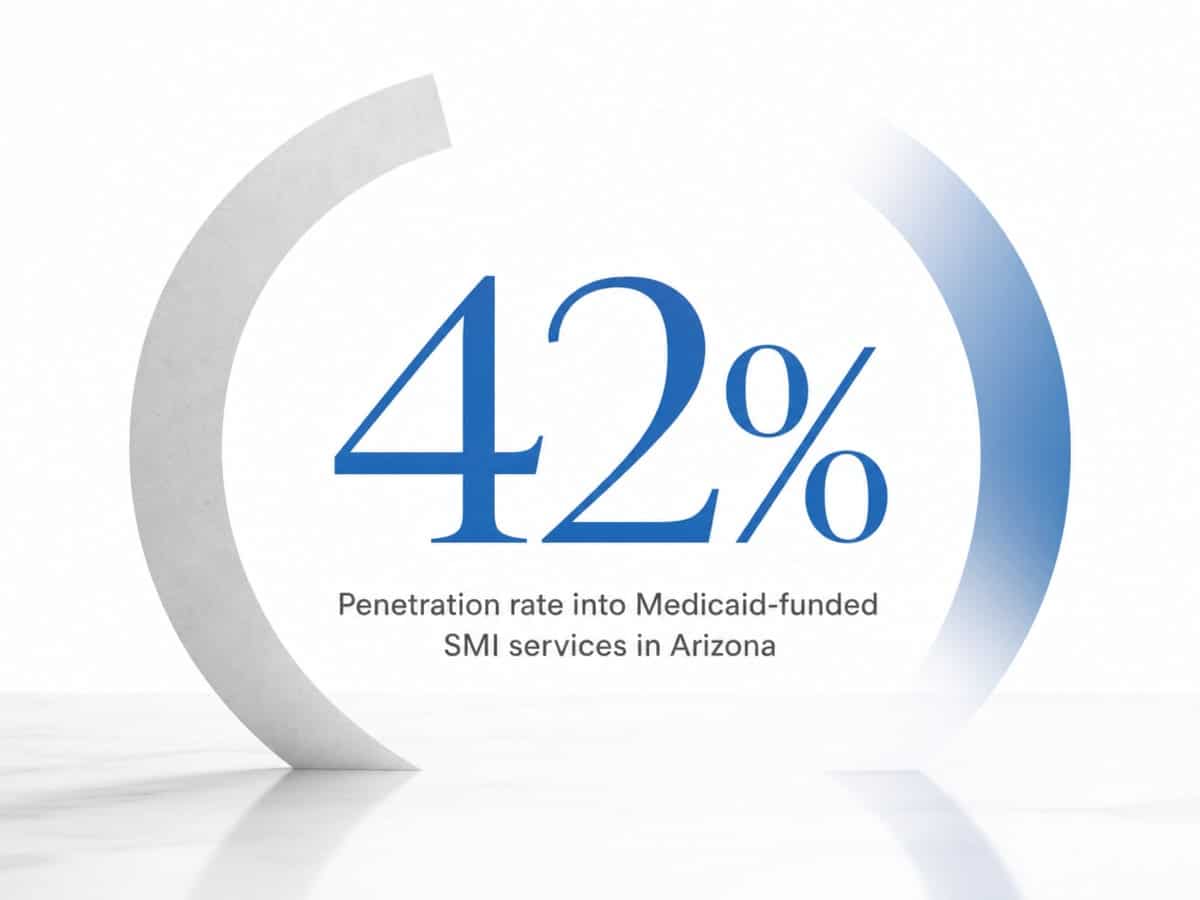
- Prescott sits inside an Arizona behavioral health system where only about 42% of adults with serious mental illness receive Medicaid-funded specialty services, leaving complex cases underserved.4
- Treatment resistance has a specific clinical definition — two adequate antipsychotic trials at 600 mg CPZ-equivalent for six weeks each with 80% adherence — and many cases labeled resistant have never actually met those thresholds.11
- Rapid-cycling bipolar and clozapine protocols require weeks of titration and observation, so length of stay tied to insurance authorization rather than clinical response often ends treatment mid-adjustment.13
- Before choosing a program, compare how it defines treatment resistance, whether psychiatry and substance use care operate as one team under SAMHSA’s integrated model, and whether duration is set by response.8
When Standard Programs Stop Working
You already know the pattern. A new medication starts, holds for a few weeks, then loses ground. A 30-day program discharges you or your loved one right as things begin to settle. An outpatient prescriber adjusts the dose, refers out for therapy somewhere else, and hopes the two sides talk. They rarely do.
If you’ve cycled through two or three antipsychotic trials, a short-stay rehab, and a rotation of outpatient providers without stable results, that isn’t a personal failure. It’s a clinical signal. For schizophrenia, the consensus definition of treatment resistance begins after failure of at least two adequate antipsychotic trials at therapeutic doses. For rapid-cycling bipolar disorder and co-occurring substance use, the picture is similar: standard sequencing runs out of moves, and the case gets labeled complicated rather than treated differently.10
Prescott sits inside an Arizona behavioral health system that was not built around cases like yours. Most programs are designed for a typical treatment arc, not for someone whose diagnosis has already outlasted the arc. That mismatch is where people fall out of care, or bounce between crisis lines, ERs, and short admissions that stabilize the moment without changing the trajectory.
What follows is a plain look at why that happens here, what genuinely specialized psychiatric care requires, and how ViewPoint Dual Recovery approaches the cases other programs consider too complex.
The Arizona System Behind the Prescott Gap
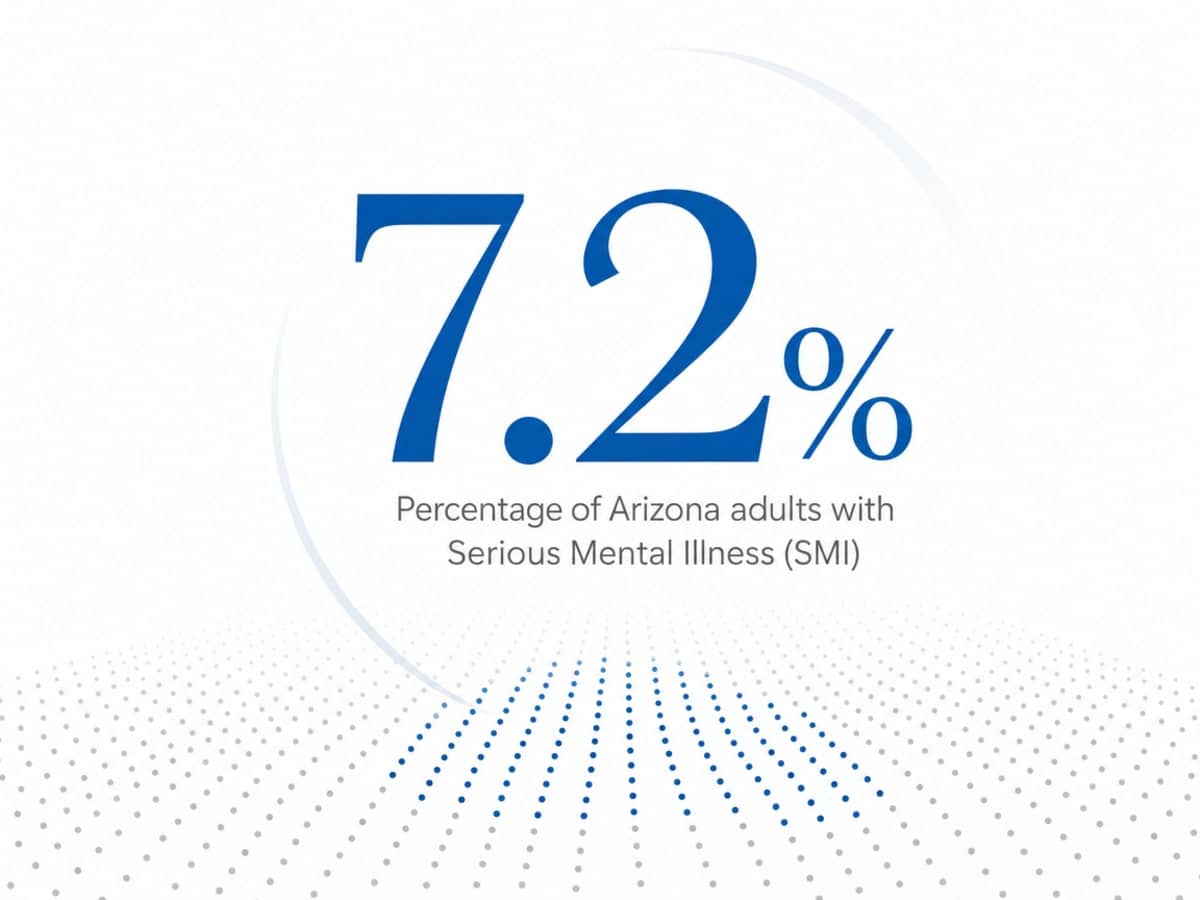
Prescott’s treatment options don’t exist in isolation. They sit inside a statewide system that, by its own numbers, reaches fewer than half the adults who need it. AHCCCS estimates Arizona has an adult population of about 5,994,209, a serious mental illness rate of 7.2%, and roughly 432,073 adults living with SMI. Of those, only about 180,504 are receiving Medicaid-funded SMI services — a penetration rate near 42%. More than half of Arizona adults with serious mental illness aren’t in the specialty system at all.4
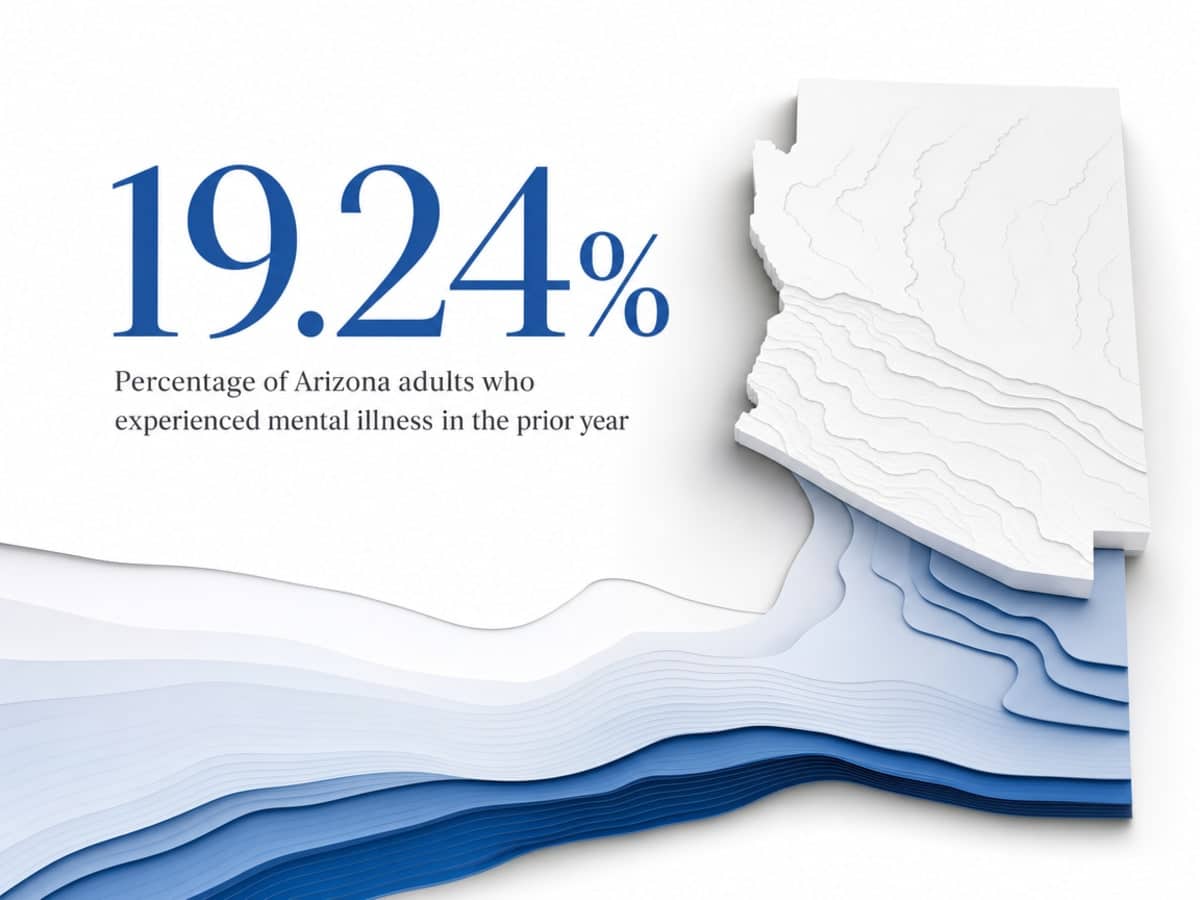
Some of that gap is eligibility and enrollment. A lot of it is workforce. The University of Arizona Center for Rural Health has documented that 19.24% of Arizona adults experienced mental illness in the prior year, against a behavioral health workforce that is unevenly distributed and thinly stretched outside the Phoenix and Tucson metros. Yavapai County lives inside that thinness. Prescott has clinicians and programs, but the roster of providers who can competently run clozapine, complex mood-stabilizer combinations, or true integrated dual diagnosis care is smaller than the population that needs them.1
Here’s how that translates into what you’ve probably already lived through. A general outpatient prescriber can start a second antipsychotic, but may not have the infrastructure to move to clozapine when the second one fails. A 30-day rehab can detox and hold, but often can’t manage a rapid-cycling bipolar presentation that destabilizes on discharge. A therapy practice can do excellent work on trauma, but can’t titrate the medication that’s making the trauma work possible.
The gap isn’t that Prescott lacks care. It’s that complex cases need a specific kind of care, and there are fewer places built for it than the raw prevalence numbers would suggest. That’s the space a treatment-resistant psychiatric facility is meant to fill — not to replace outpatient providers, but to handle the presentations those providers were never resourced to carry.
What ‘Treatment-Resistant’ Actually Means
The word gets used loosely. A prescriber says a case is “tough” or “complicated,” and it starts to sound like a personality trait rather than a clinical category. It isn’t. Treatment-resistant schizophrenia has a specific definition, and knowing where you or your family member actually sit against it changes what should happen next.
The 2020 consensus criteria are concrete. To meet the threshold for treatment-resistant schizophrenia, a person needs:11
- active symptoms for at least 12 weeks,
- treatment with at least two different antipsychotics at doses equivalent to 600 mg or more of chlorpromazine daily for at least six weeks each, and
- documented adherence of at least 80%.
The British Journal of Psychiatry review reaches the same core point: failure of at least two adequate treatment episodes with different antipsychotic drugs is required before resistance can be established.10
Read those numbers carefully, because each one exists for a reason. The 12-week symptom window rules out short-term flare-ups. The 600 mg CPZ-equivalent dose rules out under-treatment dressed up as failure. The six-week duration per medication rules out trials that were stopped too early to know if the drug worked. And the 80% adherence figure is the one that quietly disqualifies more cases than any other — because if pills weren’t taken consistently, what looks like resistance may be something the field calls pseudo-resistance. That distinction matters. Real resistance points toward clozapine and specialized protocols. Pseudo-resistance points toward addressing the reasons adherence broke down in the first place.10
Rapid-Cycling Bipolar and the Limits of Short-Stay Care
Rapid-cycling bipolar disorder — four or more mood episodes in twelve months — is where the standard 30-day model quietly falls apart. You may already know the shape of it. A depressive stretch pulls you into treatment. By the time an admission ends, mood has flipped, or a mixed state has emerged, and the discharge plan was written for the person you were two weeks ago, not the one walking out the door.
The pharmacology here is not a single-answer problem. Effective regimens for rapid-cycling presentations draw from lithium, divalproex, lamotrigine, carbamazepine, and atypical antipsychotics, often in combination, and typically require reducing agents that promote cycling — antidepressants being the most common culprit. More recent reviews reinforce the same core toolkit, noting that valproate, lamotrigine, aripiprazole, and quetiapine each play distinct roles across manic, depressive, and maintenance phases, and that response is genuinely heterogeneous from one person to the next.12,13
Short-stay programs rarely have the runway for that process. A three- or four-week admission can barely establish a steady-state level on lithium or divalproex, let alone observe how mood tracks across a full cycle. Antidepressant taper, if that’s part of the picture, needs weeks of observation to know whether cycling actually slows. Lamotrigine titration alone takes about six weeks to reach a therapeutic dose safely. When the calendar runs out before the medication chemistry has settled, discharge becomes a handoff mid-experiment.
What complex bipolar cases need is a setting where the length of stay matches the pharmacology, not the insurance authorization. That means watching mood daily across weeks, adjusting one variable at a time, and treating any co-occurring substance use in the same building rather than referring it out. It also means clinicians who are comfortable holding a mixed or dysphoric presentation without reflexively adding an antidepressant that may worsen the cycle. That is the level of care rapid-cycling bipolar actually asks for, and it is the level ViewPoint is built to provide.
Dual Diagnosis Done as One Team, Not Two
Most people who arrive at ViewPoint have already lived through the split. A psychiatrist manages the medication. A therapist manages the trauma work. A separate rehab manages the substance use. Three offices, three intake forms, three sets of notes that rarely land on the same desk. When something destabilizes — a relapse, a new symptom, a medication change — no single clinician has the full picture, and the person in the middle ends up translating between providers who don’t talk to each other.
That fragmentation is not a small inconvenience. It’s the specific failure mode that co-occurring disorders keep exploiting. SAMHSA’s evidence-based practices kit defines integrated treatment plainly: it happens when
“the same clinicians or teams of clinicians, working in one setting, provide appropriate mental health and substance abuse interventions in a coordinated fashion”.8
Not two programs sharing a fax line. One team, one setting, one plan. SAMHSA goes further in its practice principles, stating that
“integrated care is the preferred model of treatment for individuals with CODs,”
and framing screening under a “no wrong door” standard — meaning anyone who shows up for mental health care should be screened for substance use, and anyone who shows up for substance use should be screened for mental illness, regardless of which door they walked through first.9,7
What that looks like in practice at a facility built for it: the psychiatrist adjusting your clozapine is in the same case conference as the therapist running your trauma protocol and the counselor working with you on stimulant use. When one variable moves, the others see it the same day. If a mood stabilizer starts blunting the trauma work, that gets caught in a team meeting, not three weeks later in a referral loop. If cravings spike during a medication change, the response is a joint clinical decision, not a phone tree.
For you or the person you’re helping, the practical difference is quieter than it sounds. Fewer intake interviews telling the same painful history. Fewer contradictions between what one provider said and what another prescribed. Fewer discharge summaries that treat the addiction and the psychiatric illness as if they belonged to two different people. ViewPoint’s integrated psychiatry-and-therapy team is structured around that SAMHSA definition — same clinicians, one setting, one coordinated plan — because for treatment-resistant and dual-diagnosis presentations, anything less has already been tried.
How ViewPoint’s Prescott Facility Approaches Complex Cases
Root-Cause Psychiatric Assessment on Intake
The intake at a treatment-resistant facility should look different from the intake at a general program, and at ViewPoint it does. Instead of a symptom checklist and a diagnosis carried forward from the last discharge summary, the first days are spent reconstructing what has actually been tried, at what dose, for how long, and with what documented adherence. That reconstruction matters because the consensus definition of treatment resistance turns on those specifics — two adequate antipsychotic trials at 600 mg CPZ-equivalent or more for at least six weeks each, with at least 80% adherence.11
If those thresholds were never met, the case may be pseudo-resistant rather than truly resistant, and the clinical path changes accordingly. If they were met, clozapine and specialized augmentation come onto the table honestly. Either way, you get an answer that prior settings often didn’t have time to reach.10
Root-cause assessment also means screening for substance use in psychiatric presentations and for psychiatric illness in substance use presentations — the “no wrong door” standard SAMHSA describes for co-occurring conditions. Nothing about your history gets treated as background noise.7
Clozapine Protocols and Medication Stabilization
Clozapine is the medication most outpatient settings quietly avoid. It works — evidence positions it as first-line for treatment-resistant schizophrenia — but it requires weekly blood monitoring, careful titration, and a clinician comfortable holding the medication through early side effects. Most general programs don’t have the infrastructure. Complex cases end up cycling through second and third antipsychotics that the literature already predicts won’t work, because the setting can’t run the drug that would.11
A facility built for treatment-resistant psychiatry runs those protocols as routine work rather than an exception. That includes clozapine initiation with the required lab schedule, dose adjustment based on trough levels rather than guesswork, and management of the side effects — sedation, metabolic changes, hypersalivation — that cause people to discontinue prematurely.
The same principle applies to mood stabilizer work for rapid-cycling bipolar disorder. Lithium, divalproex, lamotrigine, and carbamazepine each require their own titration and monitoring rhythm, and atypical antipsychotics often layer in. When that pharmacology needs to happen alongside active substance use treatment, having the psychiatrist and the addiction team in the same building — not the same referral network — is what keeps the plan intact.13,12
Duration Set by Clinical Response, Not a 30-Day Clock
Here’s where the mismatch between complex cases and standard programs becomes most concrete. Clozapine titration to a therapeutic level takes weeks. Lithium reaches a meaningful steady state around days five to seven, and observing whether it actually slows cycling takes considerably longer. Lamotrigine’s safety-driven titration schedule alone runs about six weeks. If discharge is scheduled before those clocks finish, the medication story ends unfinished, and the next relapse is essentially built into the plan.
ViewPoint’s length of stay is set by clinical response rather than a preset authorization window. That means you or the person you’re helping stays long enough to see whether a clozapine trial actually holds, whether a mood-stabilizer combination steadies the cycling, whether the co-occurring substance use quiets when the psychiatric picture does. Some cases settle in weeks. Some take considerably longer. The point is that the calendar doesn’t dictate the treatment — the treatment dictates the calendar.
For someone who has been discharged mid-adjustment before, that difference is not administrative. It’s the reason a next attempt might actually reach an endpoint.
Where State Behavioral Health Dollars Actually Go
If you want to understand why complex cases keep landing in short admissions and crisis loops, look at how Arizona actually spends its behavioral health money. AHCCCS’s Medicaid spending on services for adults with serious mental illness totals $911.1 million, and the categories tell you a lot about what the system is built to do:5
- Inpatient hospital services take 17.7%.
- Pharmacy takes 15.8%.
- Crisis services take 15.0%.
- Residential facilities take 13.9%.
- Everything else — outpatient care, case management, rehabilitation, peer support, and the rest of community-based work combined — sits in the remaining 37.6%.
Read those slices together. More than 46 cents of every SMI dollar goes to hospitalization, crisis response, and residential stays. Those are the acute end of the system, the places you land when something has already broken. That spending is not wrong — people need those services, and they need them fast — but it does tell you where the runway is short. There is less funded room for the sustained, integrated psychiatric work that treatment-resistant cases actually require: weeks of clozapine titration, methodical mood-stabilizer adjustment, and dual-diagnosis care delivered by one team rather than three.
This is part of why a specialized facility matters. When the surrounding system is weighted toward acute stabilization and pharmacy fills, the middle layer — the deliberate, longer-arc clinical work that changes a treatment-resistant trajectory — has to happen somewhere built for it.
Crisis Access and Aftercare in Yavapai County
If things escalate at 2 a.m. — whether it’s someone you love or you — you shouldn’t have to guess where to call. The Arizona Statewide Crisis Hotline is 1-844-534-HOPE (4673), staffed 24 hours a day, seven days a week. AHCCCS sets a hard standard on those lines: calls are answered within a maximum of 18 seconds, or about three rings. That matters when the person on the other end is deciding, in real time, whether to keep holding.14,15
Yavapai County sits inside the same crisis structure. A call can trigger a mobile crisis response, a warm handoff to a local provider, or a same-night facility placement, depending on what the situation actually needs. For a treatment-resistant psychiatric case, the important part is what happens after the crisis is contained. A stabilization bed can quiet the acute moment. It cannot titrate clozapine, reassess a mood-stabilizer regimen, or run the integrated dual-diagnosis work the underlying picture requires. That’s the handoff a specialized facility is built to receive.
Aftercare has its own geography. Prescott’s rural edges and the drive times across Yavapai County make in-person continuity hard for some families. Arizona telepractice rules allow licensed behavioral health clinicians to continue care with clients located in the state, with documented consent and clear risk framing. Used well, that keeps the therapy relationship intact when someone returns home, without pretending telehealth replaces the on-site psychiatric work that stabilized them in the first place.16
Reaching Out When You’ve Already Tried Everything
If you’re reading this after years of appointments, medication changes, and short admissions that didn’t hold, the idea of starting again can feel worse than staying still. That’s fair. Another intake interview, another retelling of the same painful history, another program that might discharge you mid-adjustment — none of it sounds like relief.
A specialized reach-out is a smaller ask than it sounds. It doesn’t commit you to admission. It’s a conversation about what has actually been tried, at what dose, for how long, and where the previous plan stopped short of the thresholds that define treatment resistance clinically. Sometimes that call surfaces a pseudo-resistance picture that a general provider can carry forward. Sometimes it points toward clozapine, a mood-stabilizer rework, or the kind of integrated dual-diagnosis care that only happens when psychiatry and therapy share a case in the same setting.8,11
ViewPoint Dual Recovery is set up for that first conversation — for the person who has already been through failed treatment, and for the family member or referring clinician calling on their behalf. If the moment is acute, the Arizona Statewide Crisis Hotline at 1-844-534-HOPE (4673) is available around the clock. If it isn’t acute but nothing has held for a long time, that’s still a reason to reach out.14
Start a personalized assessment for complex psychiatric needs
Receive expert recommendations tailored to your unique clinical challenges and history.
Frequently Asked Questions
How is ViewPoint’s Prescott facility different from a standard 30-day rehab?
A 30-day rehab is built around detox and short-term stabilization. ViewPoint is built around treatment-resistant psychiatry and dual diagnosis, with length of stay set by clinical response rather than a preset authorization window. That matters because clozapine titration, mood-stabilizer adjustment, and lamotrigine’s six-week ramp all take longer than a month to evaluate honestly.11
Does ViewPoint work with AHCCCS or private insurance?
ViewPoint accepts a range of coverage options, and the intake team walks through benefits with you before admission so there are no surprises mid-treatment. Because Arizona’s SMI system leaves real gaps in specialty care access, a first call typically includes verifying what your plan covers, what prior authorizations are needed, and how clinical duration will be documented against your specific benefits.4
How long does treatment typically last for treatment-resistant cases?
There isn’t a single number, and any facility that quotes one hasn’t looked at the case yet. Clozapine trials, mood-stabilizer combinations for rapid-cycling bipolar, and integrated dual-diagnosis work each carry their own timelines. Some cases settle in a few weeks. Others need longer to know whether a regimen actually holds. Duration is set by response, not by a preset discharge date.12
Can family members be involved in treatment planning and aftercare?
Yes. Family counseling is a core service, and family members are often part of team meetings when the person in treatment consents. For aftercare, Arizona telepractice rules allow licensed clinicians to continue therapy with clients located in the state, which helps preserve family sessions when someone returns home to a distant part of Yavapai County or further out.16
What should someone do during a psychiatric crisis in Yavapai County?
Call the Arizona Statewide Crisis Hotline at 1-844-534-HOPE (4673). It’s staffed 24 hours a day, seven days a week, and calls are answered within about three rings. That line can dispatch mobile crisis response or coordinate a same-night placement. Once the acute moment is contained, a specialized facility can take on the underlying psychiatric work a crisis bed isn’t built to do.14,15
What happens on the first call when reaching out to ViewPoint?
The first conversation is a clinical intake screen, not a commitment. Expect questions about diagnosis history, medications tried, doses, durations, adherence, prior admissions, and any co-occurring substance use — screened together under SAMHSA’s “no wrong door” standard. That call surfaces whether the picture points toward true treatment resistance, a pseudo-resistant case that needs different steps, or an integrated dual-diagnosis plan.7
References
- The Arizona Behavioral Health Workforce. https://crh.arizona.edu/sites/default/files/2022-03/20210702_AZ_BH_WorkforceReport_FINAL_0.pdf
- NSDUH Behavioral Health Barometer: Arizona, Volume 8. https://www.samhsa.gov/data/report/nsduh-behavioral-health-barometer-arizona-volume-8
- Arizona (AZ) | CBHSQ Data – SAMHSA. https://www.samhsa.gov/data/report/arizona-az
- 2025 Service Capacity Assessment – AHCCCS. https://www.azahcccs.gov/AHCCCS/Downloads/ArnoldVSarn/AnnualReports/2025/2025_AnnualServiceCapacityAssessment.pdf
- FY 2025 Behavioral Health Funding Overview – House Appropriations Subcommittee on Budgetary Funding Formulas – January 25, 2024. https://www.azjlbc.gov/25bhejlbcpres.pdf
- Population Health and Vital Statistics – Mental Health Indicators (Arizona Department of Health Services). https://pub.azdhs.gov/health-stats/hip/index.php?pg=mental
- Managing Life with Co-Occurring Disorders – SAMHSA. https://www.samhsa.gov/mental-health/serious-mental-illness/co-occurring-disorders
- Integrated Treatment for Co-Occurring Disorders: The Evidence. https://library.samhsa.gov/sites/default/files/ebp-kit-the-evidence-10242019.pdf
- Substance Use Disorder Treatment for People with Co-Occurring Mental Disorders. https://library.samhsa.gov/sites/default/files/pep20-06-04-006.pdf
- Treatment resistant schizophrenia. https://pmc.ncbi.nlm.nih.gov/articles/PMC6231547/
- Treatment-Resistant Schizophrenia. https://pmc.ncbi.nlm.nih.gov/articles/PMC7725152/
- Current Status and Treatment of Rapid Cycling Bipolar Disorder. https://pubmed.ncbi.nlm.nih.gov/38230858/
- Treatment of rapid-cycling bipolar disorder. https://pubmed.ncbi.nlm.nih.gov/17029493/
- Crisis Hotlines – AHCCCS. https://www.azahcccs.gov/BehavioralHealth/crisis.html
- Crisis Services in Arizona – AHCCCS. https://www.azahcccs.gov/AHCCCS/Downloads/CrisisServicesinArizona.pdf
- Telepractice Guidelines – Arizona Board of Behavioral Health Examiners. https://bbhe.az.gov/sites/default/files/2025-01/Telepractice%20guidelines010321.pdf