Key Takeaways
- Arizona licenses many facilities for co-occurring care 1, but licensing sets a floor, not a ceiling, and standard programs routinely decline cases involving active psychosis, clozapine candidates, rapid-cycling bipolar, or severe untreated trauma.
- Crisis resources like 988, the 1-844-534-4673 line, and walk-in stabilization centers are available regardless of insurance 5, 6, but they stabilize the next 72 hours rather than treat complex dual diagnosis over months.
- When screening Arizona programs, ask about 24/7 on-site board-certified psychiatry, in-house clozapine monitoring, what drives length of stay, and how psychiatry and therapy share one plan 11.
- Simultaneous psychiatric and substance use treatment on one clinical team, matched to severity and delivered in a specialized residential setting, is the next step for families who keep hearing no.
When Standard Programs Say No: The Turn-Away Problem
You already know how this call goes. You describe your situation, or your loved one’s, to the intake coordinator. There is a pause. Then a version of the same answer you have heard before: “We’re not really set up for a case like that.” Sometimes it is polite. Sometimes it comes with a referral to a crisis line. Either way, the door closes, and you are back where you started, only more tired.
If you are reading this, standard treatment has not worked, or standard treatment will not take the case. Maybe the psychiatric symptoms are too active. Maybe there is a history of failed medication trials, a clozapine conversation that nobody wants to lead, or a rapid-cycling bipolar pattern that unravels within a week of any structured program. Maybe trauma keeps driving relapse the moment sobriety exposes it. Maybe an active psychosis sits on top of active substance use, and the addiction program says “stabilize first,” while the psychiatric program says “get sober first.”
That loop is the turn-away problem, and it is not your fault. Many Arizona facilities are licensed to treat co-occurring mental health and substance use disorders 1, but licensing is not the same as capability. Standard programs are built around a middle band of severity. When a case sits outside that band, admissions politely pass.
Specialized facilities exist for exactly this reason. ViewPoint Dual Recovery in Prescott is one of them, built to accept the presentations other programs decline. Before we get to what that looks like, it helps to name, plainly, which cases keep hearing no.
What Dual Diagnosis Actually Means for Complex Cases
The Clinical Presentations That Get Denied
Dual diagnosis, in plain terms, means a mental health condition and a substance use disorder happening at the same time. That definition is easy. The hard part is what sits underneath it, because the phrase covers everything from mild anxiety with weekend drinking to active psychosis paired with fentanyl use. Standard programs are comfortable with the first end of that range. They are not built for the other end.
Here are the presentations that tend to hear no at intake:
- Treatment-resistant schizophrenia, especially when clozapine is on the table. Clozapine works, but it requires ongoing blood monitoring and prescribers who know the protocol. Most co-occurring programs do not staff for that.
- Rapid-cycling bipolar disorder, where moods shift faster than a standard 30-day curriculum can respond to.
- Treatment-resistant major depressive disorder that has already failed multiple medication trials.
- Severe trauma that drives relapse the moment sobriety lifts the numbing. Programs without trauma-focused clinicians often surface the trauma and then have nowhere to put it.
- Active psychosis with active substance use, where the addiction side says “stabilize the psychiatry first” and the psychiatry side says “get sober first.”
- Cognitive impairment layered on top of any of the above, which makes group-based curricula harder to absorb 12.
If you recognize your situation in that list, you are not asking for too much. You are asking for a discipline that fewer facilities practice.
Why Co-Occurring Care Is Common, Not Rare
It can feel, on the inside of a hard case, like you are the only family dealing with this. You are not. More than one in four adults living with serious mental health problems also has a substance use problem 13. Read that scope carefully: it describes adults with serious mental illness, not the general adult population. Inside the population you already belong to, co-occurring substance use is the norm, not the exception.
That matters for two reasons. First, it means the wiring between psychiatric symptoms and substance use is not a personal failure. Depression, anxiety, schizophrenia, and personality disorders all show elevated rates of co-occurring substance use 13, and mental illness itself raises the risk of developing a substance use disorder 8. Second, it means the demand for genuine dual diagnosis capacity is much larger than the supply of programs equipped to deliver it. When you get turned away, you are not an outlier. You are running into a capacity gap.
The useful reframe is this: your situation is common in the population that needs it treated, and rare in the population of programs that can. That is why finding the right facility takes more than a Google search for “dual diagnosis Arizona.” It takes screening for capability, which the rest of this guide walks through.
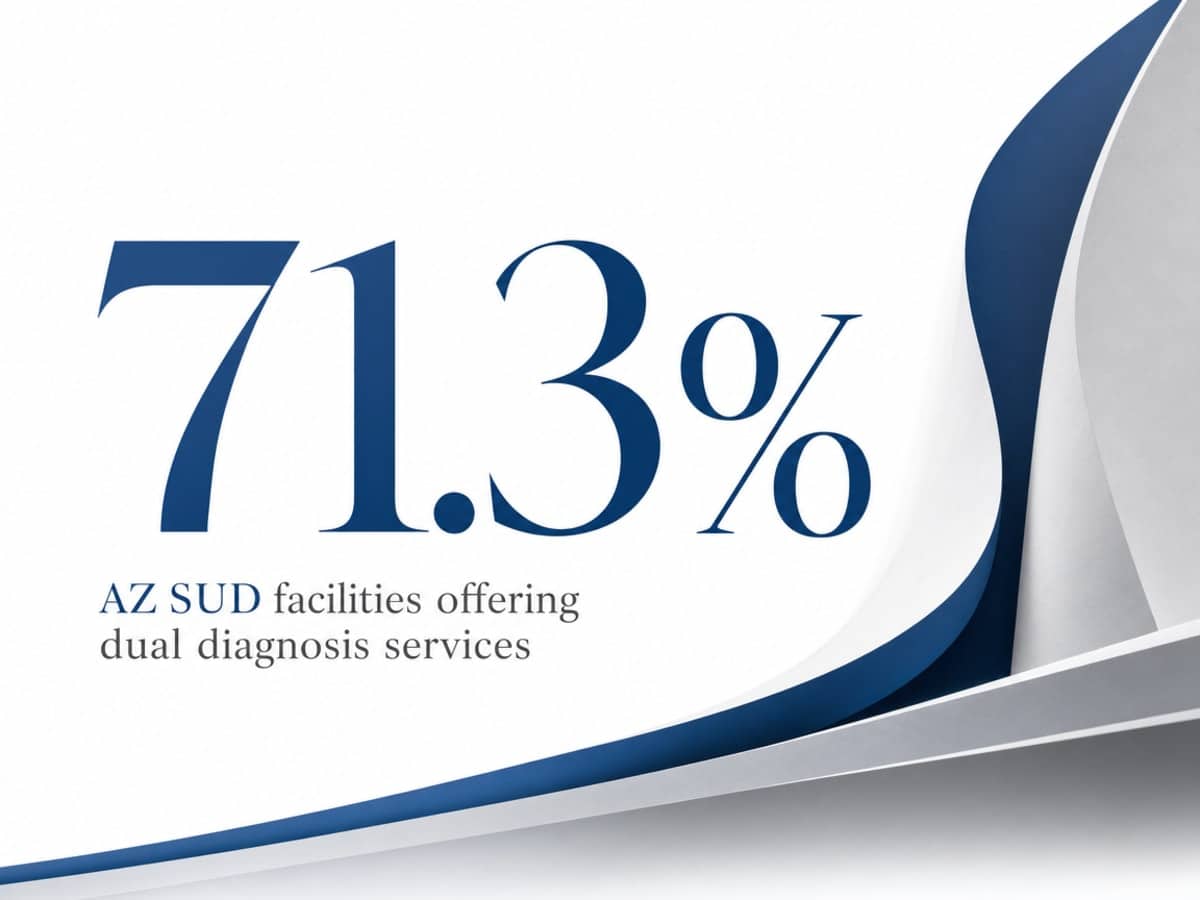
How Arizona’s Behavioral Health System Is Built
Crisis Access vs. Longer-Term Treatment
Here is a distinction that saves a lot of confusion: crisis services and treatment are not the same thing. Arizona invests heavily in one, and that infrastructure is real. But it is designed to get someone through the next 24 to 72 hours, not to treat a complex dual diagnosis over months.
On the crisis side, Arizona runs what AHCCCS describes as a behavioral health crisis network available to any Arizona resident regardless of insurance 5. You can call 988. You can call the Arizona 24/7 Crisis Line at 1-844-534-4673 6. Mobile crisis teams can come to a home or a parking lot. Walk-in stabilization centers, including Community Bridges in the Phoenix metro, take people directly and can start medication-assisted treatment on the spot 5, 6. If your loved one is in danger tonight, those are the numbers to use, and you do not need permission from an insurer to use them.
What the crisis network is not built to do is carry a treatment-resistant case through the weeks and months that real stabilization takes. A stabilization center can pull someone back from a psychotic break or an overdose. It cannot titrate clozapine, run trauma-focused therapy, and hold a rapid-cycling bipolar patient through medication trials.
That is where longer-term specialized psychiatric care, like the program at ViewPoint Dual Recovery in Prescott, picks up. Think of it as a handoff: crisis lines and stabilization centers are the front door; a specialized residential facility is where the actual clinical work happens after the acute danger passes.
Licensing, Residential Rules, and What They Shape
Underneath the crisis network sits a licensing layer that shapes almost everything about the treatment programs you will actually consider. In Arizona, the Department of Health Services (ADHS) licenses behavioral health facilities, and its definition of behavioral health services explicitly covers both mental disorders and substance abuse under the supervision of licensed professionals 1. That is the legal foundation for any program calling itself dual diagnosis.
Residential facilities have their own detailed rulebook. Article 7 of Title 9, Chapter 10 lays out the requirements for behavioral health residential facilities, from application standards to service descriptions and operational oversight 4. Those rules govern staffing ratios, clinical supervision, medication practices, and how the program documents care. They are also part of why highly specialized programs are relatively rare: the regulatory bar is high, and running a small, intensive facility for treatment-resistant cases takes more clinical infrastructure than a general co-occurring program 2, 4.
The Risk Factors That Make These Cases Complex
Complexity in dual diagnosis is not random. It clusters around a set of risk factors that clinicians can name, and if you look back at your own family’s story, you will probably see several of them.
Trauma sits near the top of the list. Childhood trauma is linked to elevated rates of substance use disorder, other mental disorders, suicidality, and physical health problems later in life 7. When someone starts drinking or using at fifteen to quiet what happened at nine, sobriety later on does not remove the memory. It removes the muffler. That is why programs without trauma-focused clinicians so often see relapse within weeks of discharge.
Genetics and environment run in parallel. Both NIDA and NIMH point to inherited traits, chronic stress, and adverse environments as shared drivers of substance use and other mental disorders 7, 9. And the influence runs both directions: mental illness raises the risk of developing a substance use disorder 8, while substance use itself can drive brain changes that increase the risk of other mental disorders 9. Once both are in motion, they feed each other.
Then there is severity. A peer-reviewed review of co-occurring alcohol use disorder and mental health conditions identifies serious mental illness, specifically schizophrenia, bipolar disorder, treatment-resistant major depressive disorder, and anxiety tied to agoraphobia, as a key factor that makes cases harder to treat 12. Add chronicity (years, not months, of active illness), co-occurring drug use on top of alcohol, and cognitive impairment that makes group work hard to absorb, and you have a case profile that a standard 30-day curriculum cannot hold 12.
Here is what that means for you. If your loved one carries early trauma, a serious mental illness diagnosis, a long history of the illness, and cognitive symptoms that make workbooks feel impossible, you are not looking at a motivation problem. You are looking at a severity profile that needs a program staffed for it. Facilities like ViewPoint Dual Recovery are built around this profile, not around the middle band. Recognizing the risk factors is the first move toward matching the case to the right level of care.
What Integrated Treatment Actually Contains
Evidence-Based Components vs. ‘Dual Diagnosis Capable’ Claims
The phrase “dual diagnosis capable” gets used a lot. It sounds definitive. It is not. SAMHSA’s evidence-based practices work identifies integrated treatment for co-occurring disorders as one of six core evidence-based practices, and its evidence report finds that specific components are almost always present in programs that produce good outcomes in controlled studies 10, 11. The gap between naming those components on a website and actually delivering them is where families keep getting hurt.
SAMHSA’s fidelity language matters here. A program is not delivering integrated care because it says so on intake paperwork. It is delivering integrated care when the components, staffing, and clinical intensity described in the evidence report are actually present, day after day 11. When you screen a facility, this table is the shape of the question you are trying to answer.
Simultaneous Care Under One Roof
The single most important word in integrated treatment is “simultaneous.” Not sequential. Not parallel. Simultaneous.
Sequential care is the loop you probably already know: get sober first, then we will treat the psychiatric condition. Or the reverse: stabilize the psychiatry first, then come back for the addiction work. Both fail the same way, because the two conditions are not sitting in separate rooms waiting their turn. Substance use can drive brain changes that raise the risk of other mental disorders, and mental illness raises the risk of developing a substance use disorder 9, 8. Treating one while ignoring the other leaves the untreated side free to pull the whole recovery apart.
Parallel care is the second trap. The addiction counselor works one track. The psychiatrist works another. They rarely meet. The patient becomes the translator between two teams that never share a chart.
Simultaneous care means one clinical team, one treatment plan, one set of hands on both problems at the same time. Arizona’s own health services framework describes integrated care as a coordinated system that treats the whole person rather than one condition at a time 3. At ViewPoint Dual Recovery, psychiatry and therapy sit inside the same case, not across a referral wall. That is the operational difference behind the word integrated.
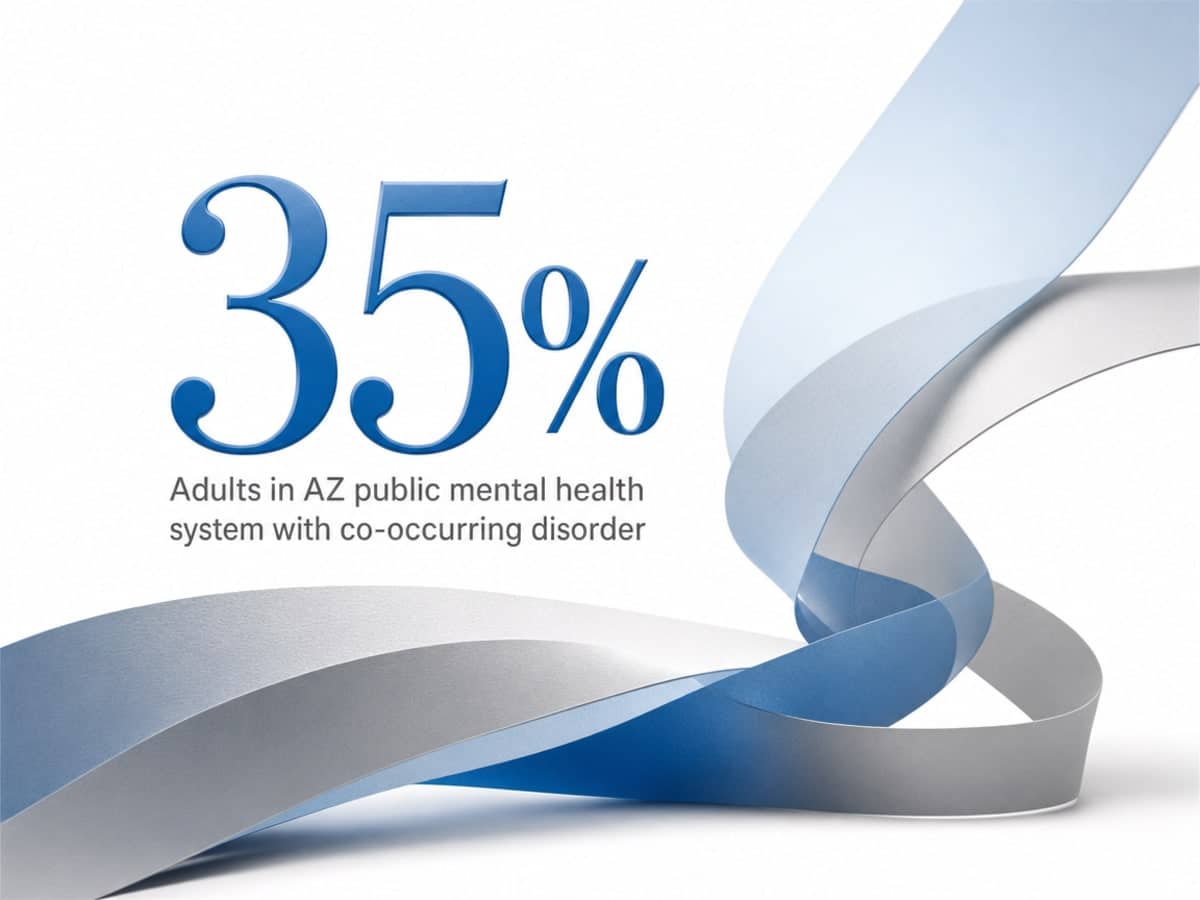
ViewPoint Dual Recovery in Prescott: A Program Built for the Hard Cases
Prescott sits in Arizona’s high country, about a hundred miles north of Phoenix, and the change of scenery matters less than what happens inside the building. ViewPoint Dual Recovery is a Joint Commission-accredited psychiatric treatment facility built around the presentations that other Arizona programs decline. That is the operating premise, and it shapes every part of how the program runs.
Start with psychiatry. ViewPoint’s board-certified psychiatrists are based in Prescott, not on call from another city. For someone in a clozapine trial, or in the middle of a rapid-cycling bipolar episode, that local psychiatric access is the difference between a medication adjustment tonight and a hospitalization tomorrow. Clozapine protocols, with the blood monitoring and dose titration they require, are managed in-house rather than referred out. Advanced medication strategies for treatment-resistant schizophrenia and complex bipolar presentations sit inside the standard scope of care, not outside it.
Treatment duration is set by clinical need, not by an insurance authorization window. That single design choice removes one of the most common reasons families end up back at square one after a 30-day discharge. Arizona’s residential facility rules under Title 9, Chapter 10 shape the staffing and oversight underneath that model 4, and ADHS licensing plus Joint Commission accreditation set the floor. The program’s ceiling comes from the case mix it accepts: treatment-resistant psychiatric patients, dual diagnosis adults who need mental health and substance use care at the same time, and complex bipolar and schizophrenia patients working through advanced medication strategies.
The integrated team is the other piece. Psychiatrists and therapists sit inside the same case, sharing one plan, which is what Arizona’s own health services framework describes as coordinated care for the whole person 3. Trauma-focused work, family counseling, and substance use treatment are delivered together, not handed off between departments. When a program is willing to take the cases others turn away, the internal wiring has to match, and that is the difference ViewPoint is built around.
How to Screen a Program Before You Commit
By the time you are calling facilities, you are tired of vague answers. Here is a short list of questions that cuts through the marketing language and gets to whether a program can actually hold the case in front of you.
Ask about psychiatric coverage, specifically. Not “do you have a psychiatrist,” which every program will answer yes to. Ask how many hours per week a psychiatrist is physically on site, whether coverage is 24/7, and whether that psychiatrist is board-certified. If your loved one needs clozapine, ask directly: do you initiate and monitor clozapine in-house, or do you refer out?
Ask what drives length of stay. If the answer is “whatever your insurance authorizes,” you have your answer. If the answer is clinical stabilization measured against a specific treatment plan, keep talking.
Ask about exclusion criteria out loud. “Would you accept someone with active psychosis and active substance use? Someone with a rapid-cycling bipolar diagnosis? Someone whose last three programs discharged them early?” The specific yes or no matters more than the reassurance around it.
Ask how psychiatry and therapy communicate. SAMHSA’s evidence report is clear that integrated programs share one clinical team and one plan, not two tracks bolted together 11. Ask who writes the treatment plan, who updates it, and how often the psychiatrist and therapist actually sit in the same room about your case.
Ask about trauma-focused clinicians by name and training. “Trauma-informed” is a broad claim. Ask which clinicians deliver trauma-focused therapy, what modalities they use, and how that work is coordinated with substance use treatment 10.
Verify licensing and accreditation, then push past it. An ADHS license and an accreditation like Joint Commission set a floor, not a ceiling 1, 4. Ask what the program does beyond the baseline that fits your specific case.
If the intake coordinator cannot answer these without transferring you, that is information too. The programs built for hard cases are used to hard questions.
What Progress Looks Like in the First Weeks and Months
Progress in a complex dual diagnosis case rarely looks like a movie montage. It looks like smaller, quieter things that add up.
In the first two weeks, progress often means a medication regimen that finally holds steady for a few days in a row. It means one night of real sleep, then two. It means a psychiatrist who has actually read the chart adjusting a dose without waiting for the next appointment cycle. If clozapine is part of the plan, progress is the first clean blood draw and a titration schedule that keeps moving.
By weeks three and four, progress often shows up in the therapy room. Trauma work that had been surfacing and going nowhere starts to have a place to land, coordinated with substance use treatment on the same team 10. Group sessions begin to feel less like noise and more like practice.
At home, families notice their own smaller wins. A week without a 2 a.m. phone call. A parent sleeping through the night. A sibling who stops flinching every time the phone lights up. Those count. Recovery from a case this complex is measured in weeks that were not crises, not in dramatic turning points.
See if advanced dual diagnosis care fits you
Get a personalized review of your unique psychiatric and substance use needs from experienced specialists.
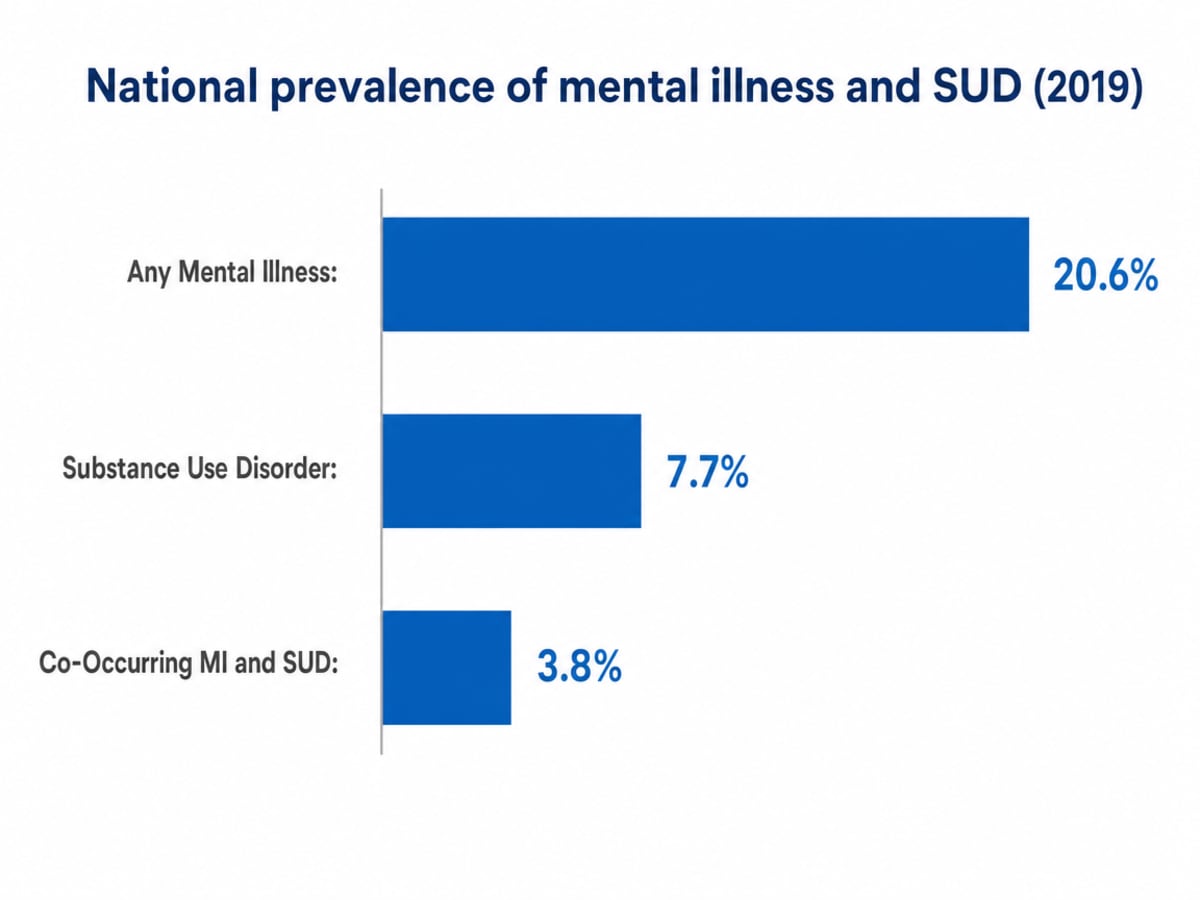
Frequently Asked Questions
Why do standard co-occurring programs in Arizona turn away complex dual diagnosis cases?
Most programs hold an Arizona Department of Health Services license that permits co-occurring care 1, but licensing sets a floor, not a ceiling. Standard programs staff for a middle band of severity. Cases involving active psychosis with active substance use, clozapine candidates, rapid-cycling bipolar patterns, or severe untreated trauma sit outside that band and get referred elsewhere.
What is the difference between a crisis line like 988 and residential dual diagnosis treatment?
Crisis services are designed to carry someone through the next 24 to 72 hours. Arizona’s crisis network, including 988, the 1-844-534-4673 line, mobile teams, and walk-in stabilization centers, is available regardless of insurance 5, 6. Residential dual diagnosis treatment picks up after the acute danger passes and delivers weeks or months of integrated psychiatric and substance use care.
What clinical features should a program have to treat treatment-resistant psychiatric conditions alongside substance use?
Look for 24/7 board-certified psychiatry on site, in-house clozapine initiation and monitoring, and trauma-focused clinicians who coordinate with substance use treatment on the same team. Arizona’s health services framework describes integrated care as one coordinated system treating the whole person 3, and SAMHSA’s evidence work names specific components almost always present in programs with good outcomes 11.
How is a ‘dual diagnosis capable’ program different from a specialized dual diagnosis facility?
Capable programs meet a baseline: they can accept a patient with co-occurring diagnoses and offer some coordination. Specialized facilities deliver the intensive components SAMHSA identifies with good outcomes, including integrated staffing, family psychoeducation, and clinical intensity sustained day after day 10. The gap shows up in admission criteria, length-of-stay drivers, and whether complex medication regimens are managed in-house or referred out.
What questions should I ask when screening a dual diagnosis program for a loved one with serious mental illness?
Ask how many hours per week a psychiatrist is on site and whether coverage runs 24/7. Ask what drives length of stay: insurance authorization or clinical stabilization. Name your loved one’s presentation out loud and ask directly whether they accept it. Ask how psychiatry and therapy share one plan 11, and verify licensing 1plus any accreditation before pushing past the baseline.
What does early progress look like in specialized dual diagnosis treatment?
Progress in the first weeks is quiet. A medication regimen that holds for several days. Two nights of real sleep in a row. A first clean clozapine blood draw and a titration schedule that keeps moving. By week three or four, trauma work coordinated with substance use treatment starts to have a place to land 10. At home, families notice a week that was not a crisis.
References
- Behavioral Health Provider Training & Licensing Resources – ADHS (Behavioral Health Facilities). https://www.azdhs.gov/licensing/bbhl-facilities/index.php
- ADHS – Behavioral Health Provider Training & Licensing Resources (Residential Facilities). https://www.azdhs.gov/licensing/bhr-facilities/index.php
- Behavioral Health 101 – Arizona Department of Health Services (Training Document). https://www.azdhs.gov/documents/licensing/trainings-exercises-collaboratives/rules/behavioral-health-101.pdf
- TITLE 9. HEALTH SERVICES CHAPTER 10. DEPARTMENT OF HEALTH SERVICES (Behavioral Health Residential Facility Rules). https://www.azdhs.gov/documents/licensing/residential-facilities/article-7.pdf
- Crisis Hotlines – AHCCCS. https://www.azahcccs.gov/BehavioralHealth/crisis.html
- Crisis Hotlines and Treatment Centers – City of Phoenix. https://www.phoenix.gov/administration/departments/health/substance-use-help/crisis-hotlines-treatment-centers.html
- Co-Occurring Disorders and Health Conditions – NIDA. https://nida.nih.gov/research-topics/co-occurring-disorders-health-conditions
- Co-Occurring Disorders and Other Health Conditions – SAMHSA (Substance Use Treatment). https://www.samhsa.gov/substance-use/treatment/co-occurring-disorders
- Finding Help for Co-Occurring Substance Use and Mental Disorders – NIMH. https://www.nimh.nih.gov/health/topics/substance-use-and-mental-health
- Integrated Treatment for Co-Occurring Disorders: How to Use the Evidence-Based Practices KITs – SAMHSA. https://library.samhsa.gov/sites/default/files/ebp-kit-how-to-use-the-ebp-kit-10112019_0.pdf
- Integrated Treatment for Co-Occurring Disorders: The Evidence – SAMHSA. https://library.samhsa.gov/sites/default/files/ebp-kit-the-evidence-10242019.pdf
- Integrating Treatment for Co-Occurring Mental Health Conditions – Alcohol Research: Current Reviews. https://pmc.ncbi.nlm.nih.gov/articles/PMC6799972/
- Mental Health and Substance Use Co-Occurring Disorders – SAMHSA. https://www.samhsa.gov/mental-health/what-is-mental-health/conditions/co-occurring-disorders