Key Takeaways
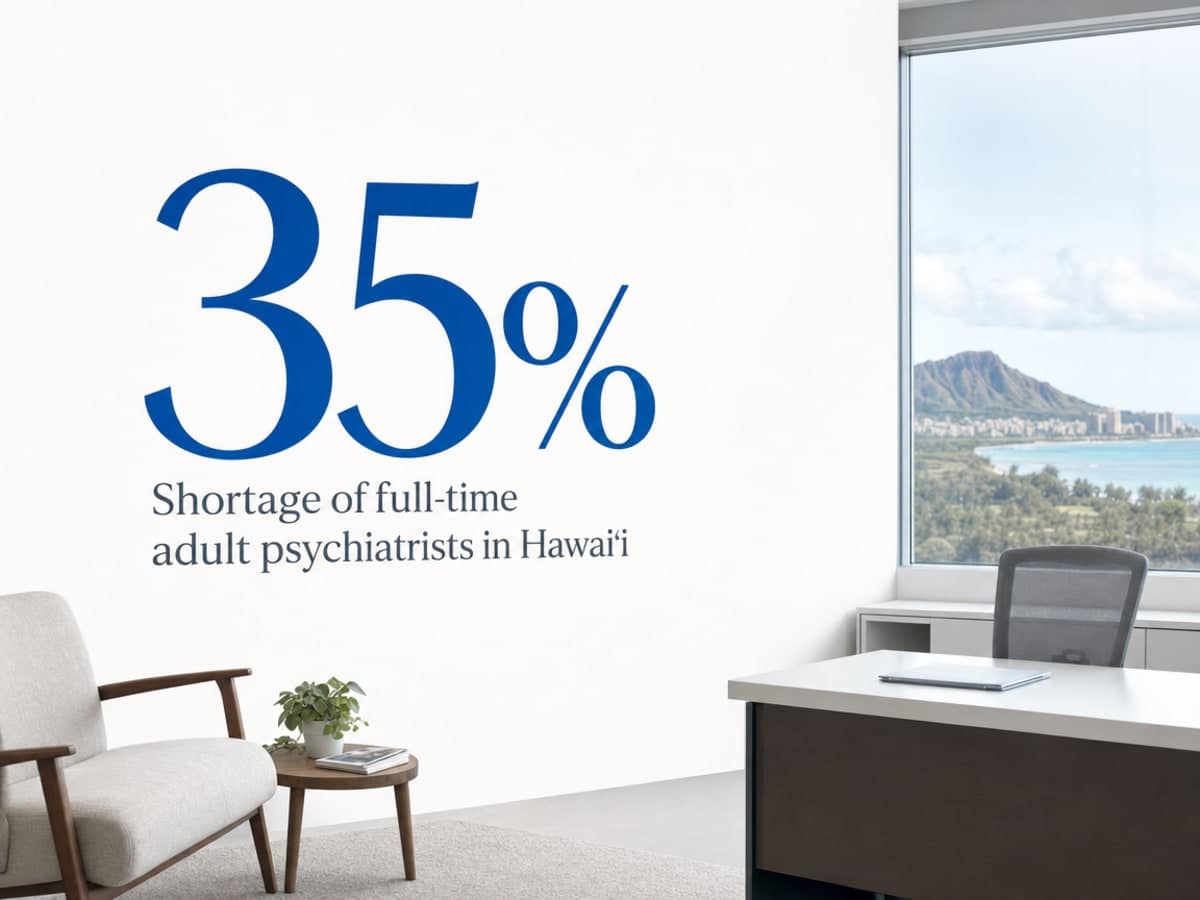
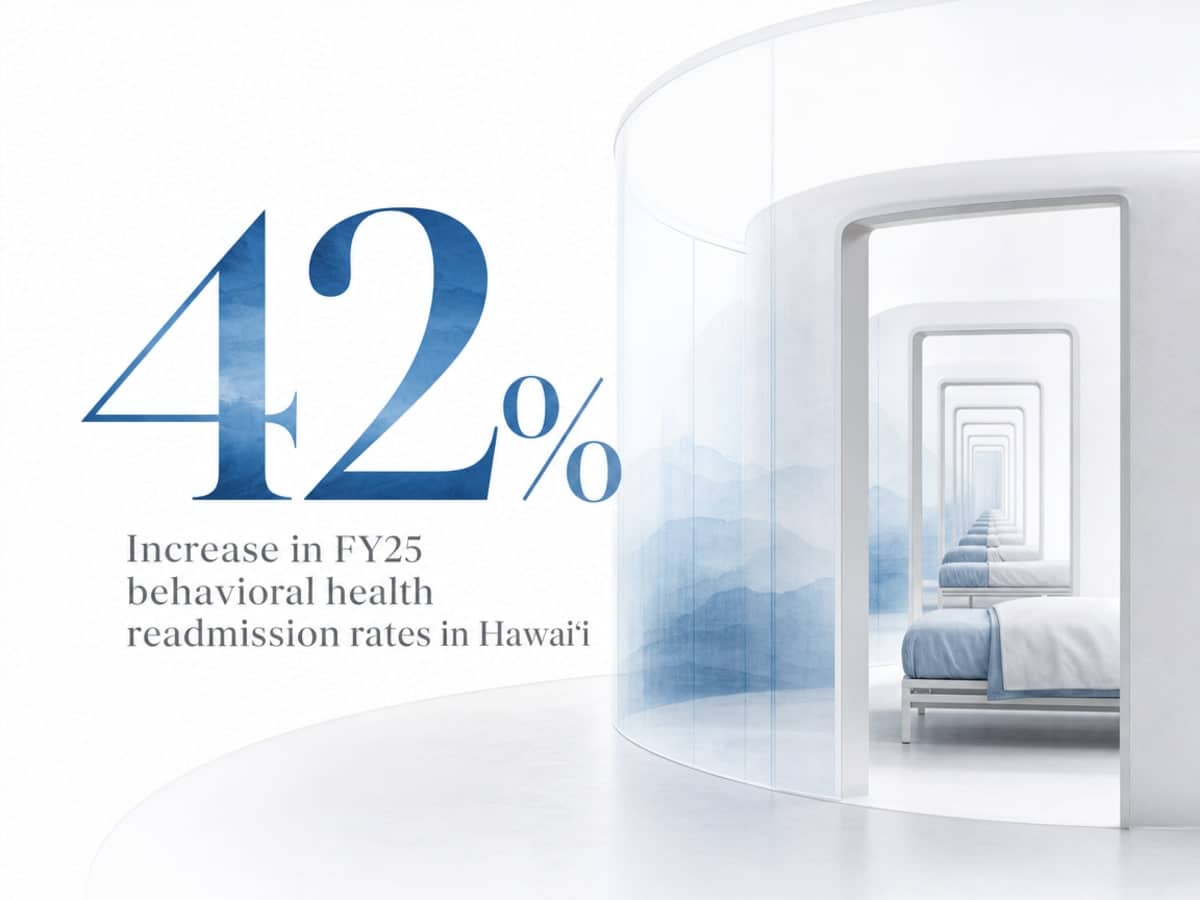
- Hawaii’s behavioral health system faces a 35% adult psychiatrist shortage and a 42% rise in FY25 readmissions, with no long-term dual disorder treatment on the neighbor islands 1, 3, 7.
- Mainland referral becomes clinically indicated after repeated short inpatient stays fail to stabilize, when treatment-resistant medication protocols like clozapine are unavailable locally, or when substance use keeps derailing psychiatric care.
- Integrated dual diagnosis care treats psychiatric illness and substance use as one clinical problem under a single team, producing better outcomes than parallel or sequential treatment 5.
- Families in Hilo, Kaneohe, Lihue, and beyond can stay involved through scheduled video family therapy, therapist check-ins, and early discharge coordination with Hawaii-based outpatient providers.
When the Local System Cannot Hold the Case
You already know something is wrong. Your loved one has cycled through outpatient appointments, maybe an ER hold in Honolulu or Wailuku, maybe a short inpatient stay that ended before anything felt stable. They came home, and within weeks the same crisis started rebuilding itself. You are exhausted. You are also, quietly, starting to wonder if what Hawaii can offer is enough.
That question is not disloyal. It is clinical.
Hawaii’s Adult Mental Health Division reported that behavioral health readmission rates in FY25 rose by 42%, with system targets missed 3. When readmissions climb like that, it usually means that the acute stays were doing what they were built to do, stabilize a crisis, but the cases coming through the doors need something longer and more integrated than the current system is built to deliver. For someone with a treatment-resistant psychiatric condition layered on top of a substance use disorder, a five-day hold is a pause, not a treatment plan.
You are not imagining the gap. The state’s own substance use plan is blunt about it: there are no long-term treatment options for dual disorders on the neighbor islands, and roughly 80% of people with a substance use disorder also carry a co-occurring mental health condition 7. That combination, in Hawaii, in 2025, often means your family has to look further than you ever wanted to look.
The rest of this guide walks you through what the local system can and cannot hold, when mainland dual diagnosis care becomes clinically indicated rather than optional, and how a family in Hilo or Lihue or Kaneohe can stay meaningfully involved when treatment happens 2,500 miles away. Take it one section at a time. You do not have to decide anything today.
What Hawaii’s Behavioral Health Infrastructure Can and Cannot Do
The Workforce Gap Behind Every Waitlist
When you call around Honolulu or Kahului trying to find a psychiatrist who takes new patients, actually treats co-occurring substance use, and has an opening this month, you are running into something bigger than bad luck. You are running into a workforce that is stretched past its limits.
Hawaii’s 2025–2026 landscape assessment from the Office of Wellness and Resilience puts a number on it: the state has a 35% shortage of full-time adult psychiatrists, and the average practicing psychiatrist is around 60 years old 1. That second detail matters as much as the first. It means the pipeline behind today’s providers is thin, and every retirement widens the gap for the exact kind of complex case that needs an experienced hand.
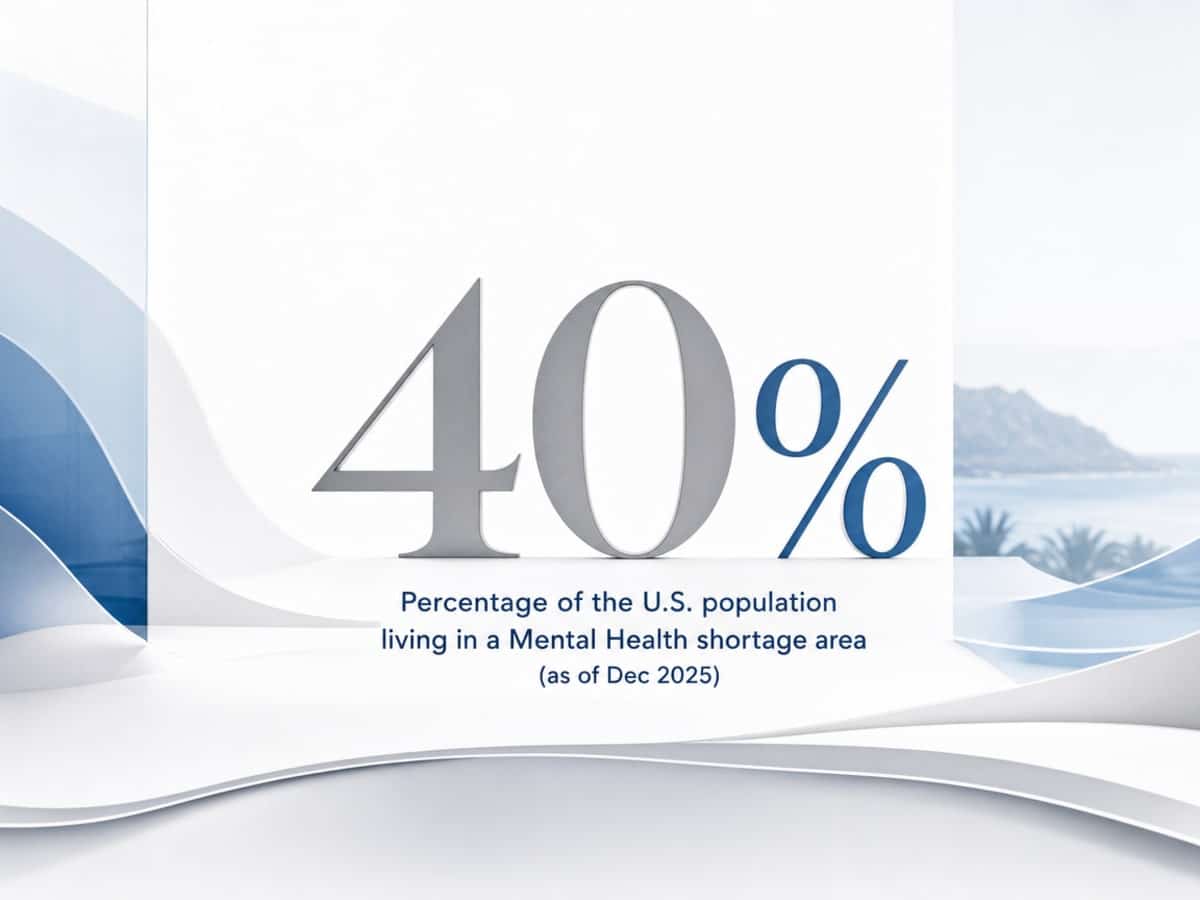
This is not only a Hawaii story. Nationally, roughly 40% of the U.S. population, about 137 million people, lives in a designated mental health professional shortage area 4. But Hawaii’s geography magnifies the shortage in a way most mainland states do not experience. A psychiatrist who leaves practice in Wailuku is not easily replaced by a colleague from the next county over. There is no next county over.
So when you are told there is a six-week wait to see someone who specializes in treatment-resistant psychiatric conditions, or that no one on your island manages clozapine, that is not a scheduling problem you can push past by being more persistent. It is capacity. And for a loved one whose symptoms shift week to week, six weeks is not a wait. It is a relapse cycle.
Naming this out loud can actually take some pressure off. You are not failing to find the right door. There are fewer doors than there should be.
Neighbor Island Realities: Beds, Distance, and Long-Term Care
If you are reading this from Lihue, Hilo, Kailua-Kona, Kahului, or Kaunakakai, you already know the layout. When something goes wrong at 2 a.m., the options narrow quickly. Where the bed is often decides what the treatment looks like.
The numbers behind that reality are stark. According to a legislative appendix on inpatient psychiatric availability, Kauai’s Samuel Mahelona Memorial Hospital has 9 adult psychiatric beds and no youth beds. On Hawaii Island, Hilo Medical Center holds 20 adult beds and Kona Community Hospital has 11. On Oahu, Castle Medical Center runs 29 adult beds, while Hawaii State Hospital anchors the system with what was 202 beds and has since expanded 12. Later utilization data shows Hawaii State Hospital operating at 297 psychiatric specialty beds with occupancy above 100% 11. Molokai and Lanai are not on that list at all.
None of this is a criticism of the clinicians working inside those units. They are doing careful work in small facilities that were never sized for the population they now serve. Once you see the geography honestly, the choice you are weighing stops looking like Hawaii versus the mainland. It starts looking like which distance, and which level of care, gives your loved one the best chance at staying well.
Why Short Stays Are Not Stabilizing Complex Cases
You have probably lived through a version of this cycle already. Something breaks, an ambulance or the police get involved, a few days pass in a hospital, and a discharge plan comes together fast. Your loved one comes home more medicated but not more stable. Within a month, sometimes within a week, the pattern rebuilds.
The system sees it too. Hawaii’s Adult Mental Health Division reported that behavioral health readmission rates in FY25 climbed by 42%, with performance targets missed and workforce capacity flagged as the foremost cross-cutting constraint on the continuum of care 3. A rising readmission rate is not just a statistic. It is thousands of individual stories where the acute stay did what it was designed to do and then handed the case back to a community system that could not carry it.
For a treatment-resistant psychiatric condition layered with active substance use, that handoff is where the plan tends to break. Clozapine titration, trauma-focused therapy, and the slow work of rebuilding sleep, nutrition, and trust cannot happen inside a five-day hold. They need a setting where the psychiatrist and the therapist are talking about the same person on the same day, week after week, and where the length of stay is set by how the person is actually doing, not by when the next admission arrives.
If your family has been through two, three, or four short stays and the ground keeps shifting under you, that is not a sign you have not tried hard enough. It is a signal that the level of care being offered does not match the complexity of the case. That gap is the reason the rest of this guide exists.
Who Actually Needs Mainland Dual Diagnosis Care
Defining Severe and Refractory Dual Disorders
Not every co-occurring case needs to leave the islands. That is worth saying clearly before anything else. Plenty of people in Hawaii with depression and an alcohol use disorder, or anxiety and cannabis use, can be treated well by an outpatient team in Honolulu, Kahului, or Hilo. The question is where your loved one sits on the severity spectrum, because the answer shapes what kind of setting can actually hold them.
The population of Hawaii adults living with both conditions is larger than most families realize. In 2019–2020, roughly 75,000 residents ages 12 and up, about 7.1% of that population, reported both alcohol or illicit drug use and any mental illness in the past year. Within that group, about 29,000 people, 2.9%, met criteria for both substance use and a serious mental illness 6. That smaller circle inside the larger one is where treatment gets hardest.
Clinicians in Hawaii have a name for the cases at the far end: severe and refractory dual disorders, or SRDD. These are the presentations that do not respond to standard care, that cycle through crisis stabilization without settling, and that combine a psychiatric illness like schizophrenia, rapid-cycling bipolar disorder, or severe PTSD with an active substance use disorder 6. If you are reading this and quietly recognizing your loved one in that description, you are not overreacting. You are naming something the state’s own researchers have already named.
Locating your family honestly on that spectrum is the first move. It is what separates a treatment plan from a wish.
A Decision Framework: Staying in Hawaii vs. Going to the Mainland
There is no single test that tells a family it is time to look off-island. There are patterns. When several of them show up together, the case has usually outgrown what community-based care in Hawaii can offer.
Staying in Hawaii tends to make sense when your loved one has an outpatient psychiatrist and therapist who are both engaged, when medications are producing at least partial stability, when substance use is present but not driving weekly crises, and when the family still has some runway, financial, emotional, and logistical, to keep supporting a home-based plan. In those cases, adding an intensive outpatient program on Oahu or a partial hospitalization slot when a bed opens can carry the treatment forward.
Mainland dual diagnosis care becomes clinically indicated when the picture looks different. You have watched two or more short inpatient stays end without lasting stabilization. The psychiatric diagnosis is treatment-resistant, and no one on your island manages the medication protocols the case actually needs, such as clozapine titration for refractory schizophrenia. Substance use keeps interrupting every attempt at psychiatric care, or psychiatric symptoms keep derailing every attempt at sobriety. You live on a neighbor island where, by the state’s own account, there are no long-term treatment options for dual disorders at all 7. The people you love are being asked to hold a case the local system was not built to hold.
The clinical evidence on integrated care is consistent in one direction. Peer-reviewed reviews of co-occurring disorder treatment find that programs treating psychiatric and substance use conditions together produce better outcomes on both fronts than parallel or sequential care, with lower hospitalization rates and stronger symptom reduction 5. When that kind of integrated setting is not available within a reasonable distance, the decision to travel is not abandonment. It is matching the level of care to the level of illness.
Sit with the list. Talk it through with your loved one’s current providers. If most of the second set of patterns describes your family, an honest conversation with a mainland dual diagnosis program, including questions about how they involve Hawaii families across the distance, is a reasonable next step, not a last resort.
What Integrated Dual Diagnosis Care Actually Looks Like
If your family has only ever seen a five-day inpatient stay or a weekly outpatient appointment, it can be hard to picture what a real integrated dual diagnosis program does differently. The short version: it treats the psychiatric illness and the substance use disorder as one clinical problem, on the same day, by a team that talks to itself.
That sounds obvious. It is not how most care is actually delivered. Standard systems tend to send someone to a psychiatrist for the bipolar disorder and to a separate substance use counselor for the drinking, with the two rarely reviewing the same chart. Peer-reviewed research on co-occurring disorders is clear that integrated programs, where psychiatric and substance use treatment happen together under one team, produce better symptom reduction, better substance use outcomes, and lower hospitalization rates than parallel or sequential care 5. For a treatment-resistant case, that structural difference is often the difference between another readmission and a stay that finally holds.
In practice, an integrated program built for complex cases looks something like this. A board-certified psychiatrist is available around the clock, not just for a scheduled 20-minute med check. Advanced medication strategies, including clozapine protocols for refractory schizophrenia and careful mood stabilizer sequencing for rapid-cycling bipolar disorder, are handled in-house rather than referred out. Individual therapy, group work, trauma-focused treatment, and family counseling run on the same calendar as the psychiatric care, and the therapist and psychiatrist meet regularly about your loved one specifically. Treatment duration is set by how the person is actually doing, not by an insurance clock.
This is the model ViewPoint Dual Recovery is built around in Prescott, Arizona. As a Joint Commission–accredited psychiatric facility focused on treatment-resistant conditions and dual diagnosis, it exists for the cases other programs describe as too complex, the presentations that need psychiatry and addiction care under one roof rather than passed between agencies.
For a Hawaii family, the practical takeaway is narrower than it sounds. When you are calling programs, the question is not whether they treat both mental health and substance use. Most say they do. The questions that matter are whether the psychiatrist and the therapist on your loved one’s case sit on the same team, whether medications like clozapine are managed on site, and whether the program is willing to keep treating until the case is actually stable rather than until a benefit day runs out.
Staying Clinically Involved Across 2,500 Miles
Building a Weekly Family Communication Rhythm
The fear underneath most Hawaii families’ hesitation about mainland care is not really about the flight. It is about the silence they imagine on the other end. You picture your daughter or your husband in a place you have never seen, and you brace for the version of this where you find out how they are doing from a discharge summary six weeks later.
That is not how a well-run dual diagnosis program is supposed to work, and it is worth asking about specifically before anyone gets on a plane.
A workable weekly rhythm across the Hawaii–Arizona time gap usually has a few fixed pieces:
- A scheduled family therapy session, held over video, at a time that accounts for the three-hour difference in standard time and the shift when the mainland moves to daylight time.
- A separate check-in call with the primary therapist, so you hear about how the week is actually going in treatment, not only what your loved one is choosing to share.
- Periodic updates from the psychiatrist when medications are being adjusted, especially during a clozapine titration or a mood stabilizer change, so you are not guessing about what a new side effect means.
Signed releases make all of this legal. Ask, on the intake call, exactly which staff members will be authorized to talk with you, how often, and what happens when your loved one goes through a rough week and does not want to pick up the phone. Programs that specialize in complex dual diagnosis cases, including ViewPoint, tend to have answers ready because they have run this rhythm with families in Hilo, Kaneohe, and Lihue before.
Progress will not be linear. The first honest phone call, the first week of stable sleep, the first family session where nobody cries, these are the moments to hold onto. They are small. They are also the shape of recovery for a case this complex.
Discharge Planning with Hawaii-Based Providers
Discharge planning is not something that happens in the last week of treatment. For a Hawaii family, it should start in the first few weeks, because rebuilding a care team back home takes time you cannot compress.
The pieces you are trying to line up are concrete:
- An outpatient psychiatrist on your island who is willing to accept the medication plan and continue managing it, including any specialty protocols started in Prescott.
- A therapist who can carry the trauma work or dual recovery work forward, ideally one who has spoken directly with the mainland treatment team before your loved one lands at HNL, OGG, ITO, or LIH.
- A primary care physician who has the discharge summary.
- A clear plan for what happens if things wobble in the first month, because they often do.
This is where Hawaii’s workforce reality shows up again. Rural and neighbor island communities face significant provider shortages and long waits for behavioral health services 14. That means the outpatient handoff cannot be an afterthought scheduled the week before flight home. Ask the mainland program’s case coordinator, by name, who is responsible for calling Hawaii providers, sending records, and confirming the first appointment is on the calendar before discharge.
When that coordination is done well, coming home becomes what it should be. Not another cliff. A step down.
A Note for Referring Clinicians and Case Managers
This section shifts audience. If you are a case manager at a community mental health center in Honolulu, a discharge planner at Hilo Medical Center, or a private practice clinician in Kahului weighing a mainland referral for a Hawaii patient, the framing changes. You are not deciding whether to send a family member across an ocean. You are matching acuity to available level of care under real workforce and bed constraints.
The cases that tend to warrant a mainland referral share a profile: treatment-resistant psychiatric illness with an active substance use disorder, two or more short inpatient stays without durable stabilization, and a medication picture that requires protocols like clozapine that no accepting outpatient prescriber on the patient’s island currently manages. Hawaii’s own reporting frames workforce capacity as the foremost cross-cutting constraint on the continuum of care 3, and rural and neighbor island communities carry the sharpest end of that shortage 14. Those are the structural facts your referral is responding to, not a judgment on local care.
When you contact a Joint Commission–accredited program such as ViewPoint Dual Recovery, the useful intake questions are narrow. Confirm integrated psychiatric and substance use treatment under one team, ask about clozapine and complex medication management on site, and pin down the family communication cadence and discharge coordination process with Hawaii-based providers before the patient boards a flight. Invite the family to ask about family involvement options directly during that first call. That is where continuity of care starts.
Start your clinical review for Hawaii referrals
Clarify next steps for complex dual diagnosis care beyond Hawaii’s current options.
Frequently Asked Questions
Why would a Hawaii family send their loved one to the mainland for dual diagnosis treatment?
Usually because the case has outgrown what the local system can hold. Hawaii’s own substance use plan documents that there are no long-term treatment options for dual disorders on the neighbor islands 7. When someone has cycled through short inpatient stays without stabilizing, mainland care is less about preference and more about matching the severity of the illness to a setting built to treat both conditions together.
How can our family stay involved in treatment when our loved one is thousands of miles away in Arizona?
Through a scheduled weekly rhythm that accounts for the time difference. Expect a video-based family therapy session, a separate check-in with the primary therapist, and psychiatrist updates when medications change. Signed releases spell out who can talk with you and how often. Ask on the intake call exactly who coordinates family contact and what happens during a hard week when your loved one does not want to pick up the phone.
What makes dual diagnosis treatment different from standard mental health or substance use care?
The psychiatric illness and the substance use disorder are treated as one clinical problem by one team, on the same day. Peer-reviewed research on co-occurring disorders finds that integrated programs produce better symptom reduction, better substance use outcomes, and lower hospitalization rates than parallel or sequential care 5. In practice, that means the psychiatrist and the therapist review the same chart and coordinate weekly, rather than working in separate silos.
How do we know if our loved one’s case is severe enough to need mainland care rather than local outpatient or inpatient services?
Look for patterns together. Two or more short inpatient stays without lasting stabilization, a treatment-resistant diagnosis that needs medication protocols like clozapine that are not managed on your island, or substance use that keeps derailing psychiatric care all point toward a higher level of care. If you live on a neighbor island where long-term dual disorder options do not exist 7, that geography is part of the clinical picture too.
What does discharge and coming home to Hawaii look like after mainland treatment?
Planned, not improvised. A good discharge lines up an outpatient psychiatrist willing to continue the medication plan, a therapist to carry the trauma or dual recovery work forward, and a primary care handoff, all before your loved one flies into HNL, OGG, ITO, or LIH. Because rural and neighbor island communities face significant provider shortages 14, ask the case coordinator by name who is calling Hawaii providers and confirming appointments.
As a case manager or clinician in Hawaii, how do I make a referral to a mainland dual diagnosis program?
Start with an intake call that pins down three things: whether psychiatric and substance use treatment happen under one integrated team, whether complex medication protocols like clozapine are managed on site, and how family communication and Hawaii-based discharge coordination actually work. Frame the referral around workforce and bed constraints documented in state reporting 3, not as a critique of local providers. Invite the family to ask about family involvement options directly.
References
- State of well-being project: A landscape assessment of mental health and well-being supports and services, barriers, facilitators, and needs for state, county, and select community-based first responders, healthcare, and school staff. https://owr.hawaii.gov/wp-content/uploads/2026/01/SOWB_LandscapeAssessment_2026_01.pdf
- State Council on Mental Health 2025 Annual Report to the Governor and Legislature. https://health.hawaii.gov/opppd/files/2025/09/Final-SCMH-2025-Report-to-the-Governor-and-Legislature-.pdf
- Adult Mental Health Division / State Council on Mental Health Annual Report to the 2026 Legislature. https://health.hawaii.gov/opppd/files/2025/12/AMHD_SCMH-AR-to-2026Leg_sub-20251231.pdf
- State of the Behavioral Health Workforce, 2025. https://bhw.hrsa.gov/sites/default/files/bureau-health-workforce/data-research/Behavioral-Health-Workforce-Brief-2025.pdf
- Co-Occurring Mental Health and Substance Use Disorders: A Review of Integrated Treatment Outcomes. https://www.ncbi.nlm.nih.gov/pmc/articles/PMC10141793/
- Establishing a System of Care for Severe and Refractory Dual Disorders in Hawai‘i. https://pmc.ncbi.nlm.nih.gov/articles/PMC9783815/
- SUBSTANCE USE STATE PLAN (Comprehensive Chapter), Draft October 2022. https://health.hawaii.gov/substance-abuse/files/2022/10/Draft-State-Plan-Oct-2022-Comprehensive-Chapter.pdf
- Substance Use State Plan – Hawaii State Department of Health (May 2023 Edition). https://health.hawaii.gov/substance-abuse/files/2023/05/Draft-State-Plan-2022-May-2023-Edition.pdf
- What Is Known about Substance Use in Hawaiʻi: A Scoping Review. https://pmc.ncbi.nlm.nih.gov/articles/PMC12994774/
- 2022 Hawaii Health Care Utilization Report (Revised April 2024). https://health.hawaii.gov/shpda/files/2023/09/2022-Hawaii-Health-Care-Utilization-Report-Rev.-20240423.pdf
- 2023 Utilization Report – Table 9: Bed Utilization by Facility. https://health.hawaii.gov/shpda/files/2024/09/2023UR-Table-9-Bed-Utilization-by-Facility.pdf
- Department Communication No. 284 – “Current Availability of Inpatient Psychiatric Hospital Beds in Hawaii”. https://data.capitol.hawaii.gov/sessions/session2023/bills/DC284.PDF
- State Council on Mental Health 2026 Report to the Governor and Legislature. https://scmh.hawaii.gov/wp-content/uploads/2026/01/SCMH-2026-Report-to-the-Governor-and-Legislature-Final-123125.pdf
- State Health Planning and Development Agency Testimony on Behavioral Health Workforce Shortage (SB2089 SD1). https://data.capitol.hawaii.gov/sessions/session2026/Testimony/SB2089_SD1_TESTIMONY_WAM_03-04-26_.PDF