Key Takeaways
- Rehabs and psychiatric units routinely decline these cases for four reasons: active psychosis, active substance use, pharmacology beyond standard scope, and mismatched length-of-stay timelines.
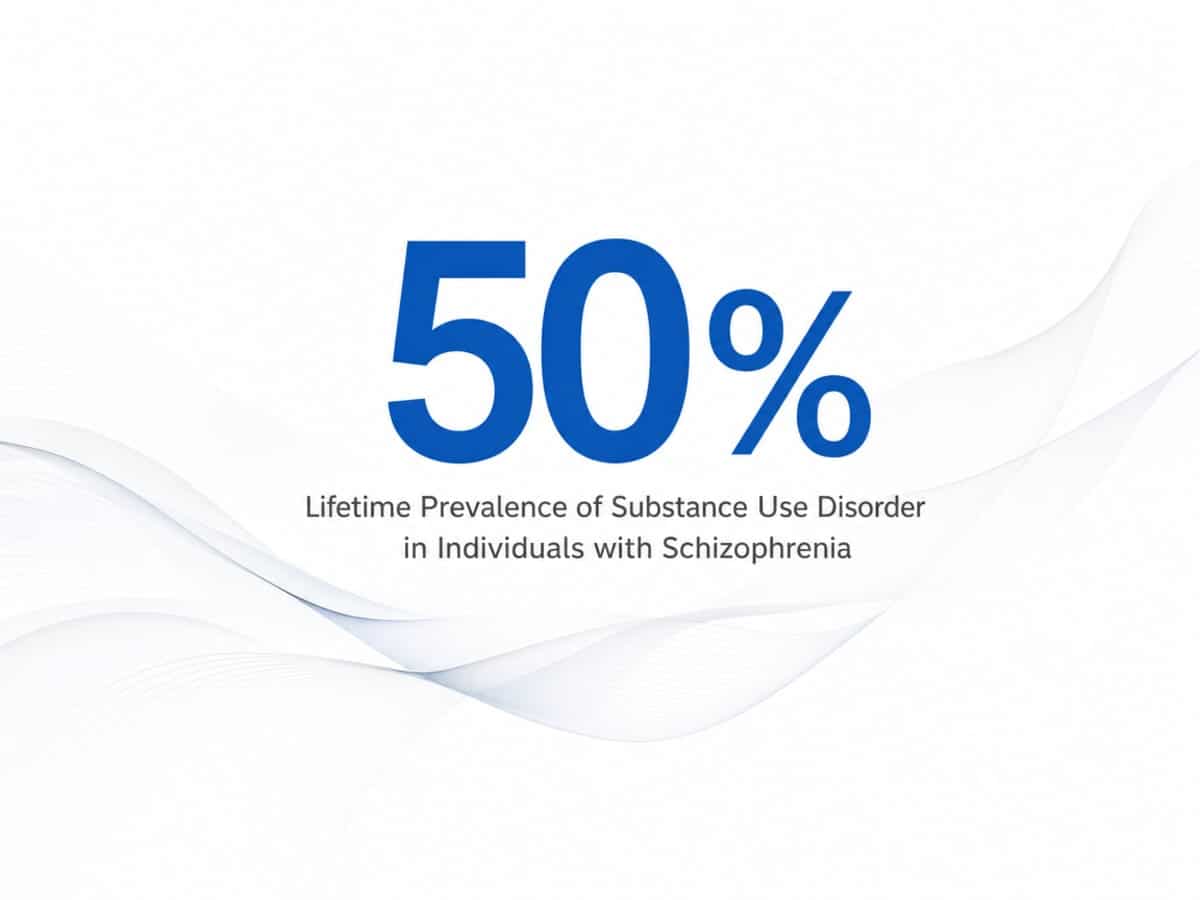
- Roughly half of people with schizophrenia develop a substance use disorder in their lifetime 2, making this a majority pattern that sequential, episodic care consistently fails to hold.
- Integrated care means one team delivering motivational interviewing, CBT adapted for psychosis, family work, structured behavioral packages, and individualized pharmacology — including clozapine when indicated — on a single plan 7, 4.
- When evaluating programs, ask about board-certified psychiatric access, in-house clozapine protocols, named psychosocial modalities, intensive family involvement, and whether treatment duration is set clinically rather than by insurance authorization.
When Both Doors Close: The Admissions Gap for Schizophrenia Plus Active Use
You’ve probably heard some version of this call before. The rehab intake coordinator says the person is “too psychotic” for their milieu. The psychiatric unit says they’re “not appropriate” because there’s active substance use, and the ED social worker suggests trying a program “better equipped for the addiction piece.” You hang up. You call the next number. The answer rearranges itself but arrives at the same place: not here.
If you’re reading this, you already know what schizophrenia is. You already know what substance use disorder is. What you’re trying to make sense of is why the two together seem to close every door that either one alone would open. That pattern isn’t in your head, and it isn’t a reflection of the person you’re trying to help. Co-occurring psychotic and addictive disorders are common, and they are routinely under-recognized and undertreated across general settings 8. The gap between what the evidence recommends — integrated, simultaneous treatment of both conditions 1 — and what most facilities are actually staffed to deliver is where families and referring clinicians keep getting stuck.
This article is written for that specific stuck point. Not a primer on symptoms. Not a pep talk. A direct look at why this comorbidity gets declined, what integrated care actually contains when it’s done well, and what to look for in a program built to hold the case rather than move it along. ViewPoint Dual Recovery, in Prescott, Arizona, is one of the programs built specifically around this population — psychosis plus substance use is the core specialization, not the exception.
Why Rehabs and Psych Units Turn These Cases Away
The Four Reasons Facilities Decline: Psychosis, Use, Pharmacology, Timelines
When you get told a program isn’t “the right fit,” what you’re usually hearing is one of four specific things. Naming them helps, because none of them are about the person you’re trying to help being a bad candidate for care.
- Active psychosis. Most residential addiction programs run on group process, community meetings, and a milieu that assumes people can track a schedule, tolerate confrontation, and participate in shared space. Someone actively hallucinating or paranoid can’t safely do that, and the program doesn’t have the psychiatric staffing to hold them while they stabilize. So the answer is no.
- Active substance use. General psychiatric units are built to stabilize a psychotic episode and discharge. They’re often not licensed, staffed, or clinically oriented to run addiction treatment in parallel. If someone is still using on admission, or the team anticipates use will drive readmission, the unit narrows its focus to the psychosis piece and the SUD gets deferred — which is exactly the pattern that has been documented as under-recognition and undertreatment in general settings 8.
- Pharmacology beyond the standard shelf. Treatment-resistant psychosis often requires clozapine protocols, careful cross-titration, and management of medication interactions with alcohol, stimulants, or opioids. That level of psychopharmacology isn’t in every facility’s scope of practice.
- Length of stay. Insurance timelines and 30-day program structures don’t match how long stabilization actually takes when both conditions are active. When the clinical clock and the billing clock don’t line up, the case gets flagged as “not appropriate for this level of care.” You’ve probably heard that phrase more than once. It rarely means what it sounds like.
The Diagnostic Ambiguity Problem: Primary Psychosis vs. Substance-Induced
There’s a fifth reason that sits underneath the other four, and it’s the one that quietly drives a lot of the referrals-out: nobody is sure yet what they’re treating.
When someone shows up psychotic and also using stimulants, cannabis, or alcohol heavily, the diagnostic question is real. Is this primary schizophrenia with substance use layered on top? Is this a substance-induced psychotic episode that will clear with sustained abstinence? Is it both, unfolding at the same time? The etiologic overlap — self-medication, shared vulnerability, social factors — makes clean answers rare in the first days or weeks 6. Reviews of co-occurring psychotic and addictive disorders describe this diagnostic difficulty as a central driver of misclassification and fragmented care 8.
That ambiguity has admissions consequences. A program that needs to check a single primary diagnosis box before admitting is going to hesitate. A team without the psychiatric depth to sit with the uncertainty — to observe, adjust, and let the picture clarify over weeks rather than days — is going to send the case somewhere else. Holding a patient through that ambiguity, rather than resolving it prematurely on paper, is a specialized capability. It requires board-certified psychiatry on the floor, a length of stay driven by what the clinical picture is actually doing, and staff who are comfortable treating both possibilities at once until the diagnosis settles.
How Common This Comorbidity Actually Is
The numbers here matter, because they explain why this isn’t a niche presentation that a general program can afford to punt on. It’s a majority pattern inside schizophrenia care, and treating it as an exception is part of what keeps the revolving door spinning.
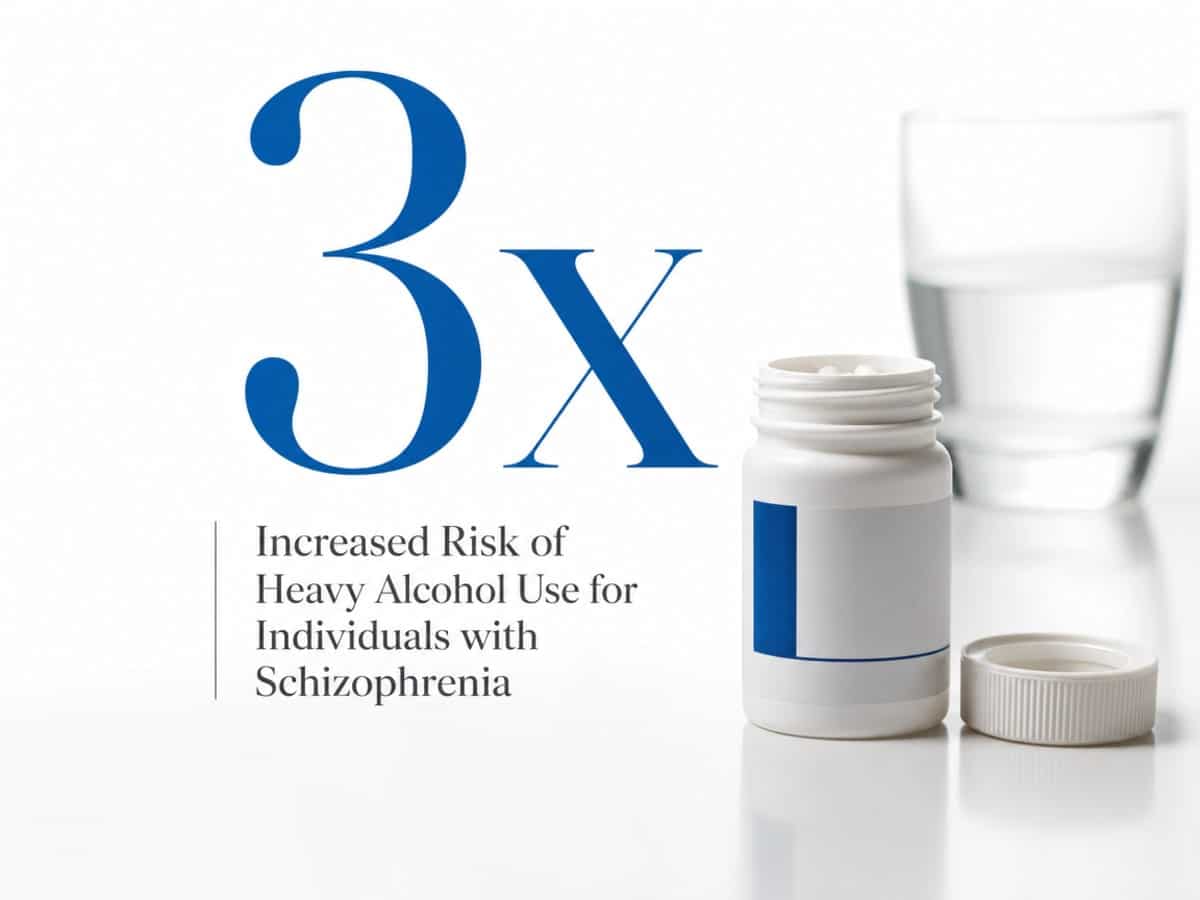
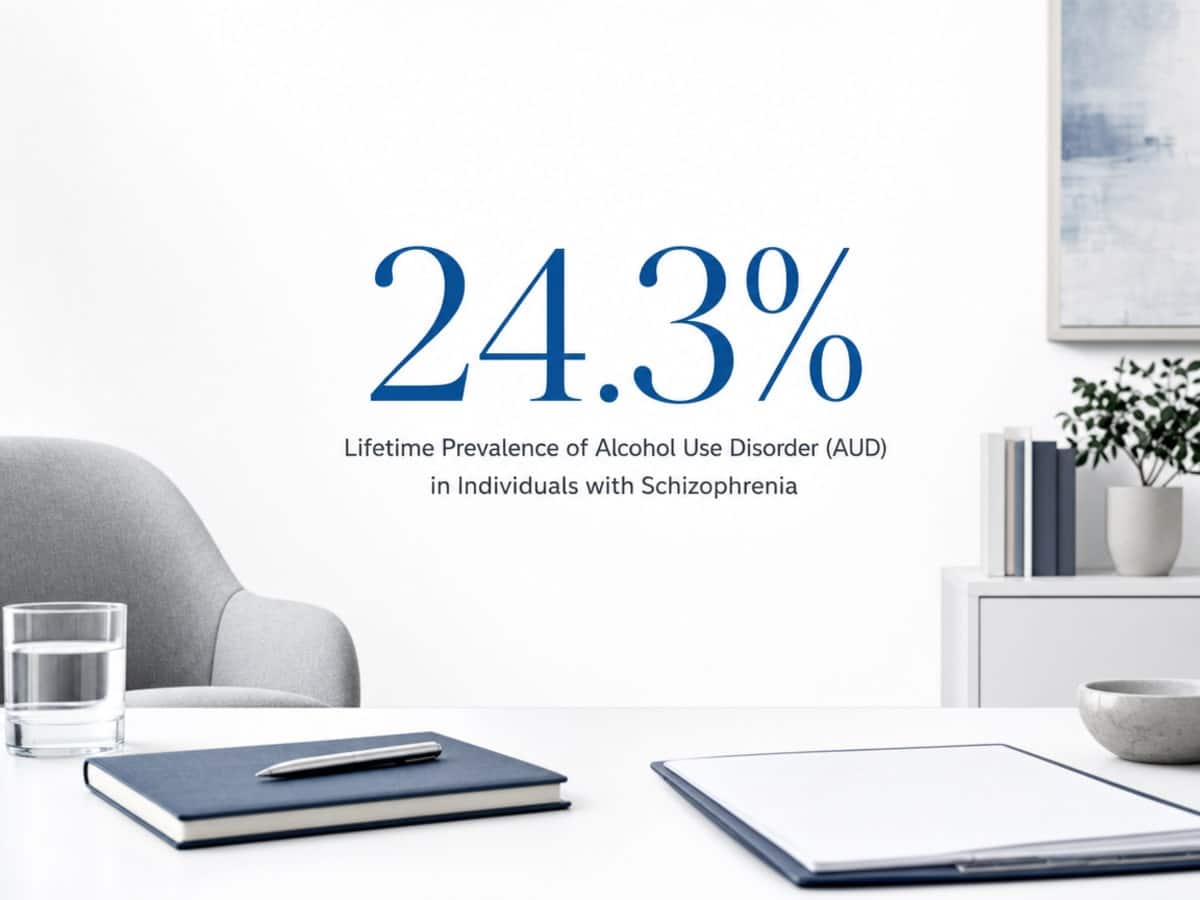
Across the clinical literature, roughly half of people with schizophrenia develop a substance use disorder involving alcohol or illicit drugs at some point in their lives 2. That’s not a fringe subgroup. It’s closer to a coin flip. Broken down further, about one-third have a comorbid alcohol use disorder and about one-quarter have a use disorder involving other substances — stimulants, cannabis, opioids, or a mix 6. A meta-analysis specific to alcohol placed lifetime AUD prevalence in schizophrenia at 24.3%, and quantified the elevated risk directly: individuals with schizophrenia or schizoaffective disorder carry roughly three times the risk of heavy alcohol use compared with the general population 5.
Sit with that for a second. If you’re the family member who’s been told your loved one’s case is unusually complicated, the data says something different. The complexity is common. What’s unusual is a program staffed and structured to treat it as the primary clinical picture rather than a complication.
This is also why treating psychosis and substance use in sequence — stabilize one, then refer for the other — collides with the actual epidemiology. For most people carrying a schizophrenia diagnosis, substance use isn’t a separate chapter that arrives later. It’s woven into the course of the illness, and the care model has to be built around that reality from day one.
Why This Comorbidity Looks Different in the Room
Symptom Masking and Medication Non-Adherence Tied to Use Patterns
Here’s what makes the clinical picture so hard to read: the two conditions keep borrowing symptoms from each other.
Heavy alcohol use can blunt affect, disorganize thinking, and produce paranoia that looks a lot like a psychotic prodrome — or a relapse. Stimulant use can push someone into frank psychosis that closely mimics primary schizophrenia. Cannabis use can amplify negative symptoms and cognitive fog. When someone is using, the treating clinician often can’t tell whether a worsening presentation reflects the underlying illness, the substance, withdrawal, or all three at once. Distinguishing AUD-related symptom exacerbation from primary psychotic relapse is a well-documented clinical challenge that general settings often aren’t equipped to work through in real time 5.
Medication adherence gets tangled up in the same pattern. If your loved one drinks or uses on top of an antipsychotic, they may skip doses because the interaction feels bad, or because active use disrupts the routines that keep a daily medication schedule intact. Sometimes non-adherence looks like denial. Often it’s more mundane — a chaotic week, a lost bottle, a decision that the medication and the substance don’t mix. Either way, the antipsychotic level drops, symptoms creep back, and the return of symptoms drives more use. That loop is exhausting to live inside. Naming it isn’t blame; it’s the starting point for a treatment plan that actually accounts for how the two conditions interact day to day.
Why Episodic Care Fails: Relapse and Rehospitalization Patterns
The revolving door isn’t a metaphor. It’s what the outcome data show.
Think about what a typical short stay actually accomplishes. In a 30-day rehab, an actively psychotic person may spend the first two weeks getting an antipsychotic to a therapeutic level, if the program can prescribe at all. That leaves a couple of weeks for addiction work, and then discharge. On the psych side, a short inpatient stay resolves the acute symptoms, and the person walks out into the same substance-use environment that helped destabilize them in the first place. Neither setting has had time to build the medication adherence, the family involvement, or the abstinence infrastructure that would actually change the trajectory.
The research on long-term follow-up points the other direction. Patients engaged in sustained integrated dual-diagnosis treatment show meaningful reductions in substance use and improvements in functioning over multi-year follow-up 11. The active ingredient is time — enough of it, held in one place, with both conditions treated as the primary work rather than a complication of somebody else’s specialty.
What Integrated Care Actually Contains
The Psychosocial Stack: MI, CBT, Family Work, and Behavioral Packages
Integrated care isn’t a single therapy. It’s a stack — several evidence-based approaches layered together, delivered by one team, on one plan, at the same time. When people talk about integrated dual diagnosis treatment being the standard of care, this is the concrete thing they mean.
Start with motivational interviewing. MI meets a person where their ambivalence actually lives — not in the fantasy of clean commitment, but in the real back-and-forth of wanting to use and wanting to be well. It’s the front end that keeps someone in the room long enough for the rest of the work to happen.
CBT adapted for psychosis and substance use is the next layer. It targets the specific thoughts and triggers that drive both symptoms and use — the paranoid interpretation that gets soothed by alcohol, the hallucination that quiets after a stimulant, the boredom of unstructured evenings that leads to a familiar bad choice. A broad review of integrated care found that combined MI, CBT, and family therapy reduced substance use in patients with schizophrenia for at least one year — the kind of durable signal that supports layering these modalities rather than picking one 7.
Family work carries its own evidence. The Family Intervention for Dual Diagnosis (FIDD) study showed reduced relapse and substance use rates alongside reduced family burden when families were engaged intensively as part of the treatment plan 12. That last piece matters. You’ve likely been carrying more than you should. A program that treats family involvement as clinical, not optional, gives you a role that actually helps and takes weight off you at the same time.
Structured behavioral packages round out the stack. BTSAS — a manualized behavioral treatment developed specifically for substance abuse in schizophrenia — produced significant reductions in use and improved adherence over the course of the program 13. Bring these together under one roof, delivered by one team, and you have something a general rehab or a general psych unit isn’t set up to run.
Pharmacology: Second-Generation Antipsychotics, Clozapine, and Individualized Choice
The medication piece deserves its own honest conversation, because this is where a lot of programs quietly reach the edge of what they can do.
Second-generation antipsychotics are the backbone of pharmacologic treatment in schizophrenia with co-occurring substance use. The VA evidence brief on this population found that while SGAs such as olanzapine and risperidone may offer advantages, the available evidence does not clearly demonstrate superiority for any single agent — the right choice depends on the individual’s efficacy and side-effect profile 4. The 2024 updated review reinforces the same point and adds that pharmacology should always be paired with psychosocial support inside an integrated, multidisciplinary approach rather than delivered as a standalone fix 15.
For treatment-resistant psychosis — the situation you’re likely in if standard antipsychotics haven’t held symptoms — clozapine enters the conversation. Clozapine requires careful titration, ongoing blood work, and a team that’s used to running the protocol day in and day out. Not every facility is set up for it. When active substance use is in the picture, the pharmacology gets even more careful: alcohol, stimulants, and opioids all interact with antipsychotic levels, adherence, and side effects in ways that require a psychiatrist paying close attention rather than a monthly medication check.
The practical read-through is this. If your loved one has already failed one or two antipsychotics, or if the medication list is complicated by co-occurring use, the program you want is one that treats individualized medication strategy — including clozapine when it’s clinically indicated — as a routine capability rather than a specialist referral. ViewPoint Dual Recovery’s clozapine protocols and board-certified psychiatry are structured around exactly that scenario.
The Honest Limits of the Evidence Base
Here’s the part most marketing pages skip. Integrated care is the best-supported approach we have for this comorbidity, and the evidence has real limits. Naming them isn’t a hedge — it’s how you tell the difference between a serious program and one selling certainty it doesn’t have.
A Cochrane review of prospective randomized studies on integrated services for schizophrenia and substance abuse concluded there was no clear evidence of superiority for integrated approaches overall, even as related data suggested benefits in treatment retention 14. A 2018 stepped-wedge cluster randomized trial of Integrated Dual Diagnosis Treatment in assertive community teams found that days of substance use decreased after implementation, but there were no significant improvements in psychopathology, functioning, therapeutic alliance, or motivation, and limited impact on clinicians’ MI skills 16. Fidelity — whether teams actually deliver the model as designed — is a persistent problem in real-world rollouts.
What that means for you: outcomes depend heavily on how the model is actually delivered, by whom, and for how long. A program calling itself “integrated” isn’t the same as a program built and staffed around this population from the ground up. When you’re evaluating options, ask specifically about staffing ratios, psychiatric coverage, family programming, and how length of stay is determined. Those are the levers that separate the label from the practice.
What to Look for in a Program That Will Hold the Case
After a few rounds of “not appropriate for this level of care,” it helps to have a short list of questions that separate programs built for this comorbidity from programs that will accept the admission and then discharge into the same crisis a few weeks later.
- Psychiatric coverage. Ask who prescribes, how often they see the patient, and whether board-certified psychiatry is part of the daily treatment team. The 2024 review on managing schizophrenia with comorbid SUD is explicit that pharmacology should sit inside a multidisciplinary integrated model, not run parallel to it 15. If the psychiatrist is a weekly consultant, that’s a different program than one where psychiatry is on the floor.
- Medication scope. Ask directly: Does the program run clozapine protocols in-house? How do they handle cross-titration when antipsychotics haven’t held? The VA evidence brief makes clear that no single second-generation antipsychotic is clearly superior, so medication choice has to be individualized — which only works if the prescribing capability is deep enough to actually individualize 4.
- The psychosocial stack. You want to hear specific modalities — motivational interviewing, CBT adapted for psychosis and substance use, structured family work, behavioral packages like BTSAS — delivered by one team on one plan 7, 12, 13. “We do dual diagnosis” is not an answer. “Here is how MI, CBT, and family sessions are scheduled each week” is.
- Length of stay. Ask how it is determined. If the answer is “whatever your insurance authorizes,” the clinical clock is not driving the plan. Programs that hold this population well let the clinical picture set the timeline — long enough for diagnostic ambiguity to resolve, for medication to reach a steady therapeutic level, and for the behavioral and family work to actually take 11.
- Family involvement as a clinical program, not a visiting policy. FIDD-style intensive family engagement is associated with reduced relapse, reduced substance use, and reduced family burden 12. If family programming is optional or informational, that’s a gap.
- Handling diagnostic uncertainty. Ask what happens when the diagnostic picture is unclear. A program willing to hold a patient through the primary-versus-substance-induced question — treating both possibilities while the picture clarifies — is a program built for this work 8.
ViewPoint Dual Recovery, in Prescott, Arizona, is structured around exactly these questions: accreditation by The Joint Commission, board-certified psychiatric leadership, clozapine protocols, integrated team delivery, and treatment duration set by clinical need rather than insurance timelines. If the last several calls have ended in a referral out, this is the kind of program built to say yes and hold the case.
For Referring Clinicians and Case Managers
A note for the referring side of this conversation. If you’re a community psychiatrist, an ACT team lead, an ED social worker, or a discharge planner, you already know the pattern: the patient who cycles through your setting every few months because nobody downstream is built to hold both conditions at once. Under-recognition and undertreatment of co-occurring psychotic and addictive disorders are documented drivers of that cycle 8, and the fidelity gap between IDDT on paper and IDDT as delivered is real 16.
What you need from a specialty destination is straightforward: a program that won’t decline on active psychosis or active use, that runs clozapine and cross-titration in-house 4, that delivers MI, CBT, family work, and structured behavioral treatment as one plan rather than a menu 7, and that sets discharge on the clinical picture instead of the authorization letter. ViewPoint Dual Recovery is structured for exactly that referral. When the next call ends in “not appropriate,” this is the program built to take it.
Get expert guidance for complex dual diagnosis
Connect with specialists who understand the challenges of schizophrenia and substance use together.
Frequently Asked Questions
Why do rehabs and psychiatric units keep turning away someone with schizophrenia and active substance use?
Most rehabs aren’t staffed to hold active psychosis in a group-based milieu, and most psychiatric units aren’t licensed or oriented to run addiction treatment in parallel. Co-occurring psychotic and addictive disorders are consistently documented as under-recognized and undertreated in general settings 8. The exclusion pattern isn’t about your loved one being a bad candidate — it’s about setting mismatch.
How do clinicians tell the difference between primary schizophrenia and substance-induced psychosis?
They usually can’t tell quickly. The etiologic overlap between self-medication, shared vulnerability, and social factors makes clean answers rare in the first days 6. It takes weeks of careful observation, medication response, and periods of reduced use before the picture clarifies. Programs willing to sit with that ambiguity — treating both possibilities at once — do this work better than programs that require a single primary diagnosis at admission 8.
What does integrated dual diagnosis treatment actually include beyond medication?
A structured stack of psychosocial work delivered by one team on one plan: motivational interviewing to hold engagement, CBT adapted for psychosis and substance triggers, intensive family involvement, and manualized behavioral packages. A large trial found combined MI, CBT, and family therapy reduced substance use in schizophrenia for at least a year 7. Family interventions like FIDD reduce relapse and family burden 12, and BTSAS improves adherence 13.
Why does a 30-day rehab or short psychiatric stabilization rarely hold this population?
Schizophrenia patients with co-occurring SUD show significantly higher relapse and rehospitalization rates than those with schizophrenia alone 9. A 30-day rehab barely gets an antipsychotic to a therapeutic level before discharge, and a short psych stay resolves acute symptoms but sends the person back into the same use environment. Long-term follow-up data show that sustained integrated treatment — not short episodes — produces durable gains 11.
Is clozapine or another specific antipsychotic considered best for schizophrenia with co-occurring substance use?
No single second-generation antipsychotic has been shown to be clearly superior. The VA evidence brief concluded that while SGAs like olanzapine and risperidone may offer advantages, medication should be individualized based on efficacy and side-effect profile 4. Clozapine is often used for treatment-resistant psychosis and requires careful protocols. The 2024 updated review stresses that pharmacology only works inside an integrated, multidisciplinary plan 15.
What should a family member or referring clinician look for in a program that will accept and hold a complex dual diagnosis case?
Ask about around-the-clock board-certified psychiatric coverage, in-house clozapine and cross-titration capability 4, and a named psychosocial stack (MI, CBT, family work, structured behavioral treatment) delivered by one team 7, 12. Ask how length of stay is set — clinical picture or insurance authorization. Ask what happens when the diagnosis is unclear 8. ViewPoint Dual Recovery in Prescott, Arizona is structured around exactly these questions.
References
- Improving the Care of Individuals with Schizophrenia and Substance Use Disorders: Consensus Recommendations for Integrated Treatment. https://pmc.ncbi.nlm.nih.gov/articles/PMC2599914/
- Management of schizophrenia with substance use disorders. https://pubmed.ncbi.nlm.nih.gov/19944886/
- Substance Use Disorders and Schizophrenia. https://pmc.ncbi.nlm.nih.gov/articles/PMC6526786/
- Treatments for Co-Occurring Schizophrenia and Substance Use Disorders: A Review of the Evidence. https://www.hsrd.research.va.gov/research/citations/pubbriefs/articles.cfm?RecordID=29
- Alcohol Use Disorder and Schizophrenia or Schizoaffective Disorder. https://arcr.niaaa.nih.gov/media/113/download?inline
- [Epidemiology, etiology and treatment of patients with psychosis and co-morbid substance use disorder]. https://pubmed.ncbi.nlm.nih.gov/29909760/
- Integrated Treatment of Substance Use and Psychiatric Disorders. https://pmc.ncbi.nlm.nih.gov/articles/PMC3753025/
- Co-occurring Psychotic and Addictive Disorders. https://pubmed.ncbi.nlm.nih.gov/22986797/
- Dual Diagnosis Schizophrenia: Prevalence and Impact of Substance Use Disorders. https://pubmed.ncbi.nlm.nih.gov/15556128/
- Assertive Community Treatment and Integrated Services for Schizophrenia with Substance Abuse. https://pubmed.ncbi.nlm.nih.gov/12777396/
- Long-Term Outcomes of Integrated Dual Diagnosis Treatment in Schizophrenia. https://pubmed.ncbi.nlm.nih.gov/15217499/
- Family Intervention for Dual Diagnosis (FIDD) in Schizophrenia with Substance Misuse. https://pubmed.ncbi.nlm.nih.gov/15190254/
- Behavioral Treatment for Substance Abuse in Schizophrenia (BTSAS): Outcome Study. https://pubmed.ncbi.nlm.nih.gov/19358977/
- Integrating services for schizophrenia and substance abuse. https://pubmed.ncbi.nlm.nih.gov/11525078/
- Management of schizophrenia and comorbid substance use disorders: an updated review. https://pmc.ncbi.nlm.nih.gov/articles/PMC11526640/
- Effectiveness of Integrated Dual Diagnosis Treatment (IDDT) in Severe Mental Illness: A Stepped-Wedge Cluster Randomized Controlled Trial. https://pubmed.ncbi.nlm.nih.gov/30352668/