Key Takeaways
- Codependency isn’t a DSM-5 diagnosis, but it’s a measurable relational adaptation to a loved one’s untreated illness, and negative or codependent support is tied to higher relapse risk 1.
- Arizona statute and state programs like Families F.I.R.S.T. treat family involvement as expected in SUD care, so families should ask how programs structure family sessions and who is credentialed to lead them 5, 10.
- In dual-diagnosis and treatment-resistant cases, sending a client home to an untreated family system pulls recovery back into old patterns, which is why family-inclusive care improves engagement and outcomes 3.
- Families in Arizona can start by calling a program like ViewPoint in Prescott or SAMHSA’s National Helpline at 1-800-662-HELP, even before a loved one has agreed to treatment 14.
When Living With Someone’s Addiction Becomes Its Own Diagnosis
You already know the choreography. The 2 a.m. text. The rent covered again. The excuse you offer to your mother-in-law so she doesn’t ask questions. The way your shoulders drop when the bedroom door finally closes and you can stop performing normal for one more day. If you’ve been living around someone’s addiction, especially when it sits on top of a psychiatric condition that hasn’t responded to the usual treatments, your nervous system has been on shift work for years.
Here’s what often gets missed: the pattern you fell into isn’t a character defect. It’s a relational adaptation to something genuinely unmanageable. Codependency isn’t listed in the DSM-5, and no clinician is going to hand you a diagnosis for loving somebody through a crisis. But the pattern is real, it’s measurable in how it shapes a family’s day, and it matters clinically. Research on family therapy in substance use disorder treatment shows that negative or codependent support is tied to higher relapse risk, while involving the family in care improves engagement, retention, and outcomes 1.
This guide is written for two readers at once: the person in recovery and the family members around them. If you’re in Arizona and looking for a codependency treatment program that treats the whole system rather than isolating one person, the next sections will show you what that actually looks like.
What Codependency Actually Is (and What It Isn’t)
A Relational Pattern, Not a Character Flaw
Codependency gets talked about like it’s a personality type, usually a woman who “loves too much” or a parent who “just can’t say no.” That framing is not only unkind, it’s clinically wrong. Codependency is a relational pattern that develops when someone lives in close proximity to another person’s untreated illness, and it tends to look a lot like coping until you zoom out.
You start covering. You start managing. You start reading the room for tone shifts before anyone speaks. You explain the missed birthday, move the money around, and keep the kids in a different part of the house. None of that is weakness. It’s what a nervous system does when the person you love is unpredictable and the stakes are high.
The Roles Families Fall Into Around a Loved One’s Illness
When one person in a family is struggling with substance use and a co-occurring psychiatric condition, everyone else quietly gets a job. Nobody hands out the assignments. They just emerge, because the household needs to keep functioning and somebody has to absorb what’s not being said.
- The enabler smooths things over. Rent gets paid. The employer gets a plausible story. The bottle in the trash gets thrown out before the in-laws visit.
- The over-functioner takes on the missing labor: the school pickups, the bills, the emotional temperature of the entire house. They look like the strong one, and they’re usually running on fumes.
- The silent sibling or lost child gets quiet, stays out of the way, and makes themselves easy so no one has one more thing to worry about.
- The distanced partner or estranged relative pulls back, sometimes as self-protection, sometimes as protest, and their absence becomes part of the family’s daily weather.
Each role feeds the cycle. Consequences that might otherwise interrupt use get buffered. Communication that might otherwise surface the real problem gets rerouted. TIP 39’s family counseling framework describes exactly this: SUD is sustained inside a family system, and treatment has to work on communication, relational support for recovery, and self-care for the family members themselves, not just the identified client 2.
If you recognize yourself in one of these roles, that’s useful information, not an indictment. You adapted to something hard. A family-inclusive program gives every role a place to put down what they’ve been carrying.
Why the Fentanyl Era Raises the Stakes on Enabling
Some of the behaviors we’ve been describing used to buy time. Covering the rent bought another month. Driving your son home from the bar meant he made it to his own bed. Not telling your sister meant Thanksgiving stayed intact. In a fentanyl-dominated drug supply, the same behaviors carry different math.
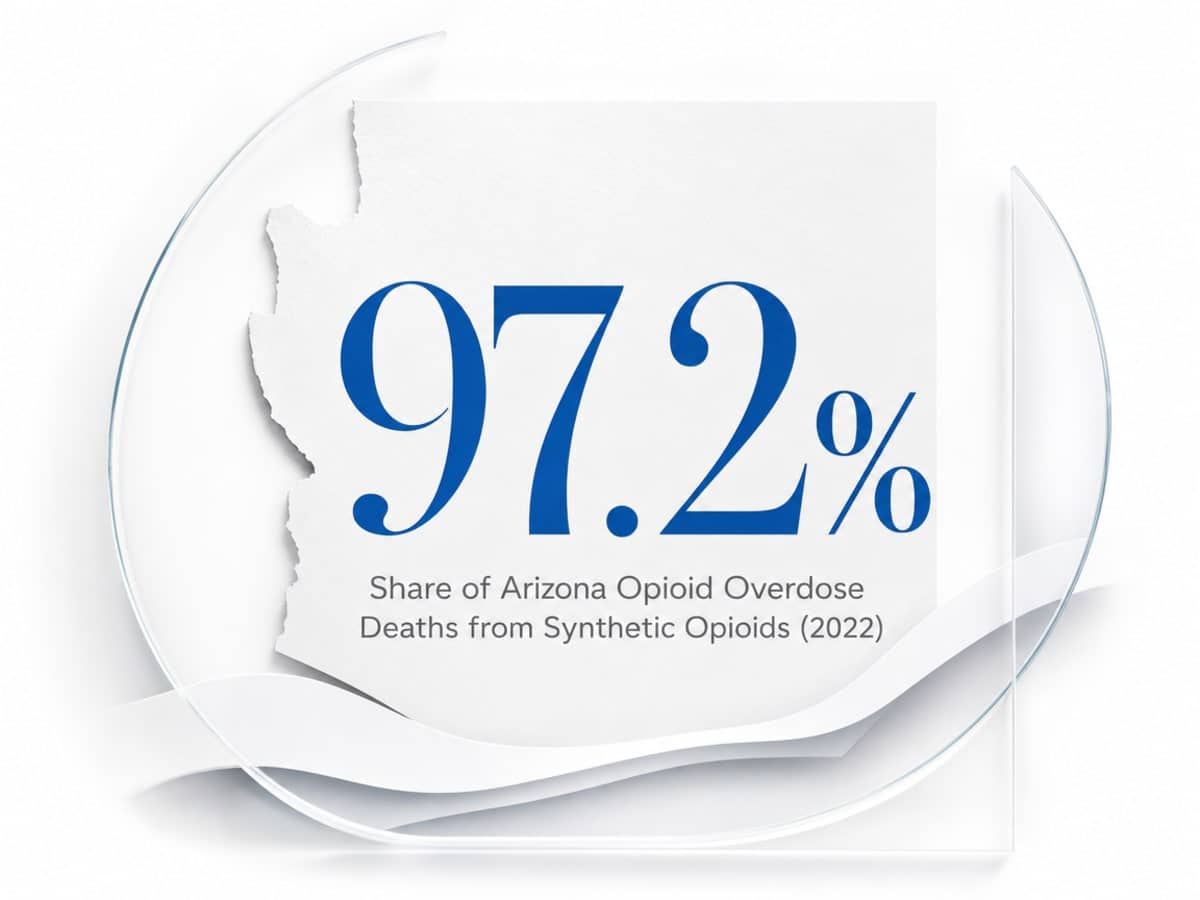
In 2022, there were 1,927 opioid overdose deaths among Arizona residents, and synthetic opioids, mostly illicit fentanyl, were involved in 97.2% of those deaths 8. That is not a statistic about strangers. It’s the environment your loved one is using in. A single pill from an unfamiliar source, a relapse after a period of tolerance loss, an unsupervised night in an apartment you’ve been quietly paying for, any of these can end differently now than they would have ten years ago.
This isn’t meant to load more guilt onto a family that is already exhausted. It’s meant to name why the old survival strategies stopped working. If you’ve been the one absorbing the consequences so your loved one doesn’t have to, the ground under that arrangement has shifted. Treating the family system, and doing it soon, is a safety intervention now, not just a relational one.
How Big the Family-Affected Population Really Is in Arizona
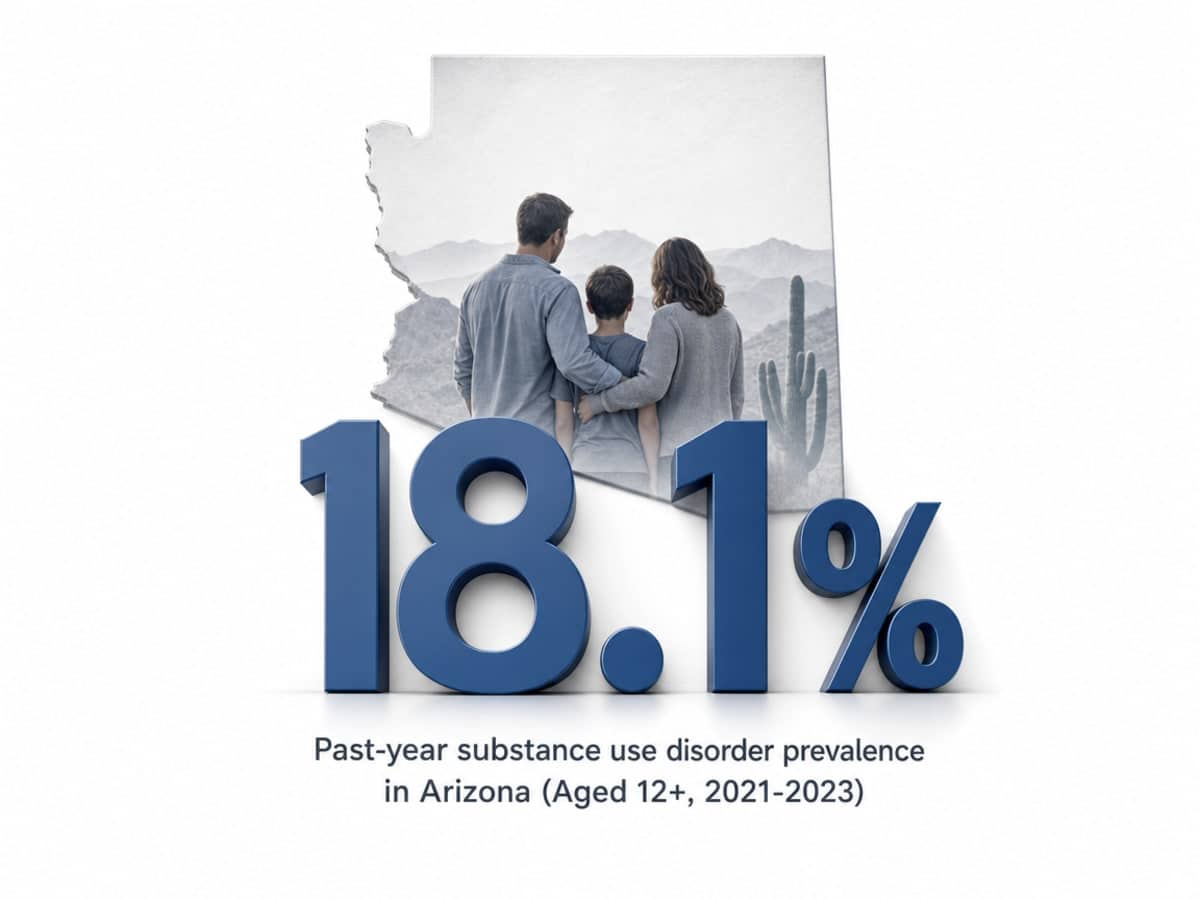
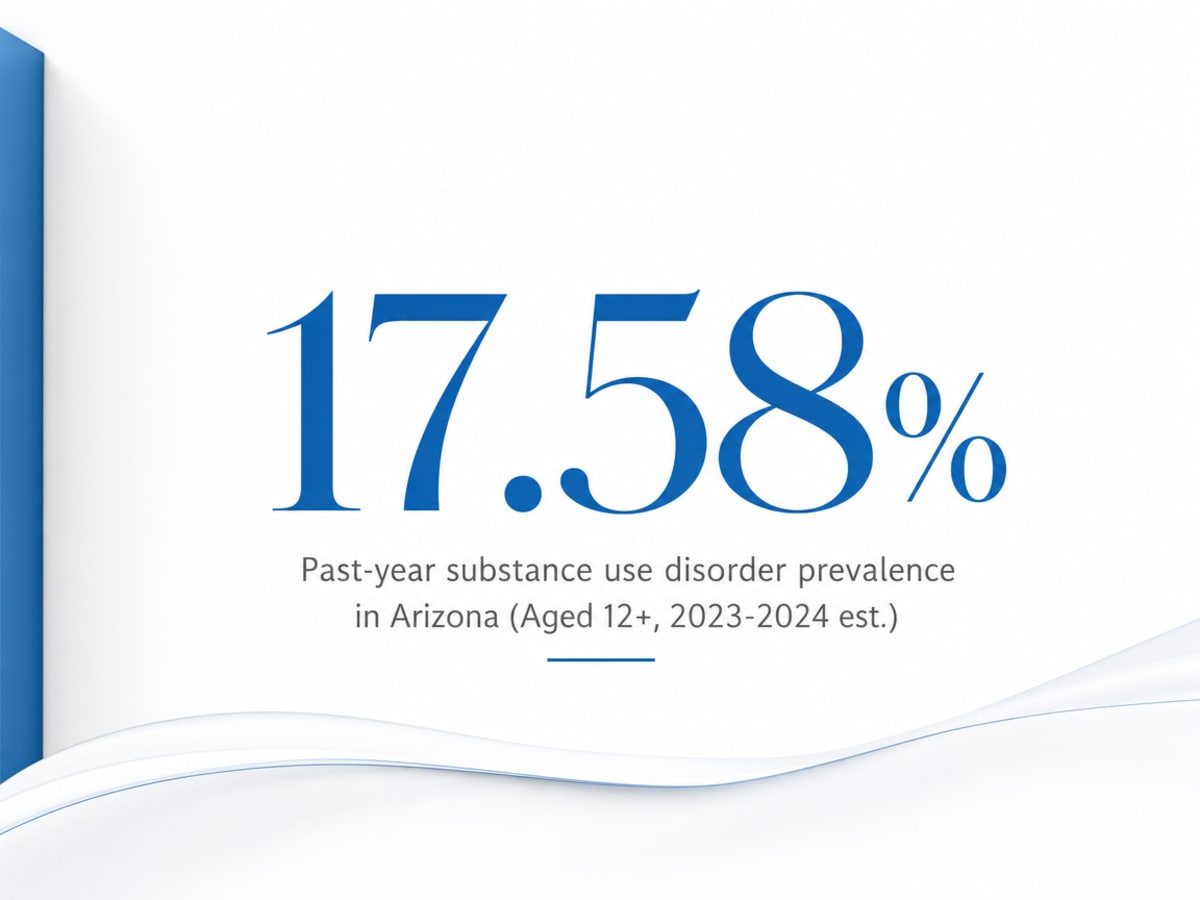
If it feels like you’re the only person in your zip code walking this out, you’re not. Between 2021 and 2023, about 18.1% of Arizonans aged 12 or older met criteria for a past-year substance use disorder, slightly above the national rate of 17.0% 6. Newer model-based estimates for 2023-2024 put the state figure at 17.58%, which is less a change in direction than a confirmation that the load isn’t easing 7.
Now do the family math. Each of those Arizonans has a partner, or a parent, or a sibling, or a child who is watching, adjusting, and holding pieces of the day together. Prevalence surveys count the person with the disorder. They don’t count the spouse who hasn’t slept through the night in two years, or the teenager who has learned to read a driveway. If you multiply out to the people orbiting each case, you’re looking at hundreds of thousands of Arizonans whose lives are organized, at least in part, around someone else’s illness.
That’s the population a codependency treatment program is written for. Not a niche. Not the extreme end. The mainstream experience of families across the state who have been asked, quietly and for a long time, to carry more than any one household should carry alone.
Why Treating the Client Alone Doesn’t Hold in Dual-Diagnosis Cases
Treatment-Resistant Illness Keeps Families in Survival Mode
Standard addiction treatment assumes a fairly linear arc. Detox, stabilize, learn some skills, build a sober support network, go home. That arc bends when the person you love has a psychiatric condition that hasn’t answered to the usual medications and therapies. Treatment-resistant schizophrenia, rapid-cycling bipolar disorder, and trauma-driven addiction don’t wrap up on a 30-day timeline, and the family around them doesn’t get to clock out either.
What that looks like in practice: you’ve been through three programs, two hospitalizations, and a handful of medication changes. Every discharge sends the same person back into the same house, into the same relational patterns, with a family that has now been in survival mode for so long that vigilance feels like personality. You read moods. You count pills. You sleep light. Your own doctor has probably suggested you look at your blood pressure.
When the identified client comes home to a system that hasn’t been treated, the system will pull the recovery back toward its old shape. Not out of malice. Out of muscle memory. That’s the piece a client-only program can’t reach. If the household is still organized around managing an illness, the person in recovery has to fight both the illness and the gravitational pull of the roles everyone learned to play.
What the Evidence Says About Family-Inclusive Care
You don’t have to take the family-system argument on faith. SAMHSA’s guidance is direct: behavioral health treatment that includes family therapy works better than treatment that does not, and for people with addiction, family therapy can reduce continued substance use, discourage relapse, and support long-term recovery 3. For co-occurring mental illness and addiction specifically, the same evidence base points to reductions in relapse, rehospitalization, and psychiatric symptoms when family is folded into the plan rather than kept at the periphery 3.
TIP 39’s family counseling framework gets more specific about what actually gets treated. Family-based SUD interventions focus on three things at once:
- helping the client initiate and sustain recovery,
- improving communication and relationships so the family can support that recovery, and
- helping family members engage in self-care and their own recovery 2.
That third piece is where codependency treatment lives. It’s not a lecture on boundaries. It’s clinical work on the patterns you developed to survive, done in a room where those patterns can be named without anyone getting blamed.
Practically, this reshapes what a treatment plan includes. Instead of a schedule that centers only the identified client, sessions loop in the spouse or parent, psychoeducation covers the whole household, and discharge planning accounts for what everyone, not just the client, will do differently on a Tuesday night. For dual-diagnosis cases especially, that shift is what keeps hard-won progress from unraveling the week after homecoming.
What Changes Inside a Family-Inclusive Program
If You’re the Person in Recovery Reading This
You might be bracing right now. Bringing your family into treatment can feel like handing the people who are already frustrated with you a bigger microphone. That’s a fair fear, and a good program plans for it.
In a family-inclusive plan, family sessions aren’t a tribunal. A clinician sets the frame, keeps the conversation on patterns rather than accusations, and makes sure you’re not being asked to process a decade of hurt in one afternoon. Your own individual work, medication management, and any dual-diagnosis care keep going in parallel. The family piece runs alongside, not on top of.
What you often get out of it is quieter than you’d expect: fewer arguments about the same three things, a spouse or parent who understands what your medication actually does, and a homecoming that isn’t wall-to-wall surveillance. TIP 39’s framework describes family counseling as helping the client initiate and sustain recovery while the household learns to support it, not police it 2. You don’t have to be ready to talk about everything on day one. You have to be willing to let the people around you learn a different way of being in the same room.
If You’re the Spouse, Parent, or Adult Child
Here’s the audience switch. If you’re the family member, this next part is written to you directly.
Your week inside a family-inclusive program looks different from what you might be picturing. You’re not sitting in the waiting room while the “real” treatment happens down the hall. You have your own touchpoints: a family therapy session (sometimes with your loved one, sometimes without), a psychoeducation group where you learn what treatment-resistant illness and dual diagnosis actually involve, and often individual sessions of your own to work on the patterns you’ve built up over years of coping.
Between sessions, you get homework that lives in your regular life. Practicing a boundary you’ve named out loud. Noticing the moment you’d normally step in to smooth something over, and choosing what to do instead. Sleeping. Eating a meal that isn’t standing over the sink. TIP 39 names this third leg of family counseling explicitly: helping family members engage in self-care and their own recovery 2. That’s not decoration. Your nervous system is part of the treatment environment your loved one will return to.
You should also expect the work to reframe some things you may have privately blamed yourself for. Covering for someone you love isn’t proof you’re broken. It’s what a person does when the alternative feels like losing them. A good program lets you set that down without shame and, over weeks, gives you a different set of moves that don’t require you to keep carrying the whole household on your back.
When Family Involvement Isn’t the Right Call
What a clinical team does in those situations is not throw up its hands. Individual work continues. Selected relatives (a sibling, an adult child, a chosen-family member) may be included while others are not. Sometimes family work happens in parallel tracks that never meet in the same room until, and unless, safety allows. The goal is a recovery environment that protects you, not a photo op of togetherness that puts you at risk.
Arizona’s Policy and Licensing Context for Family-Centered SUD Care
Arizona doesn’t treat family involvement in substance use care as an optional extra. It’s written into how the state does business. The Arizona Families F.I.R.S.T. program defines its work as “family-focused, evidence-based, trauma-informed” SUD assessment and treatment, with services described as strength-based, client-centered, and culturally relevant 4. The companion service guide goes further: providers are directed to help clients identify family and supportive people to participate in education, treatment, and recovery, and family members “shall be involved” in awareness, treatment, case coordination, and recovery maintenance as clinically indicated 5.
State licensing law backs that up. Arizona statute defines the practice of marriage and family therapy as the application of family systems theories to treat interpersonal and mental health issues, and it explicitly frames substance abuse counseling as work adapted to the needs of people experiencing chemical dependency “and to the families of those persons” 10. In other words, family-systems treatment for addiction isn’t a fringe modality here. It’s a named category in the professional statute.
What you should take from that as a family member or referring clinician: when you’re evaluating an Arizona program, ask how family involvement is structured, who on the team is credentialed to lead it, and how the facility’s ADHS licensure and accreditation shape the family-inclusive services you can actually access 13.
ViewPoint’s Prescott Program: How Codependency Fits Into Dual Recovery
Integrated Psychiatry and Therapy in One Treatment Plan
ViewPoint Dual Recovery is a Joint Commission-accredited psychiatric treatment facility in Prescott built around cases other programs consider too complex: treatment-resistant schizophrenia, rapid-cycling bipolar disorder, trauma-driven addiction, and the co-occurring substance use that so often rides alongside them. Codependency work isn’t bolted onto the side of that model. It sits inside it, because the relational patterns your household developed are part of the clinical picture the team is treating.
Practically, that means a psychiatrist and a therapist are working the same case together, not passing notes across a hallway. Board-certified psychiatry is available 24/7, and medication strategy, including clozapine protocols where indicated, gets adjusted in conversation with what’s showing up in individual, group, and family sessions. Length of stay is set by clinical need, not by an insurance clock, which matters when the family system needs time to actually shift.
For the family piece specifically, sessions are structured around the three targets TIP 39 names: sustaining the client’s recovery, changing communication patterns, and giving family members their own self-care work 2. Both the person in recovery and the people around them are invited into the plan from the start.
For Clinicians and Referring Professionals
Audience switch: this section is written for the interventionist, EAP coordinator, discharge planner, or outpatient clinician evaluating where to route a complex case.
When you’re placing a treatment-resistant or dual-diagnosis referral, the family question usually decides whether gains hold. ViewPoint operates under ADHS facility licensure and Joint Commission accreditation, with Arizona-licensed clinicians credentialed to deliver family-systems work as defined in state statute for chemical dependency populations 10, 13. Referrals get an integrated psychiatric and therapy team on the same case, individualized length of stay, and a family-inclusive plan built from intake forward rather than added at discharge 1.
What you can tell the family on the front end: their involvement is expected, not optional, and the program will accommodate cases where safety concerns require modified or parallel-track family work.
Starting the Conversation From Where You Are
You don’t have to have the whole thing figured out before you make a call. Most families who end up in a family-inclusive program started with one person, usually the most exhausted one, picking up the phone and saying some version of, “I don’t know if this counts, but here’s what’s happening at our house.” That’s enough.
If you’re the person in recovery, you can reach out on your own and ask that your spouse, parent, or adult child be brought into the plan when you’re ready. If you’re the family member, you can call before your loved one has agreed to anything and get guidance on what your own next step might look like. ViewPoint’s team in Prescott can walk you through intake, insurance, and how family sessions are structured for treatment-resistant and dual-diagnosis cases. SAMHSA’s National Helpline at 1-800-662-HELP (4357) is another 24/7 option for information and referrals if you want a second door 14.
Begin a family-centered path forward together
Gain expert guidance to identify the best next steps for your family’s recovery journey.
Frequently Asked Questions
Is codependency an actual diagnosis?
No. Codependency isn’t a diagnosis in the DSM-5. It’s a relational pattern that shows up when you live in close range of someone’s untreated illness. That doesn’t mean it’s imaginary or untreatable. Family-based clinical frameworks address it directly as part of substance use disorder care 2.
Do I have to live in Prescott to join a family-inclusive program at ViewPoint?
No. ViewPoint’s program in Prescott draws clients and families from across Arizona and beyond. Family sessions can be structured so relatives who live elsewhere in the state participate on site during scheduled visits and remotely between them, depending on the clinical plan and what safety and scheduling allow.
What if my loved one refuses treatment? Can I still get help for myself?
Yes. You do not need your loved one’s permission or participation to start your own work. TIP 39 describes family counseling as including self-care and recovery for family members as a distinct treatment target, not something contingent on the identified client showing up 2. You can call, ask questions, and begin individually.
How is family therapy different from couples counseling or a support group like Al-Anon?
Couples counseling focuses on the relationship between two partners. Al-Anon is a peer support group for people affected by someone’s drinking. Clinical family therapy inside a dual-diagnosis program is different: a licensed clinician treats the family system alongside the psychiatric and substance use care, and evidence shows this integrated approach outperforms individual treatment alone for co-occurring conditions 3.
What happens if there’s abuse or safety concerns in the family?
Family involvement gets modified, not forced. SAMHSA’s guidance is explicit that family therapy has to account for safety, cultural context, and confidentiality, and that it isn’t always appropriate 1. You might do individual work, or the team might include selected relatives while keeping others out of the room. Safety comes before togetherness, every time.
How long does a codependency-focused treatment program in Arizona usually take?
There isn’t a fixed timeline. At ViewPoint, treatment duration is set by clinical need rather than by an insurance clock, which matters for treatment-resistant and dual-diagnosis cases where the family system needs weeks, not days, to shift. Expect an initial assessment to shape the plan and clarify what your involvement will look like week to week.
References
- The Importance of Family Therapy in Substance Use Disorder Treatment. https://library.samhsa.gov/product/advisory-importance-family-therapy-substance-use-disorder-based-tip-39/pep20-02-02-016
- Chapter 3—Family Counseling Approaches (in TIP 39). https://www.ncbi.nlm.nih.gov/books/NBK571088/
- Family therapy can help people recover from mental illness or addiction. https://library.samhsa.gov/sites/default/files/sma13-4784.pdf
- THE ARIZONA FAMILIES F.I.R.S.T. PROGRAM MANUAL. https://extranet.azdcs.gov/DCSPolicy/Content/Program%20Policy/03%20Case%20Planning%20and%20Services/Links/Arizona%20Families%20FIRST%20Program%20Manual%202020_12_22.pdf
- Arizona Families FIRST Service Guide. https://extranet.azdcs.gov/DCSPolicy/Content/Practice%20Guides%20%26%20Additional%20Info/Links/Guides/Service%20Guide%20-%20Arizona%20Families%20First.pdf
- NSDUH Behavioral Health Barometer: Arizona, Volume 8. https://www.samhsa.gov/data/report/nsduh-behavioral-health-barometer-arizona-volume-8
- ARIZONA: 2023–2024 NSDUH State-Level Tables. https://www.samhsa.gov/data/sites/default/files/reports/rpt56986/2024-nsduh-sae-state-tabs1/2024-nsduh-sae-state-tabs-arizona.pdf
- Opioid Overdoses Surveillance Report, Arizona, 2022. https://www.azdhs.gov/opioid/documents/opioid-overdoses-surveillance-report-2022.pdf?v=20240112
- The Arizona Behavioral Health Workforce. https://crh.arizona.edu/sites/default/files/2022-03/20210702_AZ_BH_WorkforceReport_FINAL_0.pdf
- Arizona Statutes – Definitions related to practice of marriage and family therapy and counseling. https://bbhe.az.gov/sites/default/files/2025-01/statute%202010.pdf
- Arizona Revised Statutes §32-3274 – Licensure by endorsement. https://www.azleg.gov/ars/32/03274.htm
- Behavioral Health 101 (ADHS Licensing Training Material). https://www.azdhs.gov/documents/licensing/trainings-exercises-collaboratives/rules/behavioral-health-101.pdf
- Behavioral Health Provider Training & Licensing Resources – ADHS. https://www.azdhs.gov/licensing/bbhl-facilities/index.php
- SAMHSA National Helpline. https://www.samhsa.gov/find-help/helplines/national-helpline