Key Takeaways
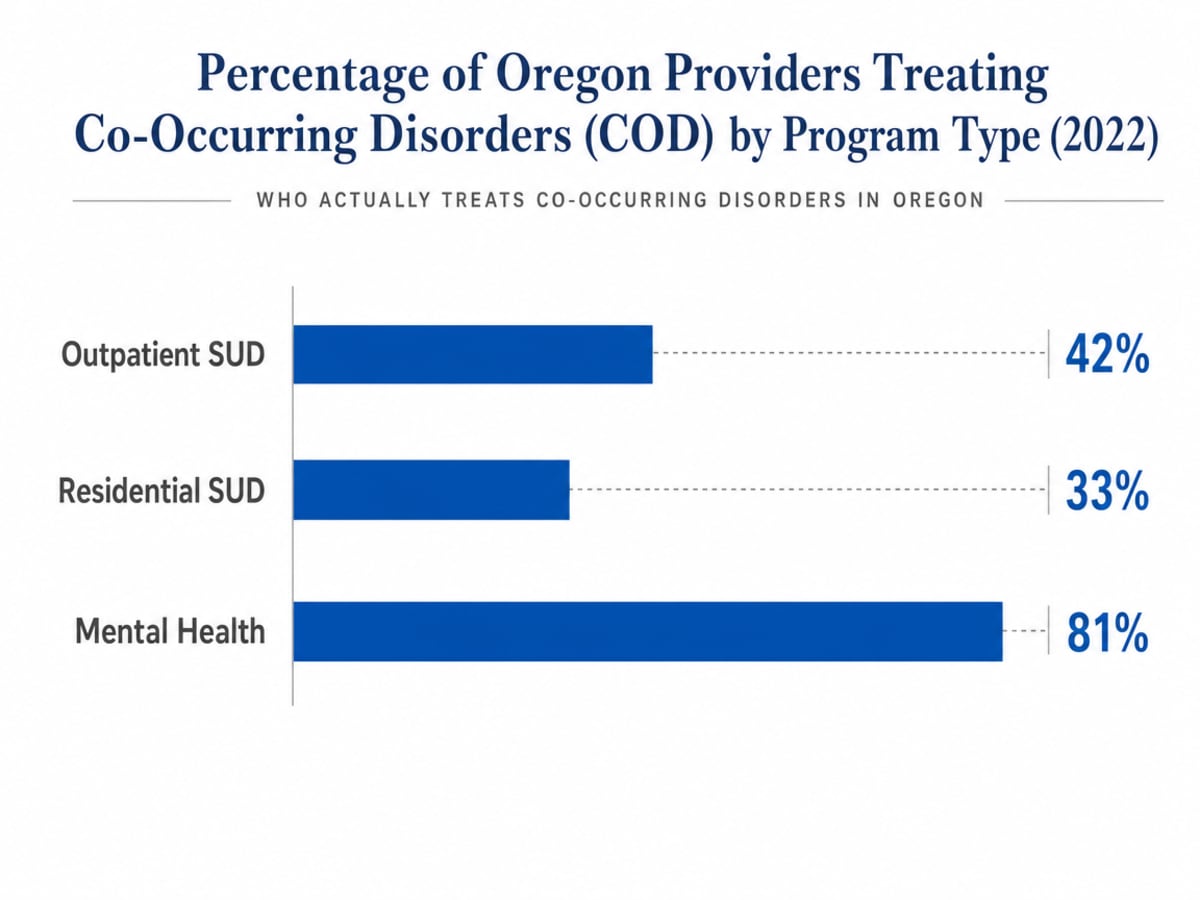
- Oregon’s own data shows only 33% of residential SUD programs and 42% of outpatient SUD programs treat co-occurring disorders, leaving a documented capacity gap 1.
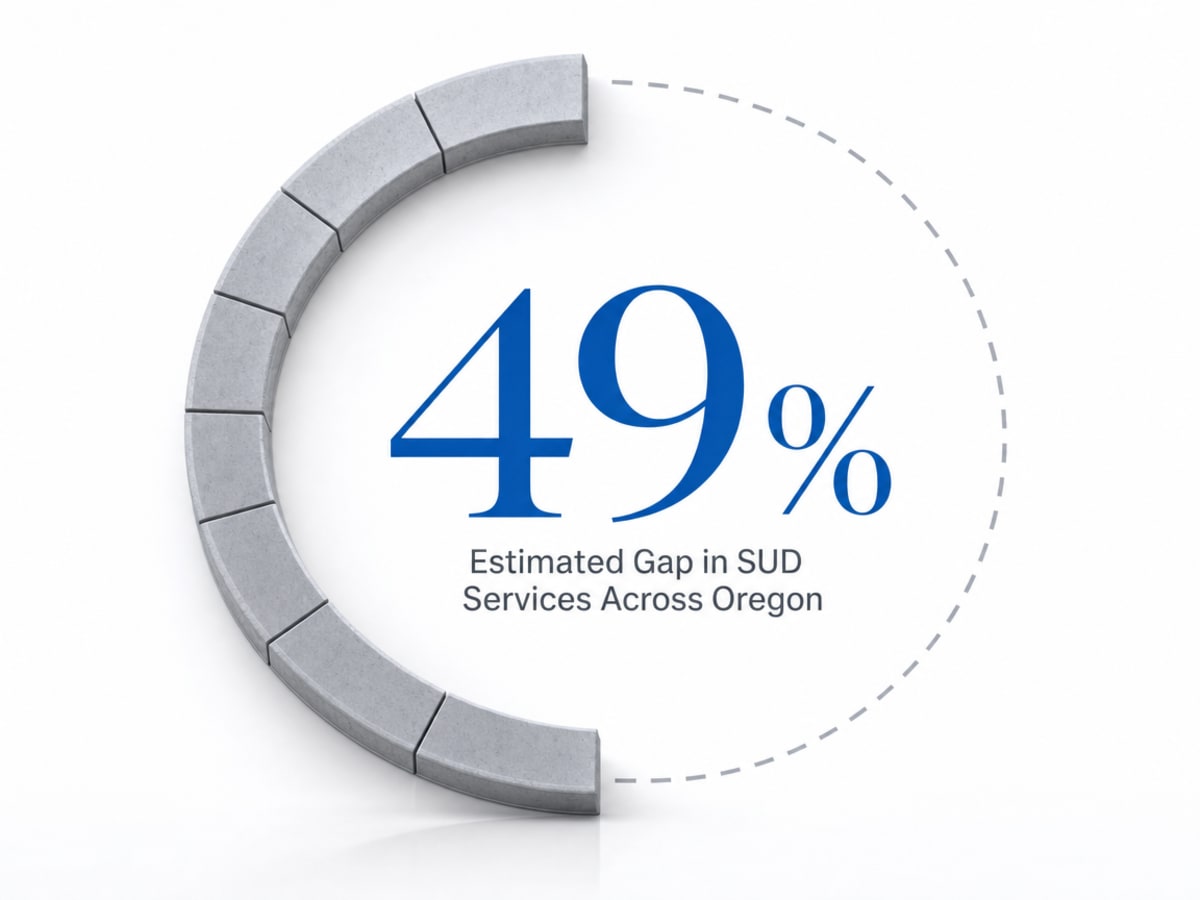
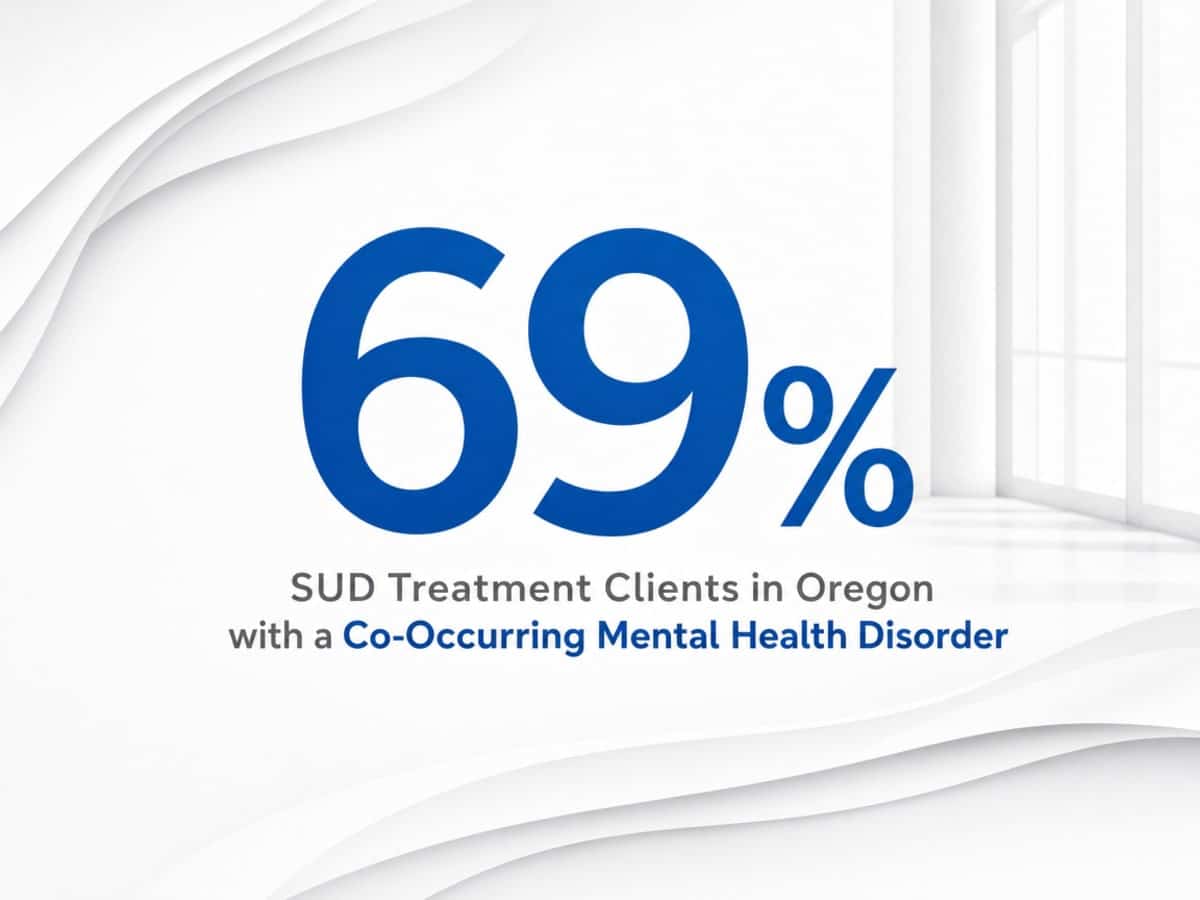
- Roughly 69% of Oregon SUD clients carry a co-occurring mental health diagnosis, yet the state estimates a 49% shortfall across the SUD continuum of care 2, 3.
- Being labeled co-occurring capable under Oregon’s ICD framework does not guarantee psychosis-capable care, clozapine management, or CBT for psychosis at higher acuity 8, 11.
- Start with your CCO’s behavioral health line and ask for ICD-registered programs with recent clozapine experience; if two Oregon programs have declined, weigh an out-of-region specialty call 11, 12.
When a Local Program Says ‘We Can’t Hold Him Here’
You’ve probably heard some version of it already. A case manager softens her voice and says the residential program can’t manage the psychosis piece. An intake coordinator in Portland leaves a message that they’re not the right level of care. A hospital social worker hands you a printed list of numbers, and you’ve called most of them twice.
If you’re reading this, you’re likely the family member, partner, or clinician of an adult in Oregon whose case keeps getting called too complex. Treatment-resistant schizophrenia layered with methamphetamine use. Rapid-cycling bipolar with alcohol. Trauma that never quieted down long enough for the substance use work to stick. You’ve cycled through outpatient, community mental health, maybe a 30-day residential stay that ended early. Nothing has held.
This is not a failure of effort on your part, and it isn’t a failure of the Oregon clinicians who’ve said no. Oregon’s behavioral health system has real strengths, but it is measurably thin on integrated, psychosis-capable dual diagnosis care at higher acuity 1, 3. This guide walks through what the state’s own data says about that gap, what you can still access inside Oregon, and when it’s worth asking about a specialty facility outside the region.
The Oregon Capacity Picture, in the State’s Own Numbers
Who Actually Treats Co-Occurring Disorders in Oregon
When a Portland residential program tells you they can’t manage your son’s psychosis alongside his stimulant use, they aren’t being unkind. They’re being honest about what their license, their staffing, and their program design can actually hold. The state’s own inventory backs them up.
Oregon Health Authority’s 2022 co-occurring service inventory looked at who, across the behavioral health system, actually treats both conditions at once. The breakdown is stark. Only 42% of outpatient substance use programs and 33% of residential SUD programs reported treating co-occurring disorders, compared with 81% of mental health programs 1. The report concluded plainly that“Oregon’s behavioral health system has limited capacity to treat patients with both SU and MH disorders concurrently”1.
This creates a significant mismatch: if your loved one’s primary crisis is substance use with co-occurring psychiatric symptoms, the residential SUD setting most likely to have a bed is also the setting least likely to be equipped for the mental health side. Two out of three residential SUD programs in Oregon aren’t set up for the co-occurring piece at all 1. While mental health programs are more likely to accept co-occurring cases, many lack the residential intensity or addiction-specific structure needed for dual diagnosis stabilization.
It’s not that Oregon lacks caring clinicians or thoughtful programs. It’s that the settings where high-acuity dual diagnosis clients need beds are the same settings least likely to be built for them. Self-identifying as COD-capable on an intake form is not the same as being staffed for active psychosis, complicated medication regimens, or treatment-resistant symptoms that don’t quiet down in a 30-day stay 1.
How Many Oregonians Actually Have Both Diagnoses
Here’s the part that makes the capacity picture harder to accept: dual diagnosis isn’t a rare edge case in Oregon. It’s the majority of the caseload.
The Alcohol and Drug Policy Commission’s assessment of Oregon’s SUD system found that 69% of substance use treatment clients in Oregon have a co-occurring mental health disorder, and 37% of mental health clients have a diagnosed SUD 2. Roughly seven in ten people already in a SUD program are carrying a psychiatric diagnosis at the same time. This aligns with national data, where the CDC reported about 20.4 million U.S. adults living with both a mental health condition and a substance use disorder in 2023 6.
What that tells you as a family member is this: your loved one is not an unusual case. The Oregon program that couldn’t hold him is turning away a version of him every week. That’s not comforting exactly, but it does reframe the exhaustion. You are not looking for something rare because he is rare. You are looking for something rare because the system is thin in a specific spot.
The gap is clear: two-thirds of SUD clients need integrated mental health treatment 2, yet only a third of residential SUD programs are equipped to provide it 1. When you add treatment-resistant symptoms, active psychosis, or a history of failed stabilizations, the number of Oregon programs that can genuinely help shrinks considerably.
The 49% Gap and Why Expansion Plans Don’t Close It for Complex Cases
Zoom out from any single program and the shortfall gets a number. Oregon Health Authority’s Substance Use Disorder Integration Report estimated a 49% gap in SUD services across the continuum of care, and concluded that“most providers cannot meet current demand”3. Nearly half of the SUD capacity Oregonians need doesn’t exist yet. This is why the waitlist you’re on is real, and why the program that promised to call back next Tuesday hasn’t.
Oregon is actively working to address this. In 2024, Governor Kotek and OHA announced a plan to add 465 residential treatment and recovery housing beds by the end of 2026, aiming for a 31% increase in residential treatment facility and home beds 10. This is a significant investment and positive news for general capacity.
However, this expansion primarily focuses on increasing the number of beds, not necessarily their specialization. The announcement does not specify how many of these new beds will be psychosis-capable, staffed for clozapine management, or designed for treatment-resistant dual diagnosis presentations 10. The underlying Behavioral Health Residential Facility Study models aggregate bed counts, which means the specific needs of complex cohorts like those with treatment-resistant schizophrenia or rapid-cycling bipolar with substance use can be overlooked 9.
This pattern isn’t unique to Oregon. A CMS assessment of Washington State’s Medicaid SUD reforms also identified“particular shortages for inpatient residential and withdrawal management services”and noted that
“a limited number of residential SUD providers are licensed as co-occurring facilities”7. The Pacific Northwest as a region faces a shortage in the exact tier of care many complex dual diagnosis cases require.
Therefore, while Oregon is expanding its behavioral health infrastructure, the expansion is largely aimed at general residential capacity, not specifically at the psychosis-capable, medication-intensive slice where your loved one’s case likely sits.
COD-Capable on Paper vs. Psychosis-Capable in Practice
What Oregon’s Integrated Framework Actually Requires
Oregon has a framework for co-occurring care through the Oregon Health Authority’s Integrated Co-occurring Disorders (ICD) track. This includes a practitioner registration process and expectations for how programs deliver mental health and substance use treatment together 11. When a program claims to be COD-capable, it typically refers to this framework.
However, the ICD framework defines integrated treatment broadly. It sets expectations for practitioner registration and program-level integration but does not detail specific requirements for managing treatment-resistant psychosis, active mania with substance use, or clozapine-level medication management 11. A separate SUD gap analysis found that while 76% of Oregon treatment providers report offering co-occurring services, these services are not necessarily fully integrated or available at higher levels of care 4.
This highlights the difference between a checkbox on an intake form and a program’s actual capacity. Being COD-capable in Oregon can range from having a licensed psychiatrist on staff to a counselor who screens for depression during intake. The term encompasses a wide spectrum of services.
Why Treatment-Resistant Psychosis Needs More Than a COD Checkbox
When a diagnosis involves treatment-resistant schizophrenia or schizoaffective disorder with substance use, the clinical demands increase significantly. Two critical components, often lacking in general residential programs, are essential:
The first is medication depth. Treatment-resistant schizophrenia is defined by a lack of response to at least two adequate antipsychotic trials, making clozapine the medication with the strongest evidence for this population. Clozapine requires ongoing blood monitoring, a prescriber experienced with its protocol, and a team capable of managing its side effects, including sedation, metabolic issues, and rare but serious adverse events. Programs not already administering clozapine are unlikely to initiate it during a short stay. If clozapine has never been offered despite the diagnosis fitting, it indicates a program’s limitations, not necessarily a poor prognosis for the patient.
The second is specialized psychotherapy. A 2024 systematic review and network meta-analysis of interventions for treatment-resistant schizophrenia concluded that“CBTp can reduce the overall symptoms of patients with treatment-resistant schizophrenia, and therefore clinicians can prioritise this intervention”8. Cognitive behavioral therapy for psychosis (CBTp) is distinct from general CBT. It requires clinicians specifically trained to work with delusions, hallucinations, and negative symptoms, and it is not widely available outside academic centers or specialty programs 8.
What You Can Access Inside Oregon Right Now
OHP, CCOs, and Community Mental Health Programs
Before looking elsewhere, it’s important to understand the resources available within Oregon, as the in-state path is often the appropriate first step for many families.
If your loved one is covered by the Oregon Health Plan (OHP), behavioral health services are a covered benefit. OHP includes mental health services, substance use treatment, medication management, hospital stays, and residential treatment. Crucially, members do not need a primary care referral to initiate these services 12. You can call directly to schedule a behavioral health intake.
Most OHP members are enrolled in a Coordinated Care Organization (CCO), which manages benefits and assists with placement. Contacting your CCO’s behavioral health line is typically the quickest way to get a case manager assigned who can help secure a bed or outpatient slot. For individuals not on OHP, the county-level Community Mental Health Program serves as a parallel entry point, particularly for crisis services and county-funded residential options.
Oregon also utilizes an Integrated Co-occurring Disorders (ICD) framework, which registers practitioners and programs specifically trained to treat both conditions simultaneously 11. When contacting intake lines, inquire directly whether the program is ICD-registered and how this impacts their approach to psychiatric medication and psychosis symptoms during a stay.
When the In-State Path Is Enough, and When It Isn’t
For many Oregon families, the in-state system provides adequate care. If your loved one’s substance use is the primary concern, psychiatric symptoms are stable on current medication, they are willing to engage in treatment, and a residential SUD program with psychiatric support has an open bed, staying in Oregon is generally preferable. Proximity to family, continuity with an existing CCO care team, and maintaining connections with outpatient prescribers are all beneficial for post-discharge success.
However, the in-state path becomes strained under specific circumstances. Signals include:
- Two or more Oregon residential programs have already declined admission or ended a stay prematurely due to psychiatric acuity.
- Clozapine being recommended but no program being able to initiate or manage it.
- Active psychosis or mania consistently derailing substance use treatment.
- Repeated discharges leading to homelessness, incarceration, or emergency room visits within days.
When these patterns emerge, it’s not a failure of the OHP-and-CCO route but rather an encounter with the capacity gap that the state itself has acknowledged in its reports 3. At this point, exploring out-of-region specialty options becomes a reasonable and necessary next step, rather than an overreaction.
When Leaving Oregon Is Worth Considering
The Real Costs of an Out-of-State Placement
Sending a loved one out of state for treatment is not merely a clinical upgrade; it involves significant personal and practical costs that should be acknowledged.
One major loss is easy visitation. A weekly drive to a local program differs greatly from flying to Arizona or Utah every few weeks. Family therapy sessions often shift to video, which, while functional, lacks the same personal connection. Your loved one will wake up in an unfamiliar environment, separated from their usual anchors of people and places. If they leave against medical advice, they will be in a city where they know no one.
Practical costs also accumulate, including travel expenses for admission, time off work for accompanying family members, and the complex coordination of discharge back to an Oregon prescriber and outpatient team who were not involved in the initial stabilization. Securing insurance authorization for out-of-state care can also involve days of phone calls before a bed can be held.
These factors are not reasons to dismiss out-of-state care entirely, but they underscore the importance of ensuring that leaving Oregon genuinely solves a problem the in-state system cannot, rather than simply being a different approach. If a local program can safely manage the case, staying local is almost always the preferred option.
Case Criteria That Point Toward a Specialty Facility
So when does it actually make sense to look outside the region? A few patterns show up again and again in the cases where families end up glad they made the call.
Consider an out-of-region specialty facility if two or more Oregon residential programs have already declined admission or ended a stay early citing psychiatric acuity. This indicates a systemic capacity ceiling, as highlighted in state reports 1, 3.
Another key indicator is when clozapine has been recommended or discussed, but no program has actually started or managed it. For treatment-resistant schizophrenia, defined by failure of at least two adequate antipsychotic trials, clozapine is the most effective medication. If it hasn’t been offered, the medication ceiling for treatment hasn’t been reached.
If active psychosis or mania consistently derails substance use treatment, leading to repeated discharges or departures, it suggests the two conditions need integrated treatment by the same team. This requires specialized psychosocial care, such as CBT for psychosis, which is often unavailable outside specialty settings 8.
Finally, if discharges consistently lead to the same outcomes—an emergency room, a shelter, a jail, or a brief psychiatric hospital stay—the revolving door pattern suggests that waiting for a different Oregon bed will likely yield similar results.
If three or four of these criteria describe your situation, contacting an out-of-region specialty facility is a reasonable next step, not a last resort.
How ViewPoint Fits a Narrow Slice of These Cases
ViewPoint Dual Recovery is a Joint Commission-accredited psychiatric facility in Prescott, Arizona. It is one option among many, specifically designed for a particular type of case rather than general SUD rehabilitation. Understanding this specific fit is crucial.
ViewPoint is equipped to help with treatment-resistant schizophrenia and schizoaffective presentations, rapid-cycling or complex bipolar illness, and trauma-driven psychiatric conditions combined with substance use. The facility offers around-the-clock board-certified psychiatric care, essential for medication adjustments at any time. Clozapine protocols are a standard part of their treatment toolkit. Treatment duration is determined by clinical stabilization, not by a fixed 30-day insurance schedule. Psychiatrists and therapists collaborate directly on each case, ensuring integrated care.
ViewPoint is not the right choice for uncomplicated substance use without a significant psychiatric component, cases where local Oregon programs can safely manage the acuity, or situations where proximity to family is clinically more important than specialized medication depth.
If you are an Oregon family considering this decision, the most productive next step is a direct conversation about your loved one’s specific case. Inquire whether their presentation aligns with what the program is designed to treat. A clear “no” can be more helpful than an ambiguous “maybe.”
What to Do This Week
You don’t have to solve this by Friday. You do have a handful of small moves that will make next week easier, whichever direction the case goes.
Call your CCO’s behavioral health line and ask for a case manager assigned specifically to your loved one. If he’s on OHP, you don’t need a PCP referral to start 12. Ask the case manager two specific questions: which Oregon residential programs are ICD-registered and currently accepting co-occurring admissions 11, and whether any of them have managed clozapine during a stay in the last year.
Pull together a short case summary you can send to any program that asks. One page. Diagnoses, current medications, the last three treatment episodes and why each ended, any documented psychiatric hospitalizations, and current substance use. Programs move faster when they don’t have to piece the history together from scratch.
If two Oregon programs have already declined or discharged early, make one out-of-region call this week alongside your in-state search. You’re not committing to anything. You’re asking whether the case fits. A clear yes or a clear no from a specialty facility like ViewPoint gives you information the in-state waitlist won’t.
Then rest tonight. This is a long call, not a sprint.
Not sure if your case fits? Let’s talk.
Get professional feedback on whether specialized dual diagnosis care is the right next step for your situation.
Frequently Asked Questions
Why do so many Oregon dual diagnosis programs turn away cases involving active psychosis?
Most Oregon residential SUD programs weren’t designed for active psychosis. Only 33% of residential SUD programs report treating co-occurring disorders at all, and even fewer are staffed for antipsychotic management, complex medication protocols, or psychosis-specific therapy 1. When a program says the case is too complex, it usually means the acuity is above what their license and staffing can safely hold.
Does the Oregon Health Plan cover residential dual diagnosis treatment?
Yes. OHP covers behavioral health services including hospital stays, medication management, and residential treatment, and members don’t need a primary care referral to start 12. Coverage on paper doesn’t guarantee a bed is open, though. Your Coordinated Care Organization’s behavioral health line is the fastest route to getting a case manager who can chase down which programs are actually admitting.
What’s the difference between a program that’s ‘co-occurring capable’ and one that can actually manage treatment-resistant psychosis?
Co-occurring capable is a broad label under Oregon’s Integrated Co-occurring Disorders framework and can mean anything from depression screening to full psychiatric integration 11. Psychosis-capable means a psychiatrist runs clozapine protocols, staff are trained for active hallucinations or mania, and psychosocial care like CBT for psychosis is available 8. Ask specifically about clozapine experience and psychiatrist coverage.
When should an Oregon family consider sending a loved one out of state for care?
Look outside Oregon when two or more in-state residential programs have declined or ended a stay early citing psychiatric acuity, when clozapine has been recommended but never started, when active psychosis or mania keeps derailing the substance use work, or when discharges keep cycling to an ER, jail, or shelter. That pattern points to the capacity gap the state has documented 3.
Will Oregon’s planned expansion of residential beds fix the dual diagnosis gap?
Partly. The Governor’s 2024 announcement adds 465 residential treatment and recovery housing beds by end of 2026, growing residential treatment facility beds from 986 to 1,287 10. That helps general capacity. It doesn’t specify how many beds will be psychosis-capable or built for treatment-resistant dual diagnosis, so the high-acuity gap likely persists even after the expansion lands 9.
How do I start a referral through my CCO or community mental health program?
Call your CCO’s behavioral health line directly if your loved one is on OHP; no PCP referral needed 12. If he isn’t on OHP, call the county Community Mental Health Program instead. Ask for a case manager assigned to the case, request programs registered under Oregon’s Integrated Co-occurring Disorders framework 11, and have a one-page case summary ready to send.
References
- Oregon inventory of services for co-occurring substance use and mental health disorders, 2022. https://www.oregon.gov/oha/HSD/AMH/DataReports/COD-Service-Inventory-2022.pdf
- Oregon SUD System Assessments and Analyses 2020–25. https://www.oregon.gov/adpc/Committee%20Resources/Summary%20of%20Assessments%20and%20Gaps%20Analyses%202020-25.pdf
- Substance Use Disorder Integration Report. https://www.oregon.gov/oha/HSD/AMH/DataReports/SUD-Integration-Report.pdf
- Oregon Substance Use Disorder Services Inventory and Gap Analysis. https://www.oregon.gov/oha/HSD/AMH/DataReports/SUD-Gap-Analysis-Inventory-Report.pdf
- Oregon Behavioral Health Residential+ Facility Study. https://www.oregon.gov/oha/HSD/AMH/DataReports/Behavioral-Health-Residential-Facility-Study-June-2024.pdf
- About Behavioral Health. https://www.cdc.gov/mental-health/about/about-behavioral-health.html
- Mid-Point Assessment of Washington’s Section 1115 SUD Amendment. https://www.medicaid.gov/medicaid/section-1115-demonstrations/downloads/wa-sud-mid-point-assessment.pdf
- Psychological and psychosocial interventions for treatment-resistant schizophrenia: a systematic review and network meta-analysis. https://pubmed.ncbi.nlm.nih.gov/38879276/
- Oregon Behavioral Health Residential+ Facility Study – Final Report. https://www.oregon.gov/oha/BH/Reports/Behavioral-Health-Residential-Facility-Study-June-2024.pdf
- Governor Kotek, Oregon Health Authority Announce 465 Added Treatment Beds by End of 2026. https://apps.oregon.gov/oregon-newsroom/OR/GOV/Posts/Post/governor-kotek-oregon-health-authority-announce-465-added-treatment-beds-by-end-of-2026
- Oregon Health Authority : Integrated Co-occurring Disorders. https://www.oregon.gov/oha/hsd/amh/pages/co-occurring.aspx
- Oregon Health Plan (OHP) Behavioral Health Coverage. https://www.oregon.gov/oha/hsd/ohp/pages/behavioral-health.aspx