Key Takeaways
- Illinois’s Medicaid structure caps IMD psychiatric stays at 30 days and directs funding toward brief stabilization, leaving treatment-resistant and dual-diagnosis cases without a native long-term container 5.
- Recent state data shows inpatient SUD stays rose 5.3% while early intervention services fell 43.5% in a single quarter, pushing more Illinois families toward crisis-only care 4.
- Extended, individualized treatment sets discharge by clinical response rather than a bed-day ceiling, using integrated psychiatry and therapy that evidence links to better outcomes for co-occurring disorders 12, 16.
- Families who have cycled through repeated short stays should evaluate whether the case meets treatment-resistance criteria 14, 15and consider programs — inside or outside Illinois — built for months-long integrated care.
When Stabilize-and-Discharge Stops Working
You already know the rhythm. A crisis lands in the ER, a 72-hour hold buys some quiet, a discharge summary lists a new medication and an outpatient referral, and within weeks — sometimes days — you’re back at the same intake desk in Chicago, Peoria, or a downstate hospital that keeps your loved one’s file on hand. The clinicians aren’t wrong. The system is doing what it was built to do: stabilize, discharge, and hand off. That works for a lot of people. For your family, it hasn’t.
If you’re reading this, you’ve probably cycled through the standard pathways more than once. Intensive outpatient. A two-week residential stay. Medication changes made in a hurry before insurance pushed for a step-down. Illinois’s public mental health system reaches only a small share of residents through ongoing community services, with penetration rates that sit well below what national need estimates suggest 1, 2. That gap isn’t a moral failing of any single clinic — it’s the shape of a system engineered around brief episodes of care.
What follows isn’t a checklist for picking a treatment center. It’s a plain look at why short-stay care keeps recycling certain cases, what an extended, individualized model actually involves, and how to tell whether your loved one has moved past what standard Illinois programs can offer. You’ve done the exhausting work of paying attention. That’s worth something here.
How Illinois Built a System Around Brief Stabilization
The 30-Day IMD Cap and Where Medicaid Dollars Actually Flow
To understand why your loved one keeps landing back in the same hospital, look at how the money is structured. Under Illinois’s Behavioral Health Transformation 1115 waiver, Medicaid coverage for stays in Institutions for Mental Diseases is capped at 30 days for eligible adults, and those stays are explicitly framed as short-term residential care focused on stabilization and rapid transition to community services 5. The waiver also adds crisis beds to divert people who can’t be maintained at home but don’t need a full psychiatric hospitalization. That’s the philosophy in writing: get the acute episode under control, then hand off.
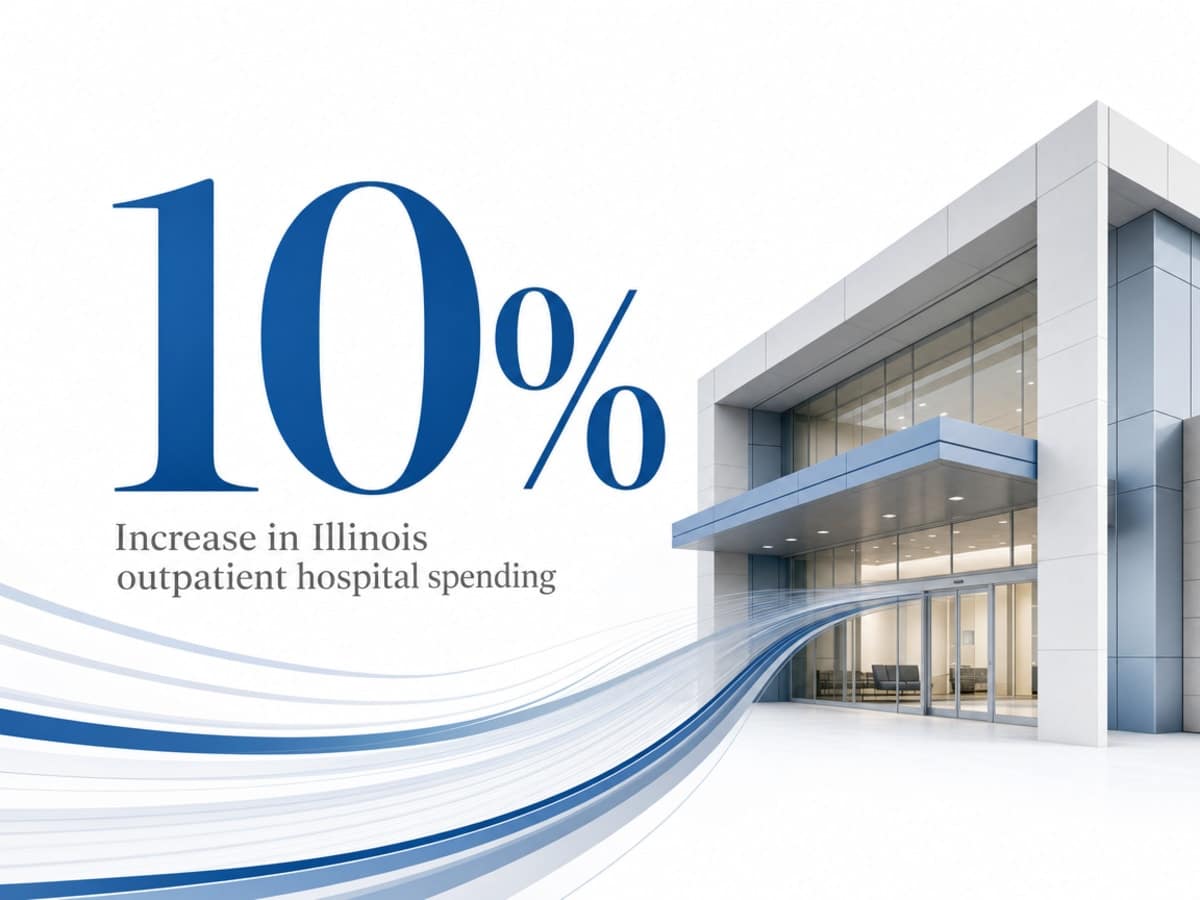
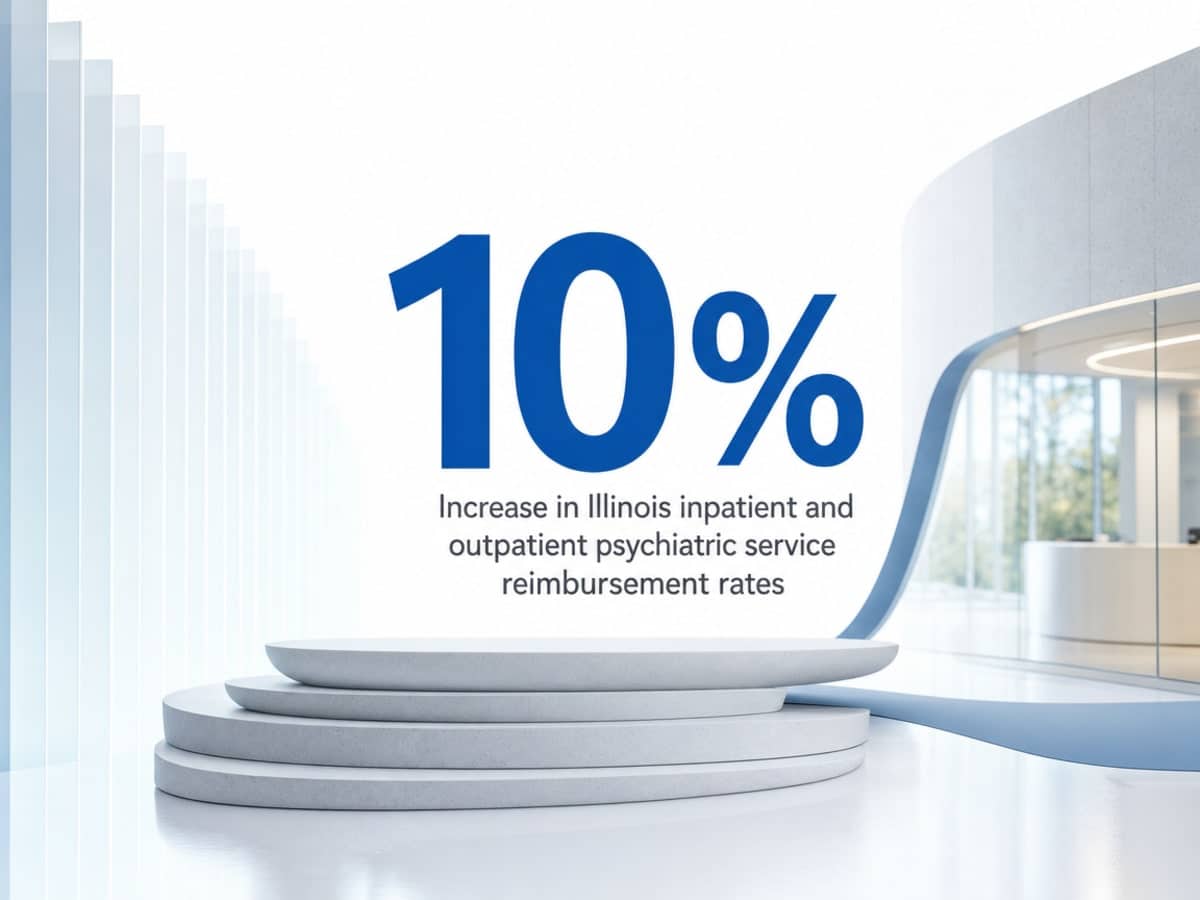
The spending pattern reinforces the design. In FY 2024, the Illinois Department of Healthcare and Family Services put more than $550 million into hospital reimbursement, including a 10% rate increase for inpatient and outpatient psychiatric services 3. Outpatient hospital spending climbed to $2.5 billion — up 10% — even though the actual volume of outpatient services dipped slightly 3. More money is flowing per encounter, but the encounters themselves are still short.
None of this makes Illinois hospitals or clinicians the villain in your story. It means the funding envelope they work inside is shaped like a triangle: a wide base of brief outpatient touches, a narrower middle of crisis stabilization, and a sharp point at 30-day inpatient stays. If your loved one has a condition that needs months of coordinated psychiatry, therapy, and medication adjustment to actually respond, the system doesn’t have a native container for that. It has step-downs. It has referrals. It has another intake next month. That gap is where families of treatment-resistant and dual-diagnosis patients tend to get stuck.
The Recent Tilt Toward Acute SUD Care
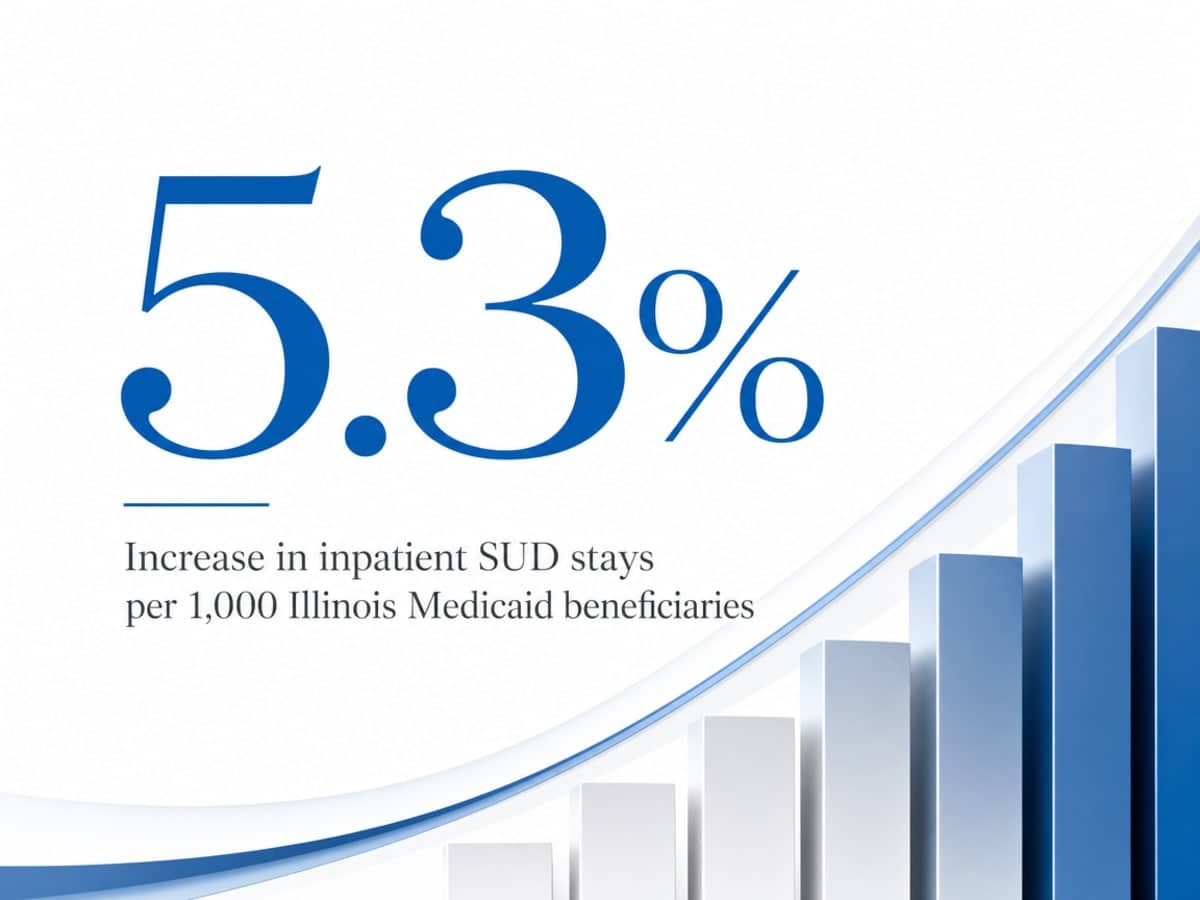
The pattern gets sharper on the substance use side, and the most recent federal monitoring data shows exactly how. Between July and September 2024, inpatient stays for substance use disorder per 1,000 Illinois Medicaid beneficiaries rose 5.3%, while early intervention services per 1,000 beneficiaries fell 43.5% in the same window 4. Two new residential facilities opened during the prior quarter, which helped push inpatient utilization up 4. In plain terms: the acute end of the system grew, and the upstream end contracted, at the same time.
If you’ve watched a family member’s addiction spiral while their outpatient counselor’s caseload kept shrinking, that number will feel familiar. Early intervention is the work that catches a relapse before it becomes an overdose, or that engages someone who is ambivalent about treatment. When it drops that steeply in a single quarter, the practical result is that more people arrive at care only when they’re in crisis — and crisis care, by design, is brief.
Who This Article Is Actually Written For
This piece isn’t written for someone whose first therapy appointment is next Tuesday. It’s written for you — the parent, spouse, adult child, or sibling who has already been through several rounds of care and is trying to figure out what’s actually left to try.
The scale of that group in Illinois is larger than most people realize. According to SAMHSA’s 2022–2023 state estimates, roughly 494,000 Illinois adults live with serious mental illness, and about 261,000 residents have a co-occurring substance use disorder alongside a serious mental illness 8. Those aren’t people with mild anxiety or a rough patch after a job loss. Serious mental illness, in the federal definition, means a diagnosable condition that substantially interferes with major life activities. Co-occurring means two full disorders running at the same time, each making the other harder to treat.
Inside that population sits a smaller group whose loved ones are reading pages like this one. If your family member has cycled through more than one hospitalization, tried two or more medications without lasting improvement, completed at least one outpatient or short residential program, and still can’t hold onto stability for more than a few months — you’re the reader we have in mind. The same is true if a substance use disorder keeps derailing psychiatric progress, or if a psychiatric episode keeps derailing sobriety.
You don’t need another article explaining what depression is, or a glossary of levels of care. You need a clear-eyed look at when standard Illinois pathways have run their course and what a different care model actually looks like. That’s what the rest of this is.
What ‘Extended, Individualized Treatment’ Actually Means
Duration Set by Clinical Response, Not a Bed-Day Ceiling
The phrase you’ll hear a lot when you start calling programs is “length of stay.” In the Illinois system, that length is largely set before your loved one walks in. A 72-hour hold ends at 72 hours. An IMD stay covered under the state’s 1115 waiver caps at 30 days for eligible adults 5. An IOP has a preset number of weeks. The clinical picture may still be moving, but the calendar is fixed.
An extended, individualized model inverts that logic. Instead of asking “how many days does this level of care allow?” it asks “what does this specific person’s response to treatment look like right now?” Someone starting a clozapine trial for treatment-resistant schizophrenia needs weeks of titration and blood monitoring before anyone can tell whether the medication is working — and that’s before therapy has had time to build on the pharmacological gains. A person coming off a decade of alcohol use with an underlying trauma history isn’t going to have that trauma processed in a two-week detox.
What “duration set by clinical response” means in practice: the discharge date is a clinical judgment, made by the treating team based on symptom stability, medication tolerance, and readiness to step down — not a number the funder assigned on day one. For families who have watched a loved one get discharged mid-adjustment more than once, that difference is the whole point.
Integrated Psychiatry, Therapy, and Root-Cause Assessment
The second piece is what happens inside those days. In a stabilization-first model, psychiatry and therapy often run on parallel tracks that rarely meet. The psychiatrist sees your loved one for fifteen minutes to adjust a medication. A therapist runs a group. A case manager arranges the outpatient handoff. Each clinician does their part; nobody is necessarily building a single case formulation.
Integrated care collapses those tracks. The psychiatrist and therapists work from the same assessment, meet about the case, and adjust the plan together as symptoms shift. SAMHSA’s evidence review on co-occurring disorders concluded that integrated programs outperform nonintegrated care across substance use, psychiatric symptoms, hospitalization, housing, and quality-of-life outcomes 12. A randomized trial of integrated treatment for dual disorders similarly found reduced hospital utilization and better substance use outcomes compared with usual care 16.
Root-cause assessment is the other half. Standard psychiatric evaluations often stop at the current diagnosis and medication list. A root-cause assessment asks what’s underneath — trauma history, prior medication failures and why they failed, undiagnosed conditions, family patterns, sleep, substance use as self-medication. For a case that has cycled through several diagnoses without a clear formulation, that deeper look is often where the actual treatment plan finally comes from.
Comparing the Two Care Models
It helps to see the two models side by side. The comparison below isn’t about one being good and the other bad — it’s about which one fits which kind of case.
| Element | Short-Stay Stabilization | Extended Individualized Treatment |
|---|---|---|
| Duration | Preset (72 hours, 14 days, up to 30 days for IMD stays under the Illinois 1115 waiver) 5 | Set by clinical response; discharge is a treatment-team judgment |
| Primary goal | Resolve the acute crisis and transition to community care | Achieve durable symptom stability and address root causes |
| Psychiatry and therapy | Often parallel tracks with separate case notes | Integrated team working from a single case formulation 12, 16 |
| Medication strategy | Adjustments constrained by length of stay | Room for complex protocols, including clozapine titration and monitoring |
| Substance use and psychiatric symptoms | Frequently treated sequentially or in separate settings | Treated simultaneously by the same team |
| Best fit | Acute crises, first episodes, cases that respond to standard care | Treatment-resistant conditions, dual diagnosis, repeated recurrence |
If your loved one has moved through the left column two or three times without lasting change, the honest question isn’t whether they need more of the same. It’s whether the column itself is the wrong one for their case.
Recognizing Treatment-Resistant Schizophrenia and Bipolar Cases
There’s a specific kind of exhaustion that comes from watching a loved one try medication after medication without lasting relief. You start to wonder whether you’re missing something, or whether the psychiatrist is. Often, the honest answer is that the case has crossed into treatment resistance — a clinical category with actual criteria, not a vague label.
For schizophrenia, the broad working definition is nonresponse to at least two sequential antipsychotic trials of sufficient dose, duration, and adherence 15. “Sufficient” matters. A two-week script that got stopped because of side effects doesn’t count. Neither does a medication your family member quietly stopped taking. The NIH review on treatment-resistant schizophrenia adds a functional layer: active and persistent symptoms for at least 12 weeks despite roughly six weeks of appropriate antipsychotic dosing, with adherence documented 14. In practical terms, that means two adequate trials, three months of ongoing symptoms, and a paper trail showing the medication was actually taken.
Bipolar treatment resistance is defined less crisply in the literature, but the pattern families recognize is similar: mood episodes that keep breaking through despite adequate trials of mood stabilizers, often with rapid cycling, mixed features, or a psychotic overlay that complicates every medication decision. If your loved one has been through lithium plus one or two other agents at real doses, and the episodes still arrive on their own schedule, the case is behaving like one that needs a more specialized approach.
A short family checklist that mirrors the clinical criteria:
- two or more adequate medication trials at therapeutic doses,
- at least 12 weeks of persistent symptoms during or after those trials, and
- evidence that the medications were actually taken as prescribed 14, 15.
If your loved one meets all three, you’re not looking at a case that another 30-day admission is likely to resolve. You’re looking at a case that needs unhurried titration — clozapine protocols for schizophrenia, complex combinations for bipolar — under a team that can watch bloodwork, side effects, and symptom response over months rather than days. That’s the operational shift to ask about when you call any program next.
Dual Diagnosis: Why Sequential Treatment Keeps Failing
Here’s the pattern you’ve probably lived. Your loved one goes to detox, gets stable, and is told to come back for the psychiatric piece “once the substance use is under control.” Or the reverse — a psychiatric unit stabilizes the mood episode and refers out for the drinking, because that’s “not what we treat here.” Each program does its half. Neither half holds, because the two conditions are feeding each other in real time.
SAMHSA’s evidence review on co-occurring disorders puts it plainly: roughly half of individuals with severe mental disorders are also affected by substance use, and integrated programs — where one team treats both at once — outperform nonintegrated care across substance use, psychiatric symptoms, hospitalization, housing, and quality of life 12. A randomized trial in community mental health centers found that patients receiving integrated treatment were 1.76 times more motivated to engage in substance use treatment at 12 months than those in usual care 7. That trial measured motivation, not abstinence, and both groups reduced use — worth naming honestly. But motivation is what keeps someone in the room long enough for the rest of the work to happen.
Duration is the other half of the equation. An NCBI review of dual-diagnosis programs found that integrated treatment delivered for 18 months or longer produced significant reductions in substance abuse and, in some cases, substantial rates of remission, along with reduced hospital use 13. Compare that to the 30-day cap on Medicaid-covered IMD stays in Illinois 5. The gap between what the evidence says works and what the funding structure covers isn’t a small one. If sequential care has failed your family more than once, the fix isn’t a better referral. It’s a team that treats both conditions in the same room, for as long as the clinical picture requires.
Adolescents and DCFS Wards: A Different Rulebook
If the person you’re worried about is under 18, the rules change — especially if they’re a ward of the state. Illinois DCFS Procedures 301 spell out placement requirements for minors in care, including the use of Therapeutic Residential services and Qualified Residential Treatment Programs (QRTP) for youth whose needs exceed traditional foster placement 6. Those aren’t just administrative categories. They shape which programs can accept your child, what assessments are required first, and how quickly a step-up or step-down can happen.
For non-ward adolescents, the constraints are softer but the shortage is similar. Pediatric psychiatric beds fill quickly across Chicago and downstate, which is why families of teens with treatment-resistant conditions often reach the out-of-state conversation earlier than they expected.
Why Illinois Families End Up Looking Beyond the State
The moment usually arrives quietly. Another discharge summary lands on your kitchen table, another outpatient appointment is scheduled six weeks out, and you realize the local options in front of you are versions of the ones that didn’t hold last time. That’s when families start typing longer, more specific questions into search bars — often the ones that lead here.
The math behind that moment is stark. An earlier NSDUH report identified roughly 2.1 million Illinois residents aged 12 and older as needing substance use treatment, while only about 357,000 actually received it 9. That’s a gap of nearly six to one, and it sits on top of a public mental health system whose community penetration rate serves about 2.0 clients per 1,000 population 10. The bottleneck isn’t hidden — it’s structural.
Looking beyond Illinois isn’t a rejection of the clinicians who have helped your family. It’s a recognition that some cases need a care container the local system wasn’t designed to hold: months of integrated psychiatric and substance use work under one team, with medication protocols that take time to titrate and therapy that takes time to land. When you’ve already tried what’s near you, geography stops being the deciding factor. Clinical fit does.
Where ViewPoint Fits — and Where It Doesn’t
A quick note on scope before this reads like a recommendation: ViewPoint Dual Recovery is a Joint Commission-accredited psychiatric facility in Prescott, Arizona. It exists in this article because it’s built around the specific gap the previous sections describe — extended, integrated care for cases the Illinois short-stay system keeps cycling.
ViewPoint is a fit when the clinical picture matches what you’ve been reading about: treatment-resistant schizophrenia meeting the two-failed-trials, 12-week criteria 15; rapid-cycling or mixed bipolar disorder that hasn’t held on standard combinations; dual diagnosis where sequential care has failed and the evidence points toward integrated programs running long enough to actually change outcomes 12, 13. The model is built for cases where duration is set by clinical response, not a 30-day cap 5, and where clozapine protocols or complex medication strategies need weeks of unhurried titration.
It’s not a fit for first-episode care, active medical detox that requires a hospital, or someone whose local outpatient plan is genuinely working. If you’re weighing this after several rounds of Illinois short-stay care, ask directly how ViewPoint’s approach differs from what your family has already tried.
Start Your Path Toward Lasting Psychiatric Progress
Find out if extended, individualized care is right for your family’s unique mental health needs.
Frequently Asked Questions
How do I know my loved one has moved past what short-stay Illinois programs can offer?
Look at the pattern, not any single admission. If your family member has completed two or more short residential or IOP stays, tried multiple medications at real doses, and still can’t hold stability for more than a few months, the local short-stay design likely isn’t the right container for their case. Illinois’s community penetration rate sits at roughly 2.0 clients per 1,000 population 10, meaning ongoing specialty engagement is thin by design.
What counts as treatment-resistant schizophrenia or bipolar disorder?
For schizophrenia, the working clinical definition is nonresponse to at least two sequential antipsychotic trials of adequate dose, duration, and documented adherence 15. The NIH review adds active, persistent symptoms for at least 12 weeks despite roughly six weeks of appropriate dosing 14. Bipolar treatment resistance follows a similar pattern — mood episodes breaking through despite adequate mood stabilizer trials, often with rapid cycling or mixed features.
Why do sequential mental health and substance use treatments keep failing for dual diagnosis?
Because the two conditions feed each other in real time, and treating them in separate settings breaks that feedback loop only briefly. SAMHSA’s evidence review found integrated programs outperform nonintegrated care across substance use, psychiatric symptoms, and hospitalization 12. A randomized trial showed integrated treatment increased motivation for substance use treatment 1.76 times over usual care at 12 months 7. One team, one plan, is the operational shift that matters.
Can a DCFS ward under 18 be placed in an adult psychiatric unit?
No. DCFS Procedures 301 state that “under no circumstances shall a ward 17 years of age or younger be admitted or transferred to an adult psychiatric hospital unit” 6. If a local ER suggests an adult unit because pediatric beds are full, that placement isn’t permitted for DCFS-involved minors. Ask directly whether the proposed unit is a licensed adolescent psychiatric unit before agreeing to any transfer.
Why would an Illinois family consider an out-of-state extended treatment program?
Because the state’s funding structure caps Medicaid IMD stays at 30 days 5and tilts toward acute care, while evidence for dual diagnosis suggests integrated programs of 18 months or longer produce meaningful reductions in substance use and hospitalization 13. When the local system has cycled a case through repeated short stays without lasting change, geography stops being the deciding factor — clinical fit and treatment duration do.
When is ViewPoint a fit — and when is it not?
ViewPoint is built for treatment-resistant schizophrenia meeting the two-failed-trials criteria 15, rapid-cycling or mixed bipolar cases, and dual diagnosis where sequential care has failed. It’s not a fit for first-episode presentations, active medical detox requiring a hospital, or someone whose current Illinois outpatient plan is genuinely working. If short-stay pathways have cycled your family, ask directly how ViewPoint’s extended, individualized approach differs from what you’ve already tried.
References
- 2024 Uniform Reporting System (URS) Table For Illinois. https://www.samhsa.gov/data/report/2024-uniform-reporting-system-urs-table-illinois
- Illinois 2024 Uniform Reporting System Mental Health Data Results. https://www.samhsa.gov/data/sites/default/files/reports/rpt56448/Illinois.pdf
- FY 2024 Annual Report (Illinois Department of Healthcare and Family Services). https://hfs.illinois.gov/content/dam/soi/en/web/hfs/sitecollectiondocuments/fy2024hfsannualreport.pdf
- Medicaid Section 1115 SUD Demonstrations Monitoring Report – Illinois. https://medicaid.gov/medicaid/section-1115-demonstrations/downloads/il-healthcare-trans-sud-qtrly-rpt-partb-jan-mar-2025.pdf
- Illinois Behavioral Health Transformation 1115 Waiver Preprint. https://www.medicaid.gov/Medicaid-CHIP-Program-Information/By-Topics/Waivers/1115/downloads/il/il-behave-health-transform-pa.pdf
- Procedures 301 – Placement and Visitation Services (Illinois DCFS). https://dcfs.illinois.gov/content/dam/soi/en/web/dcfs/documents/about-us/policy-rules-and-forms/documents/procedures/procedures-301.pdf
- The effectiveness of integrated treatment in patients with substance use disorders co-occurring with severe mental disorders. https://pmc.ncbi.nlm.nih.gov/articles/PMC3974008/
- ILLINOIS – National Survey on Drug Use and Health, 2022–2023 State Estimates. https://www.samhsa.gov/data/sites/default/files/reports/rpt56188/2023-nsduh-sae-state-tables_0/2023-nsduh-sae-state-tabs-illinois.pdf
- ILLINOIS – National Survey on Drug Use and Health, 2020–2022 State Estimates. https://www.samhsa.gov/data/sites/default/files/reports/rpt44486/2022-nsduh-sae-state-tables/NSDUHsaeIllinois2022.pdf
- Illinois 2022 Uniform Reporting System Mental Health Data Results. https://www.samhsa.gov/data/sites/default/files/reports/rpt42750/Illinois.pdf
- NSDUH Behavioral Health Barometer: Illinois, Volume 8. https://www.samhsa.gov/data/report/nsduh-behavioral-health-barometer-illinois-volume-8
- Integrated Treatment for Co-Occurring Disorders: The Evidence. https://library.samhsa.gov/sites/default/files/ebp-kit-the-evidence-10242019.pdf
- Review of integrated mental health and substance abuse treatment for patients with dual disorders. https://www.ncbi.nlm.nih.gov/books/NBK67188/
- Treatment-Resistant Schizophrenia. https://pmc.ncbi.nlm.nih.gov/articles/PMC7725152/
- Treatment-Resistant Schizophrenia: Definition, Predictors, and Therapy Options. https://pubmed.ncbi.nlm.nih.gov/34496461/
- Integrated treatment for dual disorders: A randomized trial. https://pubmed.ncbi.nlm.nih.gov/16826310/