Key Takeaways
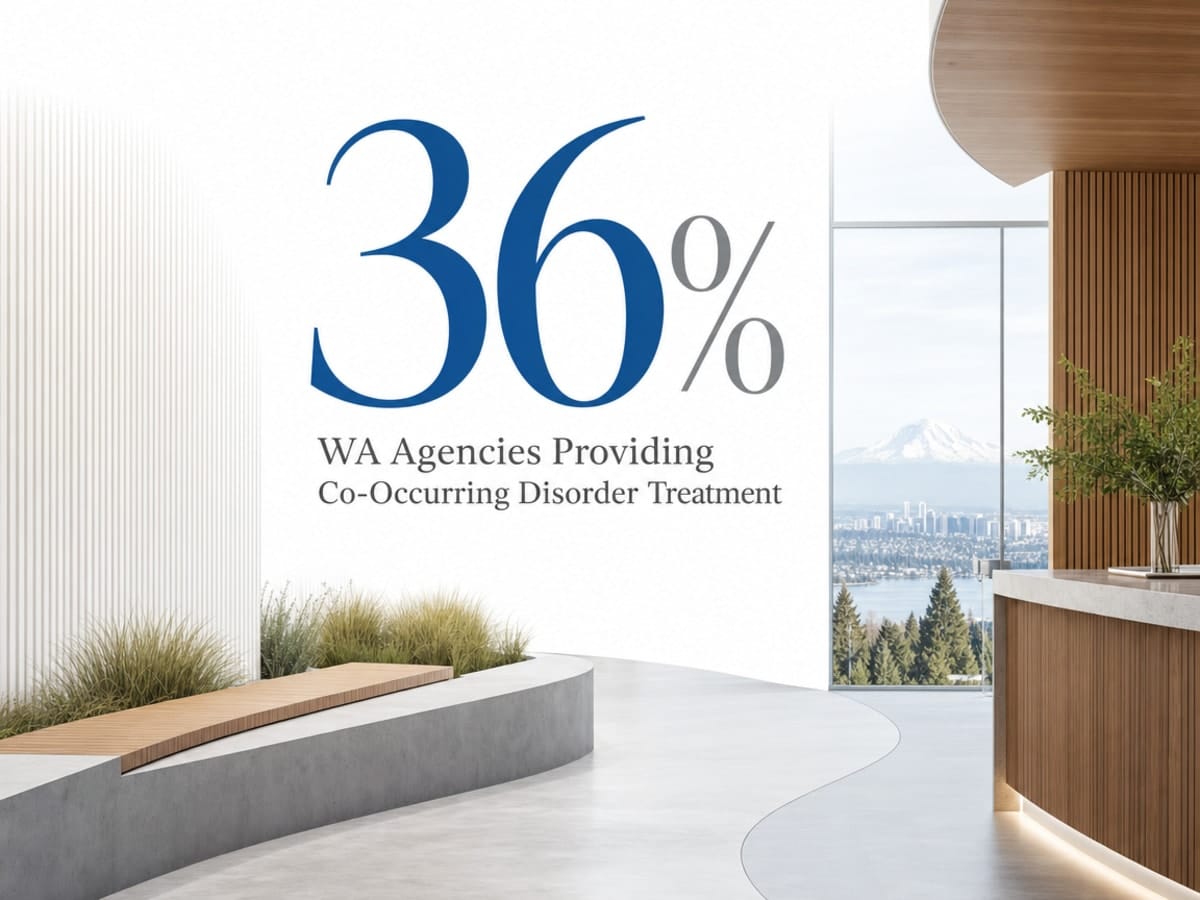
- Washington’s 2025 HCA provider survey found only 36% of responding agencies offer integrated co-occurring disorder treatment, so licensure alone does not guarantee a program can handle dual diagnosis 6.
- Secure withdrawal under Ricky’s Law is narrow: 45 beds statewide served 211 people between April and June 2025, and only a designated crisis responder can authorize involuntary detention 12, 10.
- The 48-to-96-hour gap between ‘yes’ and admission is where most interventions collapse, so pre-verify benefits, hold a bed, and lock down transportation before the conversation starts.
- Call a dual-diagnosis admissions team before writing the letter or setting a date, and keep 988 reserved for immediate safety crises rather than scheduling care 7.
The intervention is a care transition, not a confrontation
If you are reading this, you have probably already tried to help your loved one more than once. Maybe a program in King County had a six-week waitlist. Maybe a Spokane detox stabilized the substance use but had nothing for the psychiatric side. Maybe your sister said yes in the morning and was gone by evening. That exhaustion is real, and it is not a sign you have done this wrong.
Here is the shift that changes everything: an intervention is not the big confrontation scene from a television show. It is the opening minute of a care transition. The hard work is not the words you say in the living room. The hard work is what you build before the conversation starts, so that the moment your loved one says yes, there is a bed, a clinical team, a confirmed insurance approval, and a car ready to go.
Federal guidance on co-occurring disorders frames engagement as a process rather than an event, with family involvement, assessment, and treatment planning working together 17. Your job is to make the yes land somewhere real. The next sections show you how.
Why a confirmed placement changes the math
Think about the last time your loved one agreed to get help. How long did that willingness last? An hour? A day? Most families discover the hard truth too late: the window between “yes, I’ll go” and actually walking through a treatment facility’s doors is often the point where everything falls apart. A canceled bed. A denied prior authorization. A weekend without a return phone call. By Monday morning, the person who said yes is drinking again, or has stopped answering their phone, or is insisting they were never really going to go anyway.
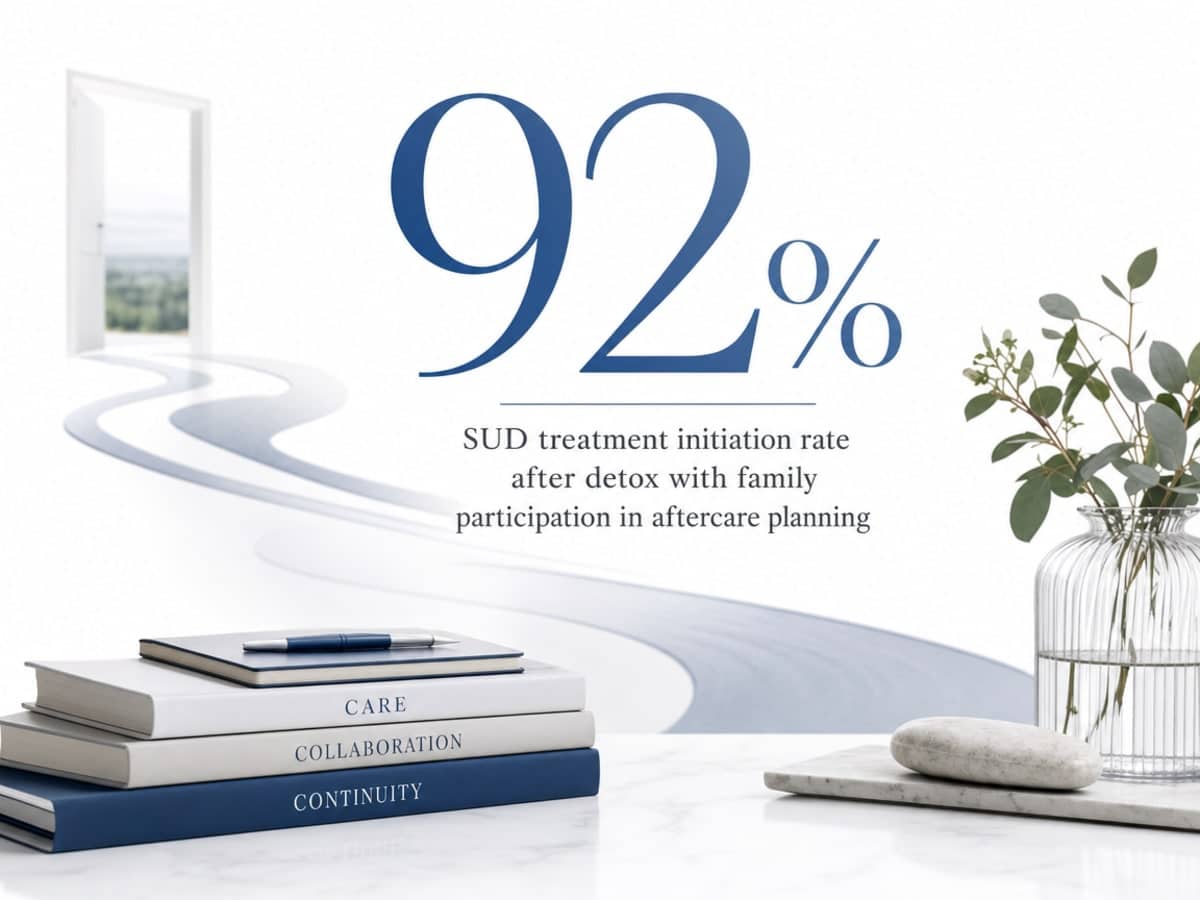
This is why advance coordination matters more than any script you rehearse. A federal evidence review of patients leaving detox found that 92% initiated substance use disorder treatment when their families participated in aftercare planning, compared with roughly a 30 percentage-point improvement over families who did not participate 20. That specific finding came from post-detox patients, not from every intervention scenario, so treat it as a signal rather than a promise. Still, the direction is clear: when the next step is already built, willingness has somewhere to land.
Why not every Washington program fits a dual diagnosis case
Here is something families learn the hard way: “licensed in Washington” and “equipped to treat your loved one’s dual diagnosis” are not the same sentence. A program can be fully compliant, well-reviewed, and staffed by kind people, and still be the wrong fit if it treats only one half of what your loved one is carrying.
The 2025 Washington Health Care Authority provider survey makes the gap visible. Of the 272 agencies that responded (a 40.8% response rate, so this is a signal rather than a complete census):
- 36% reported providing integrated co-occurring disorder treatment
- 39% reported providing both mental health and substance use disorder services
- 82% reported providing overdose-reversal medication 6
Look at those numbers again. Most responding agencies can hand someone naloxone. Far fewer can sit with the full picture of bipolar disorder tangled up with alcohol use, or PTSD running underneath opioid dependence, and treat both at once with one coordinated team.
This is the quiet reason so many Washington referrals fall apart. A program handles the detox but discharges before the psychiatric symptoms are stable. Another manages the mental health side but asks your loved one to “come back when you’re sober.” Each handoff is another chance for willingness to slip away. Integrated care, where one team addresses both conditions together, is the model federal guidance recommends for co-occurring disorders 16.
You are not being picky by asking whether a program actually does dual diagnosis work. You are doing the exact filtering that protects your loved one from a cycle you have probably already seen.
BHA, RTF, and what the licensing labels actually mean
Two acronyms will come up over and over as you call around: BHA and RTF. They sound interchangeable. They are not.
- Behavioral Health Agency (BHA)
- Licensed by the Washington Department of Health to provide mental health services, substance use disorder services, problem gambling services, or some combination of those 1. The combination part matters. A BHA certified only for mental health is not certified to treat substance use, and the reverse is also true. Licensure also requires specific policies, procedures, and clinical supervision, with substance use disorder services supervised by a credentialed SUDP supervisor 3, 4.
- Residential Treatment Facility (RTF)
- A licensed, community-based setting providing 24-hour inpatient care for people with mental health and/or chemical dependency disorders 2. Washington licenses more than 100 RTFs, but “RTF” alone does not tell you whether the facility treats both conditions together or only one.
When you call, ask directly: “Are you certified for both mental health and substance use disorder services, and do you treat them with one integrated team?” The answer should be specific, not a brochure sentence.
Questions to ask a program before you say yes to a referral
You do not need clinical training to ask good questions. You need five minutes and a willingness to interrupt a sales pitch. Here is what to ask any program before you let your loved one’s name go on a waitlist:
- Do you treat the mental health condition and the substance use at the same time, with the same team, in the same building?
- Who prescribes psychiatric medication, and how often is that person on site?
- What is your admission timeline this week, not in general, this week?
- Do you accept my loved one’s insurance, and will you handle prior authorization, including ASAM level-of-care documentation if needed 11?
- If my loved one’s symptoms worsen on day three, do you keep them, or do you transfer them out?
A program equipped for dual diagnosis will answer each of these without pausing. A program that is not will deflect, redirect to a form, or quietly suggest a different facility. Both answers are useful. You just saved yourself a week.
BHA, RTF, and what the licensing labels actually mean
Two acronyms will come up over and over as you call around: BHA and RTF. They sound interchangeable. They are not.
- Behavioral Health Agency (BHA)
- Licensed by the Washington Department of Health to provide mental health services, substance use disorder services, problem gambling services, or some combination of those 1. The combination part matters. A BHA certified only for mental health is not certified to treat substance use, and the reverse is also true. Licensure also requires specific policies, procedures, and clinical supervision, with substance use disorder services supervised by a credentialed SUDP supervisor 3, 4.
- Residential Treatment Facility (RTF)
- A licensed, community-based setting providing 24-hour inpatient care for people with mental health and/or chemical dependency disorders 2. Washington licenses more than 100 RTFs, but “RTF” alone does not tell you whether the facility treats both conditions together or only one.
When you call, ask directly: “Are you certified for both mental health and substance use disorder services, and do you treat them with one integrated team?” The answer should be specific, not a brochure sentence.
Questions to ask a program before you say yes to a referral
You do not need clinical training to ask good questions. You need five minutes and a willingness to interrupt a sales pitch. Here is what to ask any program before you let your loved one’s name go on a waitlist:
- Do you treat the mental health condition and the substance use at the same time, with the same team, in the same building?
- Who prescribes psychiatric medication, and how often is that person on site?
- What is your admission timeline this week, not in general, this week?
- Do you accept my loved one’s insurance, and will you handle prior authorization, including ASAM level-of-care documentation if needed 11?
- If my loved one’s symptoms worsen on day three, do you keep them, or do you transfer them out?
A program equipped for dual diagnosis will answer each of these without pausing. A program that is not will deflect, redirect to a form, or quietly suggest a different facility. Both answers are useful. You just saved yourself a week.
Three Washington pathways families confuse
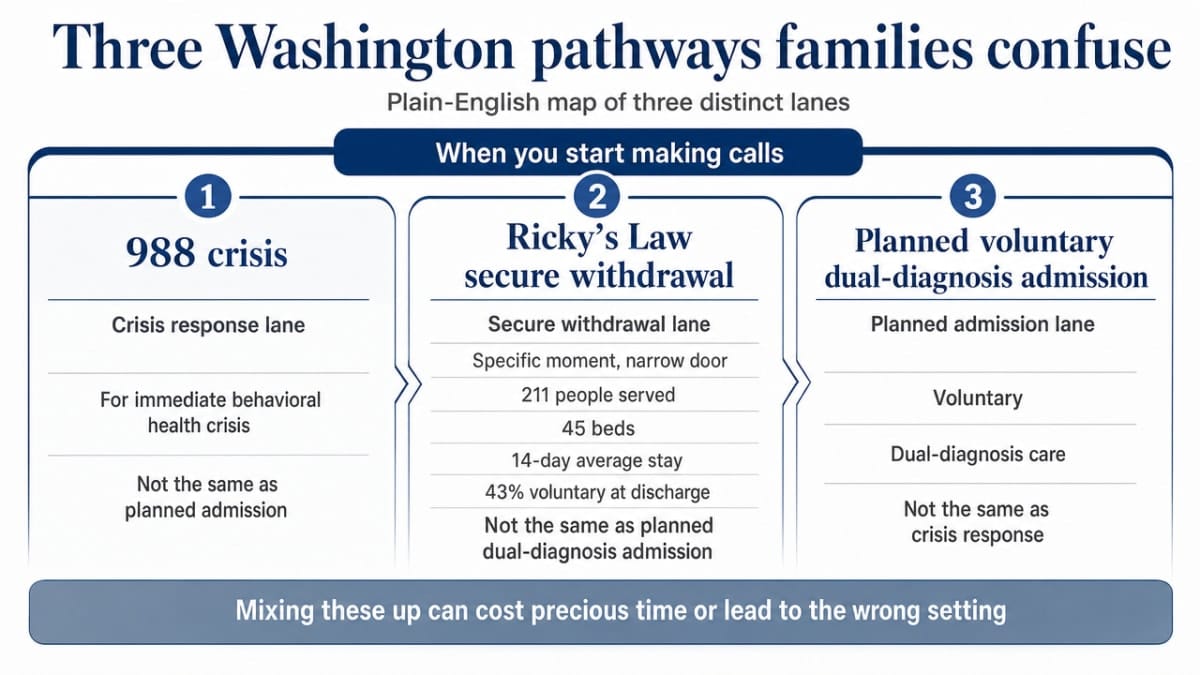
When you start making calls, you will hear three very different systems described as if they were the same thing. They are not. Mixing them up is one of the most common ways a Washington family loses precious time, or ends up with a loved one in the wrong setting for what they actually need. Below is a plain-English map of the three lanes, when each one applies, and what it can and cannot do. Washington’s secure withdrawal system alone served 211 people across just 45 beds between April and June 2025, with an average stay of 14 days and only 43% voluntary at discharge 12. That is a narrow door, built for a specific moment, and it is not the same door as a planned dual-diagnosis admission.
988 and county crisis lines: when safety comes first
Secure withdrawal management under Ricky’s Law
Ricky’s Law created Washington’s secure withdrawal management and stabilization system for people whose substance use puts them in imminent danger and who meet strict legal criteria for involuntary detention under Chapter 71.05 RCW 10. This is not a program you place a loved one into because the family is scared and tired, as real as that fear is. A designated crisis responder, not a parent or spouse, decides whether someone meets the legal standard.
The system is also small. Between April and June 2025, Washington operated 45 secure withdrawal beds statewide, served 211 people across 198 admissions, and discharged patients after an average stay of 14 days, with only 43% voluntary at discharge 12. Short stabilization. Narrow door. If your loved one is willing to talk, a planned dual-diagnosis admission is almost always the stronger path.
Planned voluntary admission to a dual-diagnosis program
This is the lane you are most likely preparing for. Your loved one is not actively suicidal tonight, and they do not meet the strict legal bar for involuntary secure withdrawal, but something has to change. A planned voluntary admission to a residential program equipped for both psychiatric and substance use care is the pathway where family coordination matters most, and where the pre-intervention work you are doing right now actually pays off.
Federal guidance on co-occurring disorders describes a specific assessment sequence that a good admissions team should walk through with you before the day arrives:
- Engaging your loved one
- Gathering information from family
- Screening for both conditions
- Determining the appropriate level of care
- Planning the treatment transition 18
If an admissions coordinator can hold that conversation with you in advance, you will know within one call whether the program is a real fit.
The pre-intervention coordination call
Before you sit down with your loved one, pick up the phone with a specialized dual-diagnosis admissions team. This single call does more to protect the intervention than any script revision. A good admissions coordinator will not just quote a bed date; they will walk you through the same assessment sequence federal guidance recommends for co-occurring disorders: gathering family information, screening for both conditions, determining the right level of care, assessing readiness, and planning the transition 18. In one 30-to-45-minute conversation, you can know whether the program is a real clinical fit, what insurance will need, and what the first 24 hours after admission actually look like.
This is where ViewPoint Dual Recovery’s admissions team can function as your planning partner rather than a hotline you call in a panic at 11 p.m. Because the facility specializes in treatment-resistant psychiatric conditions and co-occurring substance use, the intake conversation is built around the exact complexity you are carrying: the bipolar diagnosis that keeps getting lost behind the drinking, the trauma underneath the opioid use, the schizophrenia that another program said was “too complicated” to manage alongside detox. Call before you write the letter you plan to read. Call before you set a date. The coordination work you do this week is the structure that holds the whole intervention up.
Making this call before the intervention is already a step most families skip. You are not most families.
What to have ready before you dial
You do not need a medical file. You need a notebook and about 20 minutes to pull together what the admissions team will ask about. Have these within reach:
- Your loved one’s date of birth, legal name, and current address.
- Insurance card photo, front and back, or a note that they are uninsured or on Apple Health 11.
- A short list of current and past psychiatric diagnoses, even if informal.
- Current medications and approximate doses, including anything prescribed and anything they are using on their own.
- Substances used, how much, how often, and when they last used.
- Any history of withdrawal seizures, overdoses, or hospitalizations.
- Previous treatment attempts and why each ended.
Gaps are fine. Say “I don’t know” when you don’t. The admissions team expects incomplete information from a frightened family.
Closing the 48-to-96-hour gap between ‘yes’ and admission
Here is the quiet failure mode that sinks more interventions than any wrong word in a letter: the two-to-four-day gap between your loved one agreeing and actually arriving at a program. The paperwork drags. The prior authorization sits in a queue. Someone’s flight is Tuesday. By Wednesday night, your loved one has rebuilt every reason not to go.
Advance coordination collapses that gap. During your pre-intervention call, ask the admissions team to pre-verify benefits, document the ASAM level of care they will request 11, hold a tentative bed, and give you a direct phone number for the day of. Confirm transportation ahead of time, whether that is a family drive, a flight, or a secure transport service. Have the consent and release-of-information forms reviewed in advance so a signature on intervention day moves straight into admission. The goal is simple: when your loved one says yes, the next step is hours away, not days.
What to have ready before you dial
You do not need a medical file to make this call. You need a notebook, a pen, and about 20 minutes to pull together what the admissions team will ask about. If some lines stay blank, that is fine. Say “I don’t know” when you don’t. Admissions coordinators expect incomplete information from a frightened family, and partial answers still help them plan.
- Your loved one’s full legal name, date of birth, and current address.
- A photo of the insurance card, front and back, or a note that they are uninsured or enrolled in Apple Health 11.
- A short list of psychiatric diagnoses, current and past, even if informal or self-reported.
- Current medications and rough doses, including anything prescribed and anything they are using on their own.
- Substances used, how much, how often, and the last known use.
- Any history of withdrawal seizures, overdoses, or hospitalizations.
- Previous treatment attempts and why each one ended.
Gathering this in one place is already real preparation. Keep the notebook near the phone.
Closing the 48-to-96-hour gap between ‘yes’ and admission
Here is the quiet failure mode that sinks more interventions than any wrong word in a letter: the two-to-four-day gap between your loved one agreeing to go and actually walking through the door. Paperwork drags. A prior authorization sits in a queue over the weekend. The earliest flight is Tuesday. By Wednesday night, your loved one has rebuilt every reason not to go, and the willingness you worked so hard to reach is gone.
Advance coordination collapses that gap. During your pre-intervention call, ask the admissions team to pre-verify benefits, document the ASAM level of care they will request, and confirm what prior authorization and concurrent review will look like for the planned stay 11. Ask them to hold a tentative bed with a specific date, and get a direct phone number for the day of the intervention, not a general intake line.
Lock down transportation before you sit down, whether that is a family drive, a booked flight, or a secure medical transport. Have the consent and release-of-information forms reviewed in advance so a signature on intervention day moves straight into admission, not into another week of waiting. When your loved one says yes, the next step should be hours away, not days.
Writing and rehearsing what you will say
The letter you read in the living room is not the magic. The structure around it is. Still, the words matter, because the right ones keep your loved one in the chair long enough for the plan behind them to work.
Write the letter in your own voice. Keep it short, under two pages, and read it out loud at least once before the day. Three parts tend to carry the weight:
- A specific memory of who your loved one is when they are well
- A plain description of what you have seen the mental health symptoms and substance use do
- A direct ask with the next step already named
“I love you. I am scared. There is a bed waiting at a program that treats both the depression and the drinking, and we can leave this afternoon.” That last sentence is the one most families leave out, and it is the one that makes the difference.
Rehearse with the other people who will be in the room. Agree ahead of time who speaks first, who stays quiet, and who holds the admissions coordinator’s direct number. Federal guidance frames engagement as a process involving family and clinical teams together 17, so build the room to match. If your voice shakes, that is fine. Shaking voices have gotten people into treatment before.
Safety planning the day of
The morning of the intervention, take ten minutes to think about safety before anyone sits down. If your loved one has been using opioids, have naloxone in the room and in the car. Washington DOH reported 281,556 naloxone kits distributed in 2024 and more than 39,000 reversed overdoses 14, and those kits are available free through many local pharmacies and county programs. Know the signs of overdose and withdrawal, and know your nearest emergency department.
Decide in advance who calls 988 if your loved one spirals into a suicidal crisis mid-conversation 7, and keep that lane separate from the admissions coordinator’s number. Remove firearms and lock up medications before the day. If substance use patterns in your area concern you, the Washington Tracking Network dashboard can orient you to local overdose trends 13. Safety planning is not pessimism. It is the quiet work that lets you stay fully present for the conversation itself.
When in-state options run out: considering travel for care
Sometimes the right program is not within driving distance of your home. Washington’s population reached roughly 8.1 million as of April 2025, with most growth concentrated in Clark, King, Pierce, Snohomish, and Spokane counties 15. That geographic concentration means specialized dual-diagnosis beds cluster in a few corridors, and families outside those corridors, or inside them during a waitlist stretch, often look out of state.
Travel is not a failure. For a loved one with treatment-resistant psychiatric symptoms layered under substance use, the question is not “where is closest” but “where is the clinical fit real.” ViewPoint Dual Recovery in Prescott, Arizona works with Washington families whose loved ones carry exactly the kind of complexity other programs have called too much. If you are weighing a flight against another month on a waitlist, call the admissions team first and let the clinical conversation decide.
Your role after the ‘yes’
The moment your loved one agrees, your job changes. You are no longer the person building the plan. You are the person carrying it across the finish line and then stepping back so the clinical team can take over.
Call the admissions coordinator from the room, not from the driveway an hour later. Confirm the arrival window. Hand off the medication list and insurance information you already gathered. Let the signed release of information travel with your loved one so the first clinical conversation at admission is not starting from zero.
Then, stay involved in the way that actually helps. Federal guidance encourages family participation in treatment planning and aftercare, not as a monitor but as a steady presence 16. Family-centered participation during and after treatment is linked to better engagement, retention, and family resilience over time 21. Ask the program how they want you included. Say yes to family sessions. The intervention was one day. Recovery is longer, and your loved one still needs you in it.
Secure a clinical plan before your intervention
Know your loved one’s next step is ready before the intervention begins.
Frequently Asked Questions
What should I do if my loved one says yes but the admission is not until tomorrow?
Stay with them. Do not go home, do not let them “pack alone,” and do not assume sleep will reset their willingness. Keep the admissions coordinator’s direct line open, confirm the arrival window in writing, and remove alcohol or substances from the immediate environment if it is safe to do so. The 48-to-96-hour gap is where most interventions quietly fail.
Can I force my adult family member into treatment in Washington if they refuse?
No. Washington law limits involuntary commitment to procedures authorized by Chapter 71.05 RCW, and only a designated crisis responder can decide whether someone meets the legal standard 10. Family concern alone does not create that authority. Your leverage is a well-prepared voluntary conversation with a real placement waiting, not legal force.
Should I call 988 before or during the intervention?
Call 988 only if your loved one is in immediate danger, actively suicidal, or showing signs of overdose. It is a 24/7 crisis resource available regardless of insurance 7, not a line for scheduling admission. Keep it separate from your admissions coordinator’s number, and assign one person in the room to make the call if a crisis unfolds.
How do I know if a Washington program can actually treat both the mental health and substance use side?
Ask directly whether they treat both conditions at the same time, with the same team, in the same building. In the 2025 HCA provider survey, only 36% of responding agencies reported integrated co-occurring disorder treatment 6. A real dual-diagnosis program will describe its on-site psychiatrist, medication protocols, and how it handles psychiatric destabilization during detox without hesitation.
What documents and information should I gather before the intervention day?
Collect your loved one’s legal name and date of birth, insurance card photos or Apple Health details 11, a list of current and past psychiatric diagnoses, current medications and doses, substances used and last use, any history of withdrawal seizures or overdoses, and prior treatment attempts. Gaps are fine. Keep everything in one notebook near the phone.
What happens if my loved one changes their mind on the drive to admission?
Pull over somewhere safe and call the admissions coordinator from the car. A good team will talk directly with your loved one, acknowledge the fear, and walk through what the first hours of admission actually look like. Do not argue or threaten. If immediate danger emerges, call 988 7. Ambivalence on the drive is common, not failure.
References
- Behavioral Health Agencies (BHA) | Washington State Department of Health. https://doh.wa.gov/licenses-permits-and-certificates/facilities-z/behavioral-health-agencies-bha
- Residential treatment facilities (RTF): 24-hour inpatient care. https://doh.wa.gov/licenses-permits-and-certificates/facilities-z/residential-treatment-facilities-rtf
- License Requirements | Washington State Department of Health. https://doh.wa.gov/licenses-permits-and-certificates/facilities-z/behavioral-health-agencies-bha/license-requirements
- Frequently Asked Questions – Washington State Department of Health. https://doh.wa.gov/licenses-permits-and-certificates/professions-new-renew-or-update/behavioral-health-professions-facilities-and-agencies/frequently-asked-questions
- SURSAC current state assessment June 2, 2025 – Washington State Behavioral Health Treatment Need and Service Utilization Update. https://www.hca.wa.gov/assets/program/sursac-current-state-assessment.pdf
- 2025 Behavioral Health Provider Survey Interpretive Report. https://www.hca.wa.gov/assets/program/Behavioral-health-provider-survey-interpretive-report-2025.pdf
- Mental health crisis lines | Washington State Health Care Authority. https://www.hca.wa.gov/free-or-low-cost-health-care/i-need-behavioral-health-support/mental-health-crisis-lines
- 988 crisis line implementation (HB 1477) | Washington State Health Care Authority. https://www.hca.wa.gov/about-hca/programs-and-initiatives/behavioral-health-and-recovery/988-crisis-line-implementation-hb-1477
- Update on 988 & Access to Behavioral Health Crisis Services. https://www.hca.wa.gov/assets/program/988-update-presentation-20250121.pdf
- Chapter 71.05 RCW:. https://app.leg.wa.gov/rcw/default.aspx?cite=71.05%26full=true
- 2024 Apple Health Medicare Connect behavioral health services reference guide. https://www.hca.wa.gov/assets/free-or-low-cost/apple-health-medicare-connect-behavioral-health-services-reference-guide.pdf
- Secure Withdrawal Management and Stabilization April to June 2025. https://www.hca.wa.gov/assets/program/rickys-law-annual-report-202507.pdf
- Overdose Data. https://doh.wa.gov/you-and-your-family/injury-and-violence-prevention/overdose-prevention-recognition-and-response/overdose-data
- OVERDOSE EDUCATION NALOXONE DISTRIBUTION DATA 2024. https://doh.wa.gov/sites/default/files/2025-03/150314-OverdoseEducationAndNaloxoneDistributionReport2025.pdf
- Washington population growth slowing. https://ofm.wa.gov/news-publications/washington-population-growth-slowing/
- Integrated Treatment for Co-Occurring Disorders: Building Your Program. https://library.samhsa.gov/sites/default/files/ebp-kit-building-your-program-10112019.pdf
- Integrated Treatment for Co-Occurring Disorders: The Evidence. https://library.samhsa.gov/sites/default/files/ebp-kit-the-evidence-10242019.pdf
- Substance Use Disorder Treatment for People With Co-Occurring Disorders. https://library.samhsa.gov/sites/default/files/pep20-06-04-006.pdf
- Principles of Drug Addiction Treatment: A Research-Based Guide. https://nida.nih.gov/sites/default/files/podat-3rdEd-508.pdf
- EXECUTIVE SUMMARY. https://www.ncbi.nlm.nih.gov/books/NBK117209/
- Family-centred interventions for people with substance use disorders and their families: a systematic review. https://pmc.ncbi.nlm.nih.gov/articles/PMC11367307/